
Secret Doors & Hidden Rooms – Adding Whimsy & Wonder to Home Design
It’s easy to transform your living space by integrating secret doors and hidden rooms that blend playfulness with practicality; when you plan, prioritize safety and structural integrity and consult professionals to avoid hazards, while maximizing privacy and resale value. Thoughtful concealment techniques, quality hardware, and lighting let you create immersive surprises that reflect your style and protect function. With proper permits and expert installation, you can add lasting delight to your home.
Secret designs like hidden doors and rooms let you infuse playfulness while increasing home value; when you plan, you should balance imaginative features with safety and building-code compliance, address potential hazards such as egress and ventilation, and optimize functionality. With thoughtful placement and quality materials you can create delightful, practical spaces that reflect your personality and deliver lasting resale and experiential benefits.
Key Takeaways:
- Secret doors and hidden rooms create surprise and storytelling in a home, turning ordinary walls and cabinetry into playful, immersive design features.
- Successful projects require early planning for mechanisms, circulation, ventilation, lighting, fire egress and structural considerations; engage designers or contractors to ensure proper function and concealment.
- They offer strong personalization and potential market appeal for uses like storage, home offices, play spaces or safe rooms, but weigh cost, maintenance and buyer preference when deciding scope.
Key Takeaways:
- Hidden entries add surprise and personality while increasing usable space-use bookcase doors, pantry panels, or under‑stair rooms to blend function with whimsy.
- Plan for safety and code compliance: ensure lighting, ventilation, fire egress, and reliable hardware are incorporated from the start.
- Match scope to budget and skill: simple magnetic latches and trim work suit DIY, while complex pivot systems or custom millwork often require professionals.
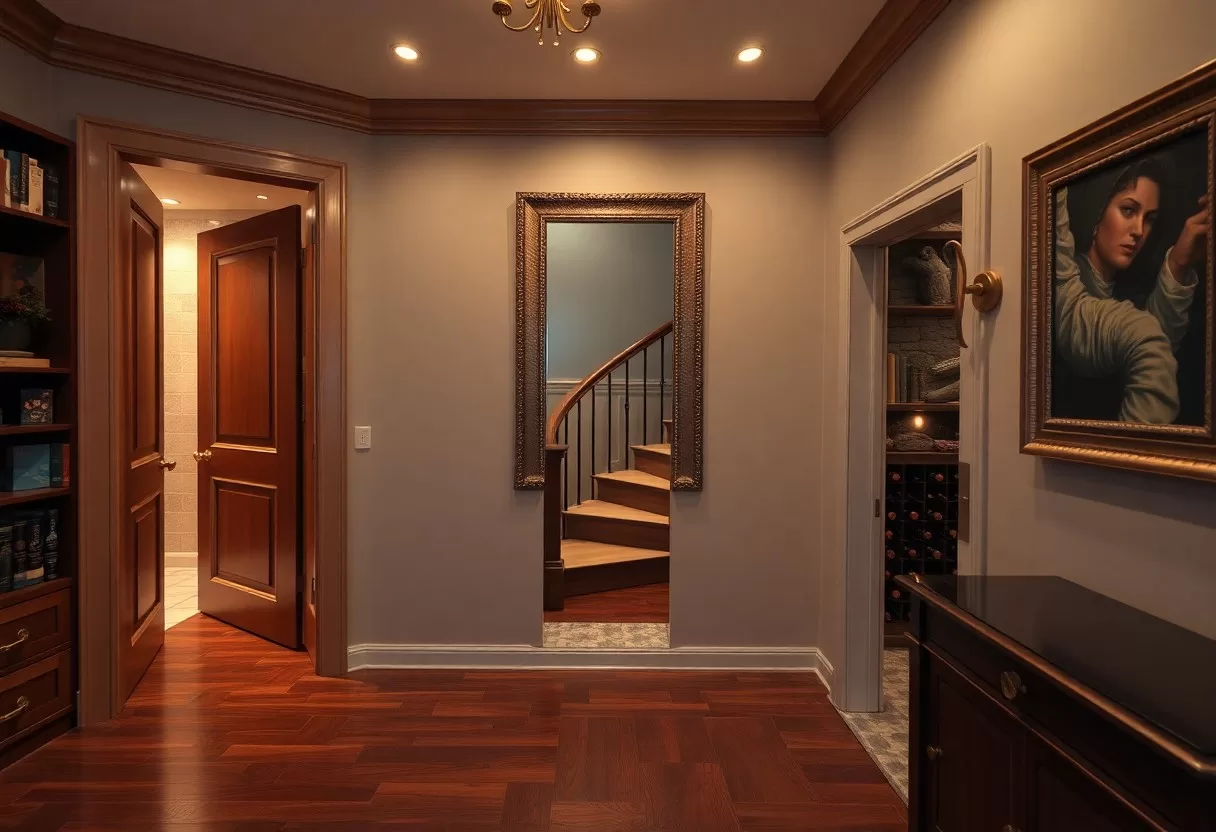
The Allure of Secret Doors
You feel a rush when a seemingly ordinary wall-bookcase doors, pivot walls, or sliding pantry panels-reveals another world; these features create surprise and let you layer storytelling into daily circulation. Designers often combine hidden entries with layered lighting, tactile hardware, and acoustic insulation so the reveal reads as intentional theater, and you can use them to add discrete storage, a private home office, or a playful circulation route that becomes a memorable focal point.
Historical Significance
Hidden entries date back centuries: 16th-17th century English priest holes hid clergy during persecution, medieval castles used secret staircases for defense, and Victorian service passages kept staff out of sight. You can see these precedents in Prohibition-era speakeasies too-each example shows how concealment balanced safety, logistics, and social needs across eras.
Modern-Day Applications
Now you’ll find concealed doors serving practical roles: secure safe rooms, wine-cellar entrances, disguised home offices, and theatrical theater access, often paired with smart locks, RFID triggers, or motorized pivots. While you enjoy the whimsy, you must also prioritize building codes, emergency egress, and proper ventilation to avoid safety hazards.
When you plan a modern hidden entry, consider materials and systems: solid-core doors with steel frames, acoustic insulation for sound control, and motorized actuators or electromagnetic locks for smooth operation. Typical budgets vary widely-from a few thousand dollars for a basic bookcase door to tens of thousands for a motorized, alarm-integrated safe room-so you’ll want to balance aesthetics, security, and practicality. Integrate lighting, ventilation, and alarm/phone lines, and get a qualified installer to tie systems into your home’s fire and security setups to ensure safe egress and reliable operation.
The Appeal of Secret Doors
A well-placed secret door transforms your home into a layered experience: it adds surprise, boosts privacy, and creates usable square footage without altering footprints. Designers report homeowners using hidden pantries and under‑stair rooms to add 10-25% more functional storage; collectors hide safes behind art for discrete security. You get storytelling woven into everyday routes, plus tangible resale appeal when executed with quality mechanicals and proper egress. Safety and professional installation protect value and function.
History and Psychological Impact
Between the 16th-17th centuries, priests’ holes in England and later Prohibition‑era speakeasies (1920-1933) illustrate how secret spaces met social needs; today, they satisfy your desire for novelty and control, stimulating dopamine and enhancing play in both children and adults. Researchers link small, private spaces to reduced stress and increased creativity, so your hidden room can be both an emotional refuge and a design statement. Secrecy often amplifies perceived value.
- Priests’ holes – concealed alcoves in 1500s-1600s England for hiding clergy.
- Speakeasies – Prohibition-era hidden bars, 1920-1933, reshaped urban interiors.
- Psychology – studies show private nooks improve focus and calm.
- Knowing you can leverage historical precedents to justify both aesthetic and functional choices.
| 16th-17th C | Priests’ holes: small concealed spaces for safety and secrecy. |
| 18th-19th C | Hidden compartments in furniture for valuables and correspondence. |
| 1920-1933 | Speakeasies: concealed entrances driving inventive urban layouts. |
| Mid-20th C | Cold war era panic rooms and secure storage solutions emerge. |
| Modern | Smart automation, pivot hinges, and bespoke millwork for aesthetic concealment. |
Types of Secret Doors
Common types you can integrate include bookcase doors (pivot or concealed hinges), camouflaged cabinet panels, rotating fireplaces, mirror closets, and under‑stair hideaways; each balances visibility, hardware complexity, and cost. Bookcase doors remain the most popular for libraries and studies, while concealed pantry panels suit kitchens. You should factor in hinge ratings, fire code egress, and access for maintenance. Durability and proper seals matter.
- Bookcase doors – classic, high-impact reveal for libraries and dens.
- Camouflaged panels – blend with millwork for subtlety in kitchens and halls.
- Rotating fireplaces/mirrors – dramatic mechanical reveals for focal rooms.
- Knowing your priority (security, showmanship, or storage) guides the right type selection.
| Bookcase Door | Pivot hinges, gravity latches, often supports 200-400 lb shelving. |
| Camouflaged Panel | Flush mounting, magnetic catches, minimal reveal lines. |
| Rotating Fixture | Motorized or counterweighted, requires electrical/mechanical access. |
| Mirror/Art Door | Lightweight substrates, keylock or biometric access for security. |
| Under‑stair Room | Optimizes 20-50 ft² typically unused; consider ventilation and egress. |
For installations, expect a wide cost range: a simple concealed panel can run $300-$1,500, custom bookcase doors $2,000-$8,000, and fully automated secret rooms $10,000+. You should plan for professional framing, concealed hardware, electrical work for motors or lighting, and periodic maintenance; projects with biometric locks or reinforced doors may also require permits. Costs, security, and maintenance determine long‑term value.
- Budget panels – $300-$1,500, minimal hardware, DIY possible with skill.
- Custom bookcase doors – $2k-$8k, professional millwork and concealed hinges.
- Automated rooms – $10k+, motors, controls, and electrical integration.
- Knowing accurate quotes and contractor experience prevents surprises and ensures compliance.
| Budget Range | $300-$1,500 (panels, simple installs) |
| Mid Range | $2,000-$8,000 (custom millwork, quality hardware) |
| High End | $10,000+ (automation, reinforced doors, smart access) |
| Maintenance | Annual checks on hinges, motors, and seals highly recommended |
| Permits | May be required for rooms used as sleeping or with electrical upgrades |
Types of Hidden Rooms
Explore common hidden rooms such as bookcase passages, concealed closets, under-stair pantries, attic lofts, and panic safes, each tailored for storage, play, security, or ambiance; you should assess load-bearing limits and fire-safety measures before construction. Thou select the option that best matches your functional needs and site constraints.
- Bookcase Passage
- Concealed Closet
- Under-Stair Storage
- Attic Loft
- Panic Room
| Bookcase Passage | Ideal for connecting rooms; typical clearance 30-36″ and requires flush hinges. |
| Concealed Closet | Good for valuables; add locks and consider ventilation to avoid moisture. |
| Under-Stair Storage | Efficient for seasonal gear; verify structural framing before adding shelves. |
| Attic Loft | Great for an office or play space; ensure insulation and safe access (ladder or stairs). |
| Panic Room | Built for security-use reinforced walls, a dedicated ventilation plan, and 24/7 access. |
Concealed Spaces for Storage
You can convert wasted volumes-under stairs, behind false panels, or within built-ins-into hidden storage that holds seasonal decor or documents; typical shelving must support 50-200 kg, so confirm structural capacity and add moisture control and locks to protect contents.
Creative Nooks for Leisure
You can design compact reading alcoves, media dens, or speakeasy-style bars that seat 1-4 people; prioritize soundproofing, lighting control, and comfortable ergonomics, and ensure HVAC access for sustained comfort.
For example, convert an 8’×6′ closet into a soundproof media nook with R-13 insulation, acoustic panels, and LED dimmers to fit a loveseat and 32″ screen; you should run a dedicated 15-20 A circuit and install a carbon monoxide detector if adjacent to fuel appliances to keep the space both comfortable and safe.
Creative Uses for Hidden Rooms
You can convert a tucked-away space into functional value: a concealed 6×8 room becomes an art studio, server closet, or safe room with proper ventilation and code-compliant egress. For layout inspiration consult The Ideal House Design: Hidden Doors & Secret Rooms. Thoughtful finishes often add privacy and up to 10% more usable square footage, but always plan mechanicals early to avoid costly retrofits.
Play Spaces and Reading Nooks
You can carve a cozy children’s play den or adult reading nook from under-stair voids or closets-typical sizes range 4×6 to 6×8 ft-with built-in benches, 12″ cubbies, and low-voltage LED strips. Use soft EVA foam flooring and rounded millwork to enhance safety, install anchored shelving for books, and position the nook near an outlet for discreet task lighting or a small sound system to keep the space both whimsical and practical.
Wine Cellars and Home Theaters
You can transform a hidden room into a climate-controlled wine cellar or a blackout home theater; wine storage performs best at 55°F (13°C) with 60-70% humidity, while theaters benefit from soundproofing, room geometry for a 5.1 or 7.1 layout, and seating for 3-8 viewers depending on footprint. Prioritize mechanical integration so both systems function without compromising either environment.
For wine, choose racking, a ducted or split cooling unit sized to room volume, and vapor-barrier insulation (aim for R-13+ in exterior walls) to avoid mold; for theaters, spec a 2,000-4,000 lumen projector or appropriate screen size for your viewing distance, add broadband acoustic panels, and route a quiet HVAC run to maintain comfort without noise intrusion.
Design Considerations
When planning hidden features you balance visual cohesion with practical needs: set reveals to about 1/8″-1/4″ for concealment, match grain and trim runs across joins, and factor in hardware loads so a bookcase door doesn’t sag over time. You should specify soft‑close pivots or a concealed continuous hinge, plan lighting and HVAC early, and reserve at least a 6×8 clear area for usable hidden rooms to avoid claustrophobic layouts and costly rework.
Aesthetic Integration
To make secrets read as part of the room, you match paint sheen and wood grain, align shelving lines and cornice profiles, and hide fasteners with recessed splines or flush magnetic catches; designers often use a flush reveal with concealed hinges and a consistent 3-4″ baseboard return to disguise seams. You can also age hardware or distress finish selectively so the hidden entry reads like original millwork rather than an add‑on.
Functional Aspects
Mechanically, you prioritize reliable movement and safety: choose continuous or pivot hinges rated for the door weight, add ventilation and LED task lighting, and plan electrical on a dedicated 15A circuit if you’ll run equipment. You should incorporate egress and smoke detection per local code, and install security options-magnetic catches, 3‑point locks, or smart sensors-that blend with the concealment strategy.
For deeper functionality, route HVAC and electrical during framing: run at least one 4″ ventilation duct or install a passive grille plus an inline fan for humid climates, and mount LED strips with a low‑voltage transformer to minimize heat. You should run conduit for future wiring, place an accessible junction box, and position smoke/CO detectors just outside or inside depending on code. When using the space for equipment, designate a 15A/20A circuit and include ventilation openings to prevent overheating and mold growth.
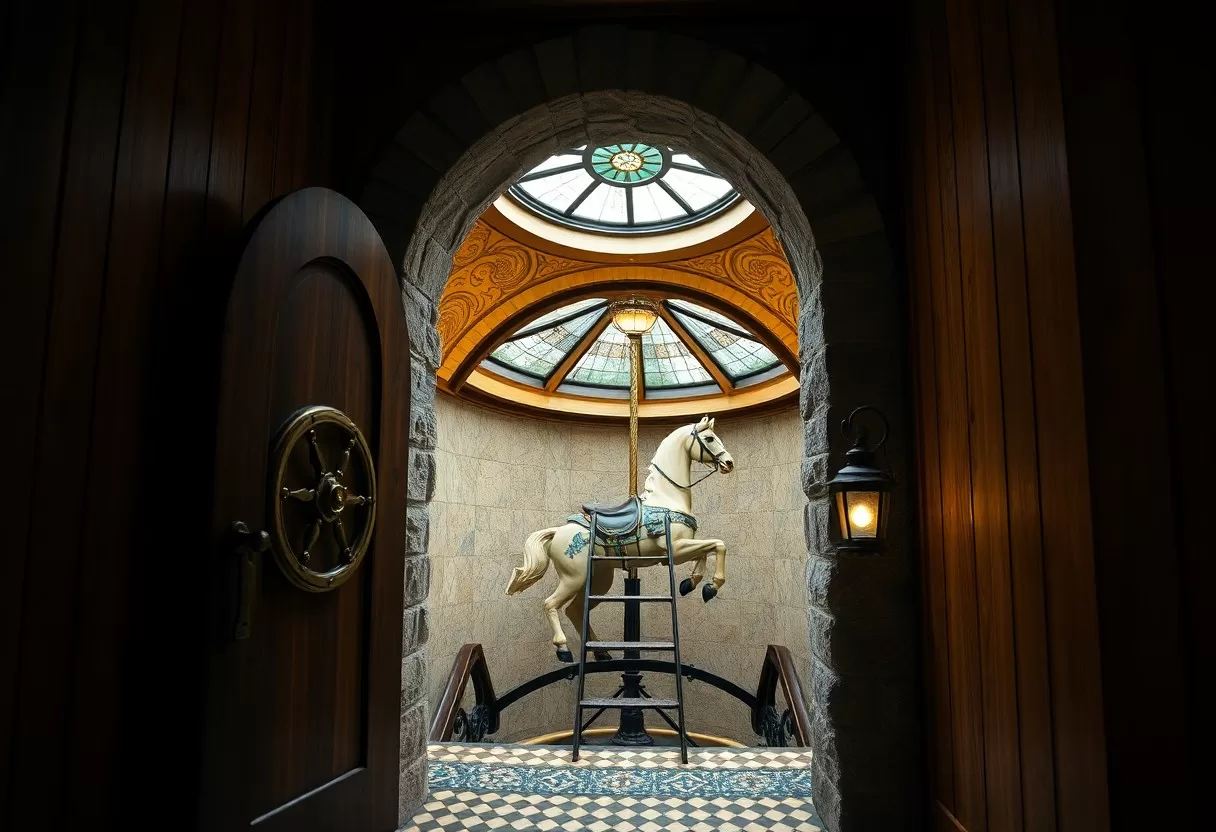
Designing Your Own Secret Spaces
Begin by mapping your floor plan and noting load paths, utilities and egress; consult The Ideal House Design: Hidden Doors & Secret Rooms for real-world layouts and measurements like a functional 6×8 tucked studio. You should budget for a licensed contractor when altering load-bearing walls, plan for at least one approved escape route, and factor in finishes so the pocket or bookcase door reads as built-in rather than bolted on.
Incorporating Secret Doors into Existing Layouts
Start by identifying voids-pantries, closets, attic access-and measure stud bays; a standard pocket requires a minimum 3-1/2″ cavity or reframing. You can replace a closet with a false back bookcase door using offset pivots or a floor-to-ceiling pivot hinge, but avoid cutting through electrical or plumbing runs and label any relocated wiring. For tight corridors, choose a sliding barn or bi-fold hidden panel to save clearance while preserving sightlines.
Materials and Aesthetic Considerations
Choose cores like 3/4″ plywood or hardwood veneer for stability and paint-grade MDF only where moisture is controlled, since humidity will warp cheap panels. Match grain and trim profiles across jambs and baseboards so the reveal reads continuous, and select hardware-magnetic catches, concealed pivots, or electronic locks-rated for the door weight and local fire-rating requirements to maintain safety while keeping the illusion.
For hardware depth, pick concealed pivots rated between 200-600 lb for heavy bookcase doors and soft-close mechanisms to prevent slam damage; magnetic locks and solenoids often provide 40-200 lb holding force and work well with wireless releases. You should seal edges and use marine-grade finishes in humid zones, test operation 50-100 cycles during install, and document access points for future maintenance to avoid surprise demolition during repairs.
Materials and Mechanisms
Prioritize long-term performance: use 3/4″ (19mm) hardwood plywood or kiln-dried solid wood for faces, pair with metal reinforcement at hinge lines, and protect cavity interiors with fire-rated drywall or cement board where required; you should plan for service access and finishes that match visible surfaces while keeping load-bearing elements independent of decorative panels.
Choosing Durable Materials
When you select materials, favor 3/4″ (19mm) exterior-grade plywood or 18mm MDF for smooth paint substrates, oak or maple veneers for visible faces, and stainless steel fasteners plus 1/8″ (3mm) steel plates at hinge stiles; in basements choose marine plywood or treated lumber for rot-resistant performance, and seal edges with epoxy to prevent delamination and moisture ingress.
Innovative Opening Mechanisms
You can combine concealed pivot hinges, continuous piano hinges, gas springs (supporting roughly 20-150 lb / 9-68 kg), and electric linear actuators; pair mechanical systems with electronic triggers like keypads, RFID, or a magnetic lock (commonly rated 300-1200 lb / 136-544 kg) while guarding against pinch points and using hydraulic pistons or soft-close dampers for controlled motion.
Integrate actuators with your automation using 12V DC power supplies (typical draw 1-3 A), provide a manual release or keyed override for power loss, add sensors or light curtains to prevent accidental closure, log operations with your smart hub (HomeKit/Crestron), and plan maintenance every 12-24 months-inspect fasteners, test dampers, and re-lubricate pivots for reliable, safe concealment.
Enhancing Security and Privacy
You can fuse secret doors with monitored systems-alarm panels, CCTV and access control-to create layered protection; magnetic locks rated 600-1,200 lbf and battery-backed actuators maintain lockdown during outages. Integrate motion sensors and tamper switches so entry triggers alerts to a monitoring station, and soundproofing or insulation boosts privacy for meetings or nurseries. Be aware that hidden routes must meet egress and fire codes (NFPA 101) to avoid trapping occupants during emergencies.
Hidden Entry Points
Bookcase pivots, recessed wall panels and floor hatches are common; you can specify a 180° offset pivot hinge or concealed continuous hinge depending on wall thickness. Electric strikes, RFID readers or biometric scanners give you two-factor access and can log timestamps for every opening. Install failsafe releases and emergency push bars so power loss or fire alarms automatically unlock to comply with local egress rules, avoiding a potentially dangerous entrapment.
Safeguarding Valuables
Hardening a hidden room into a vault means layering physical and environmental protections: UL-rated safes (TL-15, TL-30), reinforced concrete walls 6-12″ thick, and a certified vault door. You should control humidity around 45% and temperature near 65-72°F for artwork and paper. Adding seismic anchoring, tamper sensors and time-delay locks increases theft resistance while preserving condition and insurer acceptance.
Operationally, adopt redundant detection and response: dual alarm paths (cellular plus landline), 24/7 monitoring and CCTV with 30-day retention. Mount safes with 1/2″ anchor bolts and use tamper sensors on hinges and bolts to alert within seconds. Consider decoy storage and discreet inventory tagging (RFID/GPS) for items over $10,000 to aid recovery; high-value collectors often mirror museum standards-redundant HVAC, humidity control and certified vault doors-to keep losses minimal and claims straightforward.
DIY versus Professional Installation
Pros and Cons of DIY
You can often save 20-50% on labor by tackling bookcase doors or simple secret panels yourself, and you gain total design control and learning opportunities; however, you risk structural harm, code violations, and voided warranties if you misjudge load-bearing walls, electrical work, or concealed plumbing, which can turn a weekend project into expensive repairs.
Pros vs Cons of DIY Hidden Rooms
| Pros | Cons |
|---|---|
| Lower labor costs | Risk of structural damage |
| Full creative control | Potential code violations |
| Skill-building and satisfaction | No contractor warranty |
| Flexible timeline for small tweaks | Longer overall project time |
| Reuse/repurpose materials | Tool and material hidden costs |
| Quick fixes for small doors | Electrical/plumbing hazards |
When to Hire a Pro
Hire a licensed contractor if your plan involves removing a load-bearing wall, relocating electrical circuits or plumbing, or installing mechanical secret-door systems; you should also get a pro when permits are required or when estimated labor exceeds about $2,000-3,000, since professionals carry insurance, pull permits, and ensure code compliance.
For example, creating a hidden room that requires a new header or alters HVAC will usually need a structural engineer and contractor-professional costs commonly range from $1,500 to $10,000+ depending on complexity, permits often run $100-$1,000, and inspections can add time, but you gain warranty, liability coverage, and certified work that protects your home value.
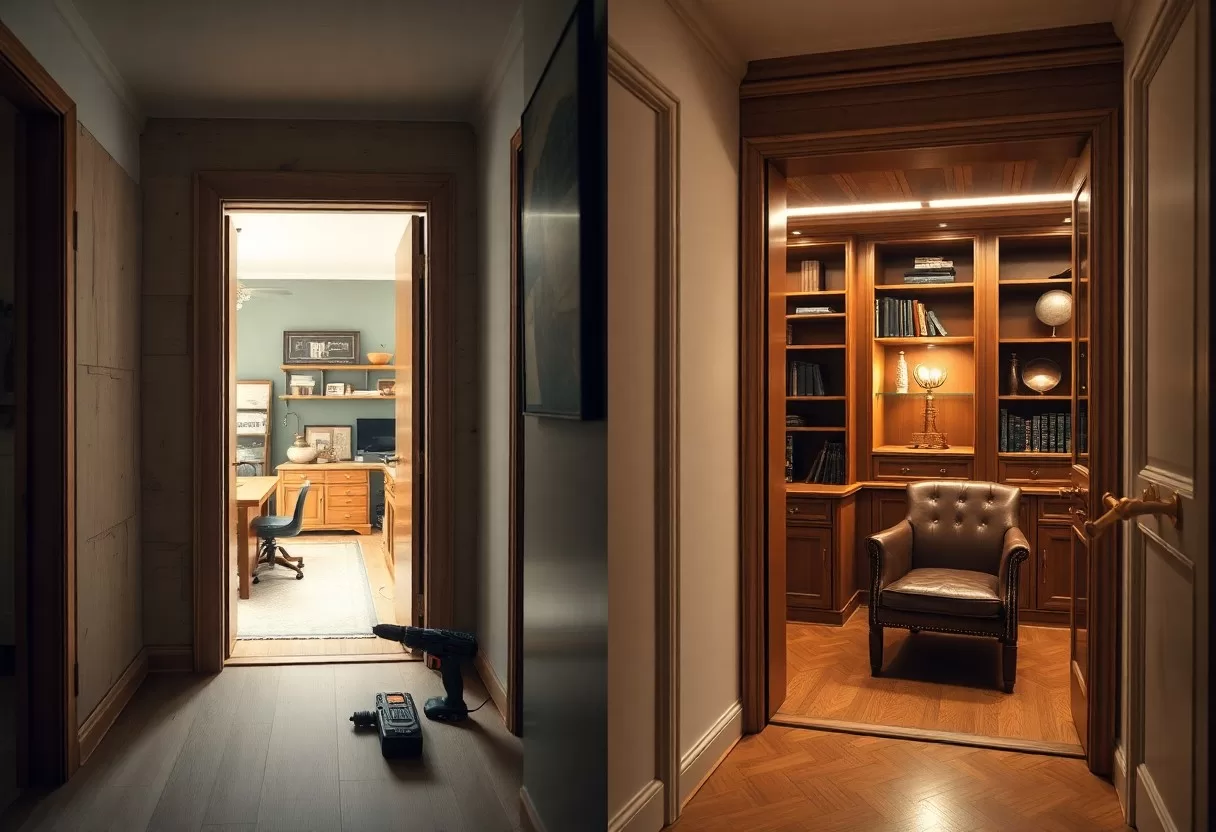
DIY vs. Professional Installation
When weighing DIY against hiring a pro, you should match the project’s complexity to your skills: simple hidden panels or bookcase doors can be a weekend build, but projects involving load-bearing walls, plumbing, or electrical integration demand a contractor. For inspiration and to set expectations, see Having a secret door is the dream for anyone wanting to … and plan for permits, tools, and potential structural reinforcement.
Pros and Cons of Each Approach
You’ll save money and gain customization with DIY, but accept longer timelines and higher risk; professionals offer speed, code compliance and warranties, yet cost more-expect trade-offs in control, insurance, and final finish.
Pros vs Cons of DIY and Professional
| DIY | Professional |
|---|---|
| Lower materials-only cost | Higher upfront cost (labor + materials) |
| Full creative control | Less hands-on control, professional guidance |
| Slower completion time | Faster turnaround with crew |
| Risk of code violations | Code compliance and permits handled |
| No warranty on workmanship | Warranty and liability coverage |
| Requires tools and skill-building | Access to specialized tools and trades |
Cost Considerations
You should budget realistically: a basic hidden bookcase can run $200-$2,000 DIY, while professionally installed pivot or motorized doors typically cost $1,500-$15,000+. Factor in permits ($50-$500), reinforcement, and any finish carpentry-unexpected structural fixes can quickly double estimates.
For deeper context, a 6×8 concealed studio conversion often lands between $5,000-$12,000 installed, while a reinforced panic room or high-end motorized mechanism can exceed $20,000. Plan for professional labor rates of roughly $50-$150/hr and get at least three quotes to compare scope, timelines, and warranty terms.

Stories Behind Hidden Spaces
Across old estates and modern renovations, hidden rooms reveal their owners’ priorities: a 1920s speakeasy repurposed as a tasting nook, a wartime refuge converted into a 6×8 storage niche, and a contemporary loft hiding a 5’x7′ server closet behind art. You can read choices-materials, access mechanisms, and finishes-as a timeline of need versus whimsy, where privacy, utility, and style intersect to tell each space’s story.
Inspirational Real-Life Examples
In one Seattle renovation a 5’x7′ under-stair became a climate-controlled wine cellar holding ~200 bottles; a London townhouse preserves a hidden servant stair connecting three floors; a Texas home integrated an 8’x10′ reinforced safe room with alarm and CCTV. These examples show you how scale, history, and technology determine whether a hidden space is playful, functional, or protective.
The Role of Imagination
Your imagination converts leftover cavities into purpose-driven delights-a kids’ fort, a private office, or a concealed workshop. Designers often start with quick mockups or 3D renders so you can test access, sightlines, and ergonomics before committing to framing or finishes, guiding whether mechanisms stay simple or become elaborate.
When you lean into imaginative solutions, combine creative form with engineered systems: a rotating bookcase on a hidden bearing, a counterweighted sliding wall on sealed tracks, or a pneumatic latch triggered by a hidden switch. Pair those with access tech-RFID, keypad, or biometric readers-for reliability. Never overlook fire egress, ventilation, and electrical safety; an unventilated or inaccessible hidden room is a hazard. Cost varies: a DIY bookcase door can be under $1,000, while professionally reinforced safe rooms with integrated electronics frequently exceed $10,000. Prototype cheaply, verify load paths with a structural pro, and check local code before final construction.
Real-Life Examples and Inspirations
Explore concrete projects that translate ideas into reality: you can see clever solutions and measurements in the 7 Awesome Hidden Door Ideas for Your Home in 2025, which includes examples ranging from a 3’x6′ concealed pantry to a full-height bookcase pivot supporting >300 lb. Pay attention to egress and fire-code impacts when adapting these concepts to your floor plan.
Notable Homes with Secret Features
Historic properties often hide surprises: the Winchester Mystery House boasts roughly 160 rooms and maze-like passages that inspire playful complexity, while several mid-century estates include retrofitted speakeasy-style basements and hidden staircases. If you pursue a renovation in a historic district, you should factor in preservation rules and permit requirements, since altering load-bearing walls or facades can trigger costly reviews and structural reinforcement.
Modern Innovations in Hidden Design
Technical advances let you blend stealth with functionality: you can install RFID or biometric access, motorized pivots with soft-start controllers, and maglocks rated between 600-1,200 lb holding force for added security. Manufacturers now offer compact actuators for doors up to ~1,000 lb, and discreet sensors prevent accidental entrapment, so you get both seamless aesthetics and robust performance.
For implementation you should budget realistically: simple concealed-bookcase hardware runs roughly $300-$1,200, while fully motorized, integrated systems commonly fall between $2,000-$15,000 depending on finish and automation. Integrate with Z-Wave, Zigbee or Matter-based hubs for remote control, include battery backup and fail-safe modes, and hire an installer familiar with local code to avoid structural or safety pitfalls.
To wrap up
The addition of secret doors and hidden rooms elevates your home design by blending functionality with playful surprise; when planned thoughtfully they enhance privacy, value, and storytelling. You can collaborate with designers and builders to integrate them seamlessly, matching architecture and budget while ensuring safety and durability, creating enduring delight for guests and your family.
To wrap up
So you can use secret doors and hidden rooms to inject whimsy and practical value into your home, creating playful escapes, clever storage, and enhanced privacy without sacrificing design integrity. When planned with clear purpose and proper engineering, these features raise your property’s character and versatility, letting you tailor surprises to your lifestyle while maintaining safety, accessibility, and resale appeal.
FAQ
Q: How can I integrate a secret door or hidden room into my home’s design without making it obvious?
A: Blend materials, lines, and hardware so the concealed element reads as part of the original architecture. Use continuous moldings, matching paneling or bookcases, or floor-to-ceiling cabinetry to disguise seams. Conceal hinges with piano hinges or concealed pivot systems and opt for magnetic or touch-release latches instead of visible handles. Keep proportions consistent with surrounding openings and avoid overly deep reveals that cast telltale shadows; subtle shadow gaps can help disguise edges. For high-traffic areas, design the reveal to align with furniture placement or traffic flow so the door remains functionally integrated rather than feeling like an add-on.
Q: What building, safety, and security issues should I consider before adding a secret door or hidden room?
A: Verify structural implications and local codes before altering walls or load-bearing elements; a structural engineer or qualified contractor can assess required headers and bracing. Address egress and fire safety-hidden rooms must have safe escape routes or approved alternative egress, and smoke detectors should be installed as required. Plan for ventilation, lighting, and electrical work to meet code and avoid moisture problems. For security, choose reliable locking mechanisms and consider fail-safe options (hidden release, keypad with backup power, or manual override) to prevent accidental entrapment. If minors will use the space, add internal release hardware and other child-safety measures.
Q: What are typical cost ranges and installation choices, and when is DIY appropriate versus hiring a professional?
A: Costs vary widely: a simple hidden bookcase door using off-the-shelf hardware can run a few hundred to a few thousand dollars for materials and basic labor, while custom concealed wall systems, structural modifications, integrated electronics, or fully finished hidden rooms often range from several thousand to tens of thousands. DIY is reasonable for non-structural projects if you have carpentry skills and can install hinges, joinery, and hardware accurately; however, hire a pro for structural alterations, electrical or HVAC work, complex concealment mechanisms, or when permits are required. Professionals bring precision on alignment, weathering and settling allowances, and integration of safety features; plan for additional lead time for custom finishes and testing of locking/release systems. Include a maintenance plan for hinges, seals, and mechanical/electronic components to keep the feature functioning and safe over time.