
Sculptural Staircases – Turning Steps into Show‑Stopping Features
Sculptural staircases transform circulation into a centerpiece, but when you design one you must balance artistry with structural safety and strict code compliance. You can exploit glass, steel and timber to craft sweeping forms that deliver a show‑stopping visual impact, while careful engineering, lighting and finish selections ensure longevity, accessibility and everyday practicality for your home or project.
Key Takeaways:
- Treat the staircase as a focal sculpture-prioritize bold forms, tactile materials, and seamless integration with the surrounding architecture.
- Balance artistic expression with structural safety and code compliance by collaborating with engineers and fabricators early in the design process.
- Use lighting, finishes, and circulation planning to amplify drama and guide movement, making each step part of the overall spatial experience.
The Art of Sculptural Staircase Design
You refine proportion, light and structure to make stairs do more than link floors; you balance practical dimensions-riser heights of 150-200 mm (6-8 in) and tread depths of 250-300 mm (10-12 in)-with aesthetic moves like cantilevers, spirals and negative space. Materials and lighting drive perception, while local codes and load criteria force technical solutions that become design opportunities, turning a structural necessity into a focal, site‑specific sculpture.
Historical Context
You trace sculptural stairs from medieval spiral keeps-where tight, clockwise winding constrained attackers-to Renaissance grand stair halls that emphasized procession. Then the 19th century brought cast iron from foundries that made ornate balusters and repeatable patterns affordable, enabling Victorian staircases with elaborate filigree. These shifts show how advances in material technology and manufacturing repeatedly expanded your formal palette and construction methods.
Modern Innovations
You now have parametric modeling, CNC fabrication and engineered materials at hand: glass, laminated veneer lumber (LVL), glulam and 3D‑printed metal let you pursue daring spans and thin profiles. Digital tools let you iterate geometry and performance quickly, and studies show topology optimization can reduce material by up to 30%, turning efficiency into expressive, lightweight forms while meeting performance targets.
You should integrate structural analysis (Karamba3D, FEA) early so connections, deflection and live‑load criteria-public areas often require ~4-5 kN/m², while residential loads are around 1.5-2 kN/m²-inform the aesthetic. CNC-cut ribs and precision welding let a single steel spine or LVL stringer achieve clear widths of 900-1,200 mm with minimal visual clutter, and layered glass or laminated treads provide the redundancy and toughness needed for public confidence and durability.
Materials and Techniques
You choose materials and methods that make form and function inseparable: mix heavy, load-bearing elements with delicate finishes, plan for a riser of 150-180 mm and tread of 250-300 mm, and specify finishes for wear and touch. Structural integrity governs aesthetic freedom, so you coordinate finishes, connections, and service penetrations early to avoid costly rework.
Traditional vs. Contemporary Materials
You weigh hardwoods, stone and cast iron-think solid oak treads 40-60 mm thick or granite slabs for thermal mass-against modern options like stainless steel, glass and engineered timber. Contemporary choices let you achieve cantilevers and transparency: 10-15 mm tempered or laminated glass balustrades and 8-12 mm steel plate stringers enable slimmer profiles while meeting performance needs.
Construction Methods and Challenges
You manage a mix of prefabrication and on-site assembly, with many designs requiring 1-3 mm alignment tolerances and anchors sized for 3-5 kN/m² live loads. Welding, bolting and resin anchors each introduce coordination demands; poor anchorage or overlooked tolerances increase the risk of deflection and fall hazards.
You specify bolted flanges or concealed resin anchors depending on access, and choose stainless grades (304 for interiors, 316 for corrosive environments). Mock-ups and load testing-often to 1.5× design load-verify connections. For glass elements use laminated assemblies with a 0.76-1.52 mm interlayer; for exposed steel insist on proper galvanizing or powder coating to prevent corrosion and maintain finish longevity.
Iconic Sculptural Staircases Around the World
Architectural Marvels
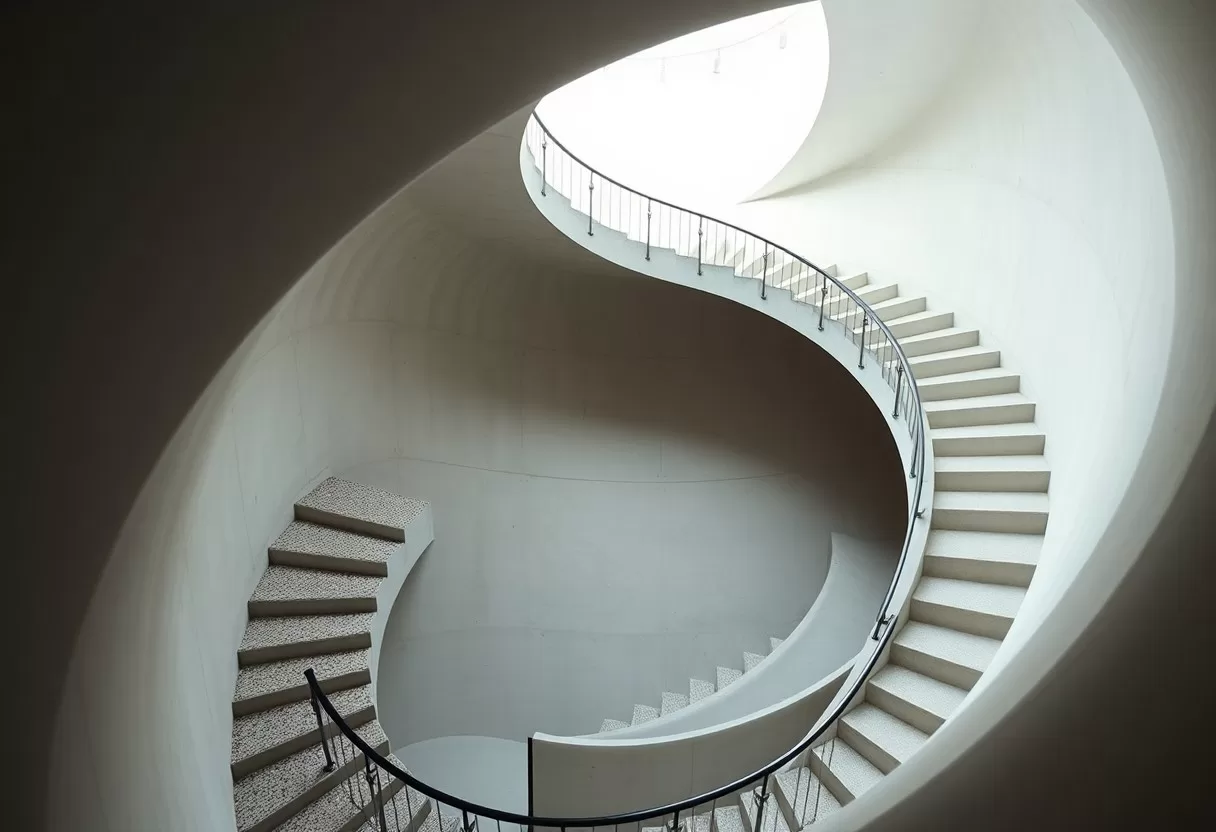
From the double-helix at Château de Chambord-often attributed to Leonardo da Vinci-to Frank Lloyd Wright’s Guggenheim with its continuous ramp gallery, you encounter staircases that define buildings. Rome’s Spanish Steps span 135 steps linking piazzas, while the Loretto Chapel’s helix of 33 steps appears to defy support. Contemporary pieces like Thomas Heatherwick’s Vessel boast 154 flights and 2,500 steps across 80 landings, but also raised safety concerns that changed public access.
Notable Designers and Their Works
You can trace bold stair innovations to figures like Frank Lloyd Wright (Guggenheim’s ramp), Thomas Heatherwick (Vessel’s interlocking flights), Antoni Gaudí (organic stairs at Casa Batlló and La Pedrera), Santiago Calatrava (expressive, skeletal stair structures), and Zaha Hadid (fluid, parametric stair planes), each marrying form and function to produce high-impact focal elements.
Wright’s Guggenheim, opened in 1959, uses a spiralling ramp rising through a skylit rotunda to guide circulation across galleries; Heatherwick’s Vessel (completed 2019) was engineered as a climbable sculpture but suffered from public-access restrictions after multiple suicides. Gaudí exploited lightwells and carved wood to create intimate, sinuous stairs around 1904-1906. Calatrava often exposes structural ribs and cantilevered treads to dramatize load paths, while Hadid’s MAXXI and similar projects use sweeping ramps and stair planes to blur floor transitions, giving you both movement and monumentality.
Integrating Staircases into Interior Spaces
Position sculptural stairs to orchestrate movement and light: place them where sightlines align with major living zones and natural daylight, and use them to frame views or conceal storage. You should size treads and risers to comfortable standards (150-180mm risers, 250-300mm treads) and consider integrated lighting for safety and drama; see how designers are pushing form and function in this piece This new design trend for stellar staircases is so beautiful.
Spatial Considerations
Account for circulation, furniture layouts and vertical clearances by planning stair placement early: maintain minimum headroom of about 2m, allow a comfortable width of 900-1200mm depending on traffic, and stack services or stair cores to simplify structural runs. You can reclaim floor area by using open treads or alternating tread designs in tight plans, but ensure landing depth and turning radii meet local code for safe use.
Aesthetic and Functional Elements
Pair material choices with performance: choose hardwoods, metal or stone based on wear and acoustics, specify 10-12mm toughened glass for transparent balustrades, and add slip-resistant finishes or contrast nosings for visibility. You should integrate continuous handrails at 900-1000mm height and conceal structural supports when aiming for a floating effect.
For example, a cantilevered oak stair with a hidden steel stringer and glass balustrade can open a compact plan while keeping structural depth to a minimum; using LED strips recessed into the nosing at 300-400 lux on the tread edge improves perception of depth at night. You may also specify acoustic underlay beneath timber treads to cut impact noise by up to 15-20dB, balancing the visual lightness with functional comfort. Strong coordination with the structural engineer and MEP disciplines will prevent clashes and ensure the staircase performs as the sculptural centerpiece you intended.
The Impact of Sculptural Staircases on Property Value
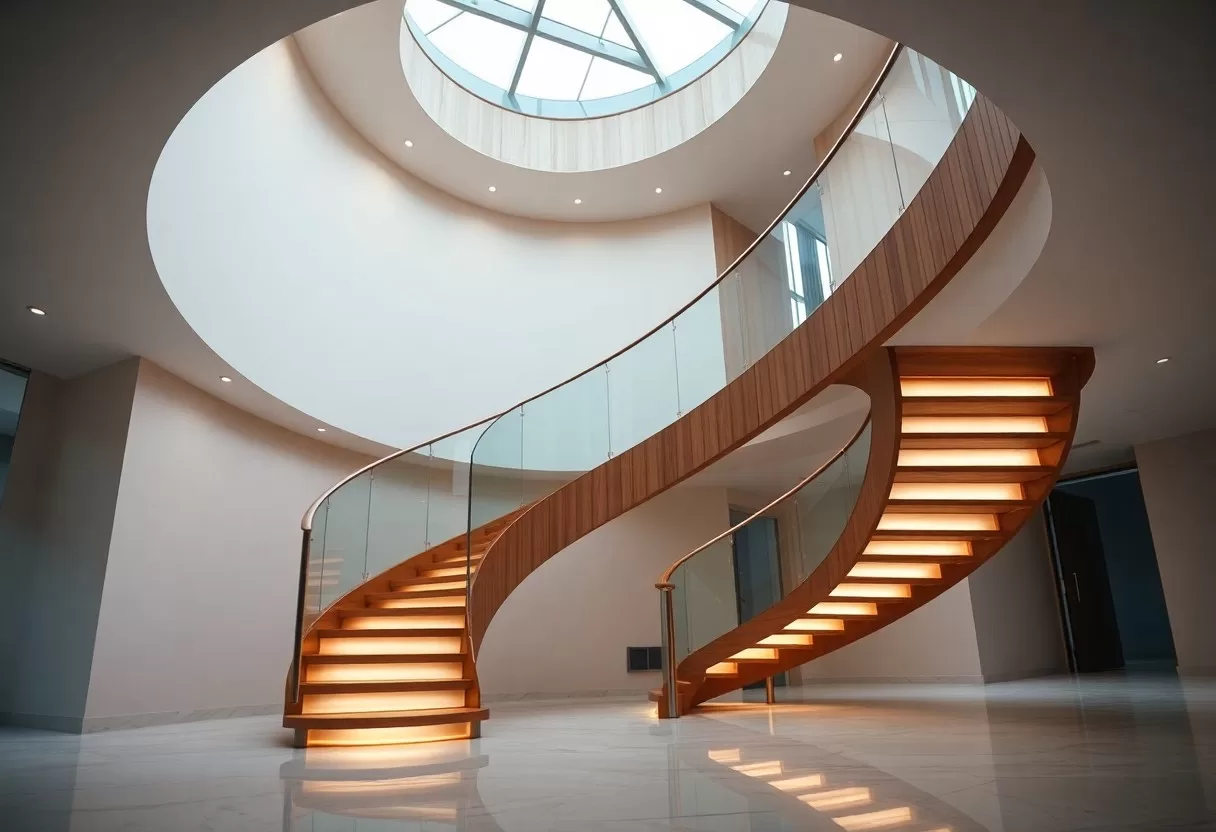
You’ll find that a well‑executed sculptural staircase often becomes a home’s defining feature, attracting buyers and press-see the 17 Stunning Staircases Around the World slideshow for market examples. In luxury listings this can translate into higher offers and faster sales; local agents commonly report a 1-3% value uplift on comparable properties. However, poor design or code issues can create safety liabilities and added renovation costs, so balance showmanship with functionality.
Investment Potential
You may invest $20,000-$150,000 in a bespoke sculptural staircase depending on materials and engineering; in high‑end markets that often pays off through stronger buyer interest and better photo‑ready listings. Agents report faster closings and offers that offset part of the cost, but plan for maintenance and insurance impacts-budget ongoing upkeep into your ROI calculations.
Market Trends
Design momentum favors minimal, sculptural profiles-floating treads, cantilevered forms and mixed metal‑wood assemblies-to capture buyer attention. You’ll see these in luxury resale and new‑build listings, and they photograph well for online marketing. Manufacturers now offer integrated LED and smart‑rail systems that enhance evening appeal; visual impact often drives listing views and initial offers.
In urban condos space‑saving spirals and glass balustrades dominate, while suburban and heritage markets prefer statement wood or wrought‑iron features; you should match the staircase language to neighborhood expectations. Also factor in compliance: many jurisdictions set riser limits around 7.75 inches and minimum tread depths near 10 inches, which affects achievable aesthetics and resale.
Maintenance and Care for Sculptural Staircases
Routine Maintenance Tips
To preserve sculptural stairs, perform monthly dusting and wipe‑downs using pH‑neutral cleaners for wood, glass and metal, schedule quarterly inspections for connections and finishes, and arrange an annual professional structural review. Watch for loose handrails and slippery finishes, which pose the greatest safety risk, and favor durable stainless steel or sealed wood in high‑traffic zones. The recommended cadence is monthly cleaning, quarterly checks and an annual professional assessment.
- Cleaning
- Inspections
- Fasteners
- Finishes
- Anti‑slip
Addressing Common Issues
Typical faults you’ll encounter are squeaks from settling treads, loose balusters, abrasion on nosing edges, glass chips and surface corrosion on metalwork. You can often silence squeaks by retorquing fasteners or injecting adhesive into gaps, remove light rust with a wire brush and primer, and repair minor glass chips with specialist resin; however, any persistent movement at connections signals a deeper problem. When structural welds or load paths show distress, stop using the staircase and engage a professional.
If issues recur, document their frequency and photograph defects before repairs. Tighten or replace worn fasteners to manufacturer torque where available (typical household bolts run roughly 15-40 Nm), refinish wood with penetrating oils every 1-3 years depending on traffic, and apply textured polyurethane or certified anti‑slip tape to reduce slips. Replace metal components showing >10% section loss and use marine‑grade 316 stainless steel outdoors. For deflection beyond L/360, visible weld cracks, or any sign of structural compromise, stop use and hire a structural engineer and experienced fabricator; minor repairs often run under $500, while structural welding can range from $1,000-$5,000.
Summing up
Hence you should view sculptural staircases as design statements that combine structure, materiality and flow to elevate your space; by prioritizing proportion, lighting, and craftsmanship you create functional art that anchors circulation, reflects your aesthetic and adds lasting value, whether through daring curves, bespoke balustrades or integrated lighting, ensuring your staircase becomes an unmistakable focal point rather than a mere connector.
FAQ
Q: How can a sculptural staircase transform a space and what design principles guide a successful installation?
A: Sculptural staircases act as architectural focal points that define circulation, sightlines and the overall character of an interior. Key design principles include scale and proportion relative to the room, clear circulation paths, coherence with the building’s style and material palette, and a balance between visual drama and everyday usability. Consider how light-both natural and integrated lighting-enhances form and shadow, and plan sightlines so the staircase reads well from primary viewpoints. Early collaboration between architect, interior designer and structural engineer ensures the design is buildable and performs well under anticipated loads.
Q: What materials and structural systems are commonly used, and how is safety maintained without sacrificing aesthetics?
A: Common materials include steel (for slim, strong frames), engineered timber (for warmth and sculptural treads), stone or cast concrete (for monolithic presence), and glass (for transparency). Structural systems range from central spines and helical cores to cantilevered treads anchored into loadbearing walls or concealed frames. Safety is addressed through engineering calculations for live and dead loads, proper connections, compliance with local building codes, appropriate balustrade heights, and slip-resistant finishes on treads. Integrating handrails, guardrails, and fire-performance requirements from the outset lets the staircase retain its sculptural quality while meeting regulatory and practical safety needs.
Q: What should clients expect in terms of cost, timeline and maintenance for a sculptural staircase project?
A: Budget and schedule vary widely based on scale, complexity, materials and site conditions: a relatively simple floating timber stair might fit a modest residential budget, while a custom helical steel-and-glass installation can be a significant investment running into tens or hundreds of thousands. Fabrication method (fully prefabricated vs. in-situ construction), bespoke metalwork or stone carving, engineering and permit approvals, and difficult access for installation all extend timelines and increase cost. Factor ongoing maintenance-finishes that resist wear, accessible lighting and easy-to-clean balustrades-into long-term operating costs. Obtain multiple quotes, request detailed scope and lead-time estimates, and build contingency for unforeseen structural work discovered during demolition or installation.