
Rain Gardens 101 – Turning Stormwater Into a Lush, Eco‑Friendly Landscape
Most homeowners find that a well-designed rain garden lets you capture and filter stormwater to reduce runoff and lower flood and pollution risks, while transforming low-lying areas into a vibrant, low-maintenance habitat. You’ll learn siting, soil amendments, plant selection, and maintenance strategies so your landscape handles heavy storms, supports pollinators, and protects nearby waterways.
Key Takeaways:
- Capture and filter stormwater on-site: a right-sized rain garden reduces runoff, prevents erosion, and helps recharge groundwater.
- Design for drainage and overflow: amended soil, proper slope, and a designated outlet keep ponding temporary (typically 24-48 hours).
- Choose native, moisture-tolerant plants and plan initial maintenance: establish with deep watering, then provide occasional weeding and seasonal cleanup to sustain function and biodiversity.
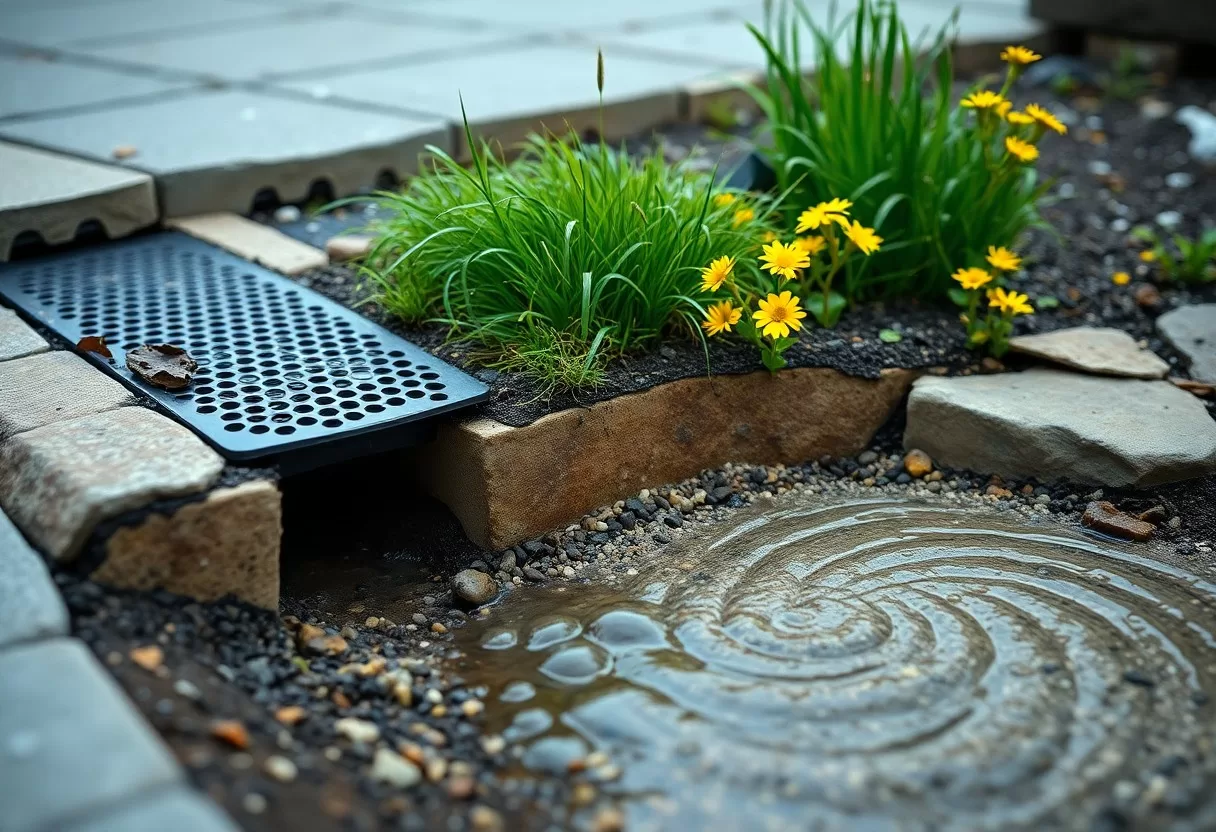
Understanding Stormwater
As impervious surfaces expand, your roof, driveway, and street send water downhill faster, boosting peak flows and carrying oil, heavy metals, and sediment into waterways. In developed watersheds runoff volumes often rise 2-6 times versus forested conditions, so treating water where it falls with rain gardens and other measures cuts erosion and improves local water quality.
What is Stormwater?
Stormwater is rainfall that doesn’t infiltrate and becomes runoff; one inch on 1,000 sq ft produces about 623 gallons, enough to overwhelm gutters and sewers. It scoops up contaminants-petroleum, fertilizers, microplastics-so you must manage both volume and pollutant loads at the source to protect streams and groundwater.
The Impact of Stormwater on the Environment
When untreated runoff reaches streams it raises temperature, increases turbidity, and delivers nutrients that spur algal blooms; urban runoff is a leading cause of local water impairment. You can see consequences downstream as coastal dead zones where excess nitrogen reduces oxygen, killing fish and curtailing recreation.
Combined sewer overflows and direct stormwater discharges can release billions of gallons of untreated water annually in many U.S. cities, transporting pathogens that trigger beach closures and metals that settle in sediments. You can look to programs in Philadelphia and Portland where rain gardens, bioswales, and permeable pavement treat runoff on-site, lower peak flows, and deliver measurable water-quality benefits.
What is a Rain Garden?
Typically designed to pond 4-8 inches, a rain garden uses native plants and engineered soil to intercept runoff from your roof or driveway. You size it at roughly 10-30% of the impervious area draining to it, and a 1,000 sq ft roof produces about 623 gallons per 1 inch of rain, so plan capacity and an overflow to a safe outlet. Vegetation and soil then slow, infiltrate, and filter stormwater.
Design Principles of Rain Gardens
Siting matters: place the basin at least 10 ft from foundations and away from utilities, positioning it downslope of downspouts or driveways. You should perform a percolation test (target infiltration >0.5 in/hr) before final design. Use an engineered soil mix (example ratio: 50% sand, 30% topsoil, 20% compost), provide 6-12 inches of planting/media depth, apply 2-3 inches of mulch, and include a rock-lined inlet plus an emergency overflow.
Benefits of Rain Gardens
You gain flood mitigation, pollutant capture, and habitat in a compact feature: well-sized rain gardens can reduce runoff by 30-60% and remove sediments, nitrogen, and phosphorus before water reaches streams. They also extend the bloom season for pollinators, reduce erosion on slopes, and lower peak flows during storms. Performance depends on soil, sizing, and plant choices, so match species to local climate and moisture regimes.
For example, a 100 sq ft garden with 6-inch ponding holds roughly 374 gallons, enough to absorb a heavy downpour from a small roof, while a 200 sq ft basin roughly doubles that capacity. Typical DIY installs run about $500-$3,000, and professional projects often fall between $3,000-$15,000 depending on complexity. Maintain by replacing mulch annually, removing invasives, and checking outlets after storms to prevent unintended overflow toward structures.
Plant Selection for Rain Gardens
Plant selection determines whether your garden soaks up runoff or just looks nice. Select species that tolerate both inundation and drought: most rain garden benches are planted in media 6-18 inches deep to handle short‑term ponding. Use deep‑rooted native perennials to stabilize soil and filter pollutants, and avoid invasive species that spread. For local incentives see Rain Gardens & Rebate Program.
Native Plants vs. Non-Native Plants
You’ll find native species like Carex sedges, Eriogonum, and Asclepias often outperform exotics in rain gardens: they support pollinators-commonly 30-60% more native insects-develop deeper roots for better infiltration, and can cut irrigation needs by roughly 30-50%. Non‑natives may establish quickly but risk becoming invasive or demanding ongoing maintenance; use regional native lists when choosing your palette.
Choosing Plants for Different Conditions
Match plants to micro‑zones: splash edges need drought‑tolerant species, shallow marshes handle brief ponding, and basins require flood‑tolerant plants. For example, pickerelweed thrives at about 6-12 inches of standing water, while sedges and rushes fit seasonally wet spots and yarrow suits drier berms. Always match a plant’s flood tolerance to your garden’s ponding depth to avoid plant loss.
Assess sun exposure and infiltration rates before planting: if infiltration is <0.5 in/hr expect longer ponding and choose Iris versicolor or Juncus effusus; if >2 in/hr you can include upland forbs like Echinacea and Rudbeckia. In full shade use woodland natives (Carex pensylvanica, Heuchera); in full sun favor prairie grasses and sun‑loving forbs. Plant in clusters of 3-7 for quicker establishment and simpler maintenance.
Site Preparation and Installation
Before you break ground, verify downspout flow and perform an infiltration test; a healthy rain garden typically holds 4-12 inches of ponding and needs soil that drains at roughly 0.5-1.5 in/hr. You can follow design examples in Rain Gardens – Managing Water Sustainability in The … to size cells, select plants, and estimate excavation volumes for your lot.
Site Prep Checklist
| Task | Detail |
| Downspout routing | Direct runoff to garden; use splash blocks or conduit for first 10 ft |
| Infiltration test | Dig 6-inch hole, fill with water; acceptable if empties within 24 hours |
| Utilities | Call locates before digging; avoid buried lines |
| Setbacks | Keep ≥10 ft from foundations and ≥5 ft from septic systems |
Assessing the Location
First, identify the contributing drainage area and any impermeable surfaces; you want the garden downhill of roofs or pavement but not in a natural floodplain. Test soils by digging a 6-inch test pit-if the water level drops within 24 hours the site is likely suitable. Also check slope: gentle grades (12%) simplify excavation and reduce erosion, while utilities and septic setbacks determine final placement.
Step-by-Step Installation Guide
Mark the outline, excavate to a depth of 8-18 inches depending on soil, then amend heavy clays with coarse sand and compost to improve infiltration. Shape gentle 3:1 side slopes, form a shallow berm at the outlet, add 2-3 inches of mulch, and plant with natives spaced per species; include an overflow route sized for a 1-1.5 inch storm event.
When you dig, keep soil piles compact for backfill and test infiltration mid-project; if percolation is 0.25 in/hr, install a perforated underdrain wrapped in fabric and gravel, and size the gravel layer to 6-12 inches to prevent clogging and speed drainage.
Installation Steps & Tips
| Step | Tip |
| Excavate | Remove soil to target depth; compact berm material separately |
| Soil amendment | Mix sand and compost into native clay to reach desired infiltration |
| Underdrain | Install if infiltration is slow; use perforated pipe in 6-12 in gravel |
| Planting & mulch | Use native sedges and forbs; apply 2-3 in shredded hardwood mulch |
Maintenance of Rain Gardens
Seasonal Care Tips
In spring, clear debris and check that the inlet and outlet are free of sediment; apply 2-3 inches of mulch and divide perennials every 3-5 years to maintain vigor. During summer, water only during extended drought (about 1 inch/week) and spot-weed before seed set. In fall, leave seedheads for birds; in winter, avoid compacting soil by keeping traffic off the basin. Assume that you inspect after heavy storms and remove any new silt to keep flow paths open.
- Spring: clear debris, check inlet/outlet
- Summer: supplemental water only in drought, pinch back aggressive growers
- Fall: cut back some stems, leave bird-friendly seedheads
- Winter: avoid compaction, remove snow piles that contain road salt
Troubleshooting Common Issues
If you notice standing water longer than 48 hours after a storm, your rain garden may be clogged or undersized; dig out 2-3 inches of compacted sediment, check inflow/outflow, and do a 1-foot infiltration test – it should drain within 24 hours under normal conditions. If you see erosion at the edges, add a rock apron or extend the swale, and control invasives by removing before seed set to prevent recolonization.
Begin troubleshooting by walking a storm event: map where water pools and trace the flow to the outlet, noting any blocked pipes or flattened berms. For heavy clay sites that pond for 48-72 hours, consider excavating 8-12 inches and amending with coarse sand and compost or installing an underdrain. Increasing planting density with deep-rooted natives often improves infiltration within 1-3 growing seasons, while targeted repairs (rock aprons, repaired inlets) stop ongoing erosion.
Case Studies: Successful Rain Gardens
Real projects demonstrate how a well-sized rain garden slashes stormwater runoff, supports native plants, and reduces pollutant loads. In many urban retrofits you’ll see 60-90% reductions in peak runoff and measurable drops in nitrogen and phosphorus. Several case studies combine low-cost materials with 2-5 hours/year maintenance to deliver lasting benefits and reduce flooding risk.
- Residential retrofit – Portland, OR: You’d find a 250 sq ft rain garden capturing ~1,200 gallons from a 1″ event, cutting household roof/driveway runoff by ~80%, installed for ~$1,800 (plants + soils), with 12 native plants and ~3 hrs/year maintenance (installed 2018).
- Schoolyard demonstration – Chicago, IL: A 1,200 sq ft campus garden treats ~6,000 gallons per moderate storm, reduced total suspended solids by ~70%, cost $25,000 supported by a state grant, and engaged 150 student volunteer hours (monitoring since 2016).
- Commercial retrofit – Philadelphia, PA: A 3,000 sq ft bioswale/rain garden treating 0.25 acre impervious area achieved ~90% peak runoff reduction for a 2″ storm, removed ~50% of dissolved nitrogen, installed at ~$45,000 with 10 hrs/yr upkeep.
- Municipal corridor project – Seattle, WA: Series of rain gardens totaling 10,000 sq ft treated runoff from ~5 acres, cut combined-sewer overflows (CSOs) from ~15 events/year down to ~5, used 40 native species, cost ~$400,000, and showed ~85% event-based runoff reductions in monitoring data.
- Neighborhood network – Minneapolis, MN: Three adjacent gardens (total 1,800 sq ft) capture stormwater from 1.2 acres, lowered localized street ponding by >70%, project cost $60,000 with half covered by community grants and 30% of labor from volunteers.
Residential Examples
On a typical property you can install a 200-400 sq ft rain garden to capture 1,000-3,000 gallons from a 1″ storm, cutting roof and driveway runoff by 60-85%. Expect installation costs of $1,500-$5,000, plant mixes of 8-15 native plants, and about 3-4 hours annual upkeep to maintain peak performance.
Community Projects
Neighborhood and park projects often scale to treat entire blocks; networks of interconnected rain gardens can reduce local combined-sewer overflows (CSOs) by 30-70% and manage runoff from 0.5-5 acres per site. Typical budgets run $10,000-$300,000 depending on scope, and volunteer labor commonly supplies 20-50% of installation hours.
When you organize a community project plan for permitting, stewardship agreements, and measurable monitoring: include pre/post sampling for TSS and nutrients, track retention volume (gallons) and peak flow reduction (%), schedule monthly checks in year one, and assign clear maintenance roles so the project sustains the initial pollution reduction and flooding benefits long-term.
Final Words
With these considerations, you can design and maintain a rain garden that efficiently captures stormwater, supports native biodiversity, and enhances your landscape’s resilience; plan sizing and soil amendments carefully, select appropriate plants, and perform seasonal maintenance to ensure long-term performance and aesthetic value, turning runoff into a sustainable, attractive asset for your property.
FAQ
Q: How do I design and size a rain garden for my property?
A: Start by mapping rooflines and other impervious surfaces that drain to one outlet; place the garden at least 10-20 feet from building foundations and above septic systems or utilities. Perform a percolation test: dig a 12″ deep, 6-12″ wide hole, fill it with water, and measure how much it drops in 24 hours – an infiltration rate above ~0.5 in/hr is ideal; slower sites need a larger footprint or an underdrain. For sizing, a common guideline is to make the rain garden 10-20% of the contributing impermeable area to capture a 1″ storm, with ponding depth typically 4-8 inches (deeper for clay soils up to 12 inches). Shape the basin to collect runoff, build a compacted berm on the lower side with a defined overflow to safely route excess water, and keep slopes gentle (under 6%) for stability.
Q: What plants and soil mix work best in a rain garden?
A: Use native species tolerant of alternating wet and dry conditions – sedges (Carex spp.), switchgrass (Panicum virgatum), blue flag iris (Iris versicolor), cardinal flower (Lobelia cardinalis), Joe-Pye weed (Eutrochium), black-eyed Susan (Rudbeckia), and shrubs like red-osier dogwood or buttonbush are good examples. For the soil mix, aim for high permeability: a blend of roughly 50-60% coarse sand, 20-30% topsoil, and 10-20% compost works well in many regions; where sandy loam exists, amend with compost rather than importing sand. Apply 2-3 inches of shredded hardwood mulch to conserve moisture and reduce erosion, and plant in groupings by moisture tolerance (wetter species in the center, drier on the edges).
Q: How do I maintain a rain garden and prevent standing water or mosquito issues?
A: Maintenance is light after establishment but requires attention the first 1-3 years: water weekly during dry spells the first season, pull invasive weeds, remove accumulated sediment from inlets and the basin after big storms, and refresh mulch annually. To avoid mosquitoes, design for infiltration so water drains within 24-48 hours; eliminate low spots that hold permanent pools and ensure the overflow functions. Encourage predators (dragonflies, frogs) by planting diverse native species. For persistent stagnant water, inspect and repair compaction or clogged inlets; use biological larvicides (Bti) as a targeted short-term measure if needed. In late winter or early spring, cut back spent stalks if you prefer tidiness, or leave them through winter to provide habitat and erosion control until spring cleanup.