
Mixing Woods and Metals – Tips for Creating Depth and Authenticity
Mixing wood and metal finishes adds depth and warmth to a room, as long as there is a plan. Choosing a dominant wood tone, repeating each metal at least twice and balancing warm and cool finishes keeps the look intentional. Here is how to combine them with confidence.
Table of Contents
Key Takeaways:
- Pick one dominant wood tone and let metals play a supporting role.
- Mix smooth and rough textures to give the room visual depth.
- Match the undertones of your woods and metals so they read as one palette.
Understanding the Aesthetic of Mixing Woods and Metals
Wood and metal work well together because they contrast in almost every way. Wood brings grain, warmth and a soft, matte surface. Metals like brass, copper and steel bring shine, crisp edges and a slightly cooler feel. The trick is to give each material a clear job, so the room looks planned rather than collected by accident. For help pairing several wood species in one room, read How to Mix Wood Tones in Interior Design: Expert Tips ….
The Importance of Texture and Contrast
Texture and contrast are what keep a room from looking flat. Set the warm, organic grain of wood next to the smooth, cool surface of metal and your eye has something to move between. You can push this further by mixing finishes within each material, like a wire-brushed oak floor with a satin walnut table, or a hammered copper bowl beside brushed steel hardware.
Choosing Complementary Finishes
Start by matching undertones. Most woods lean warm (red, orange or yellow) or cool (gray or ash-toned). Metals do the same: brass, bronze and copper are warm, while chrome, nickel and stainless steel are cool. A rich walnut with brushed nickel can still work, but it reads best when the nickel shows up in a few places, so the contrast looks deliberate.
Warm woods such as oak and cherry sit comfortably with brass, bronze or gold-toned hardware. Cooler, paler woods like ash, birch or white oak with a gray wash pair well with stainless steel, chrome or nickel. Matte black is the easy exception, because it works with almost any wood. Before you commit, hold samples together in the room at different times of day, since morning and evening light can shift how a finish looks.
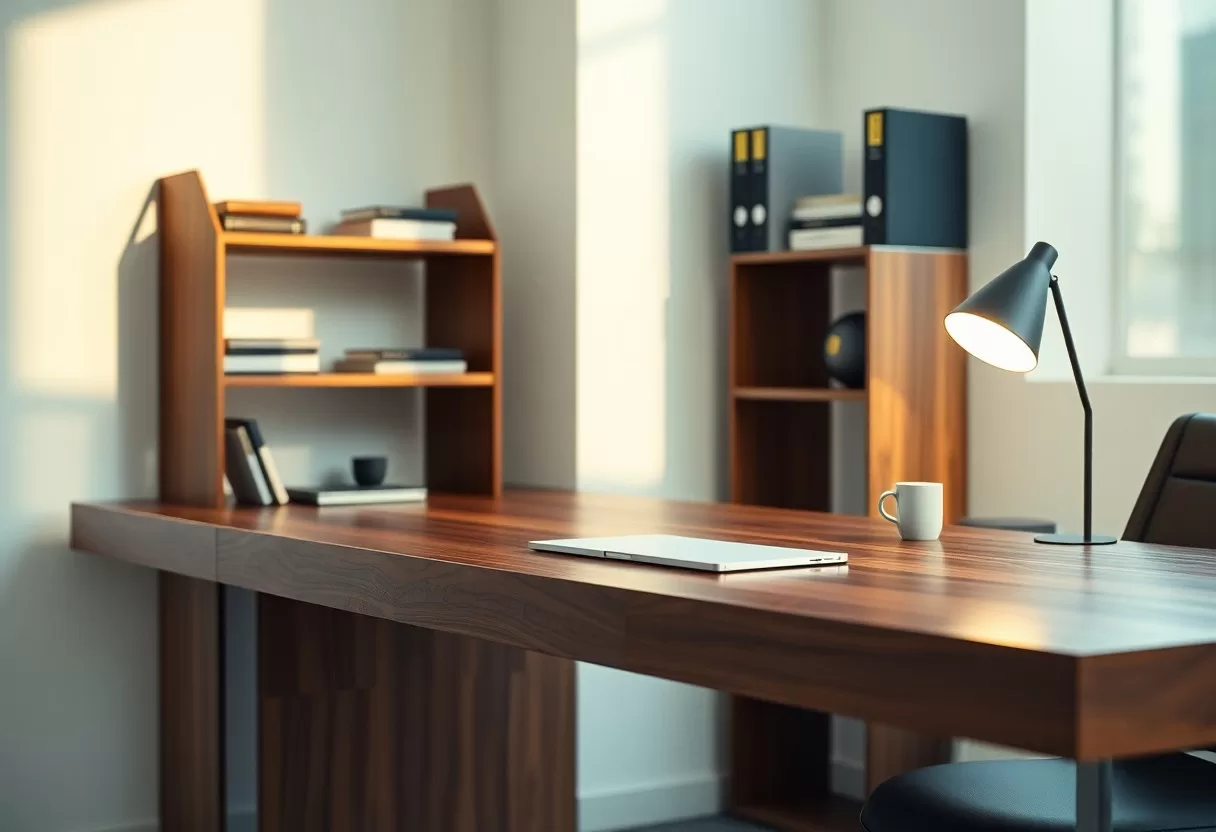
Types of Woods to Consider
Each wood species has its own grain, color and hardness, and that affects which metals look right beside it. Here are common options and what they are known for:
- Oak – durable and versatile
- Maple – light and takes stain well
- Walnut – rich color and grain
- Pine – affordable and lightweight
- Cedar – aromatic and resistant to decay
Any of these can pair with metal. Just limit yourself to two or three wood tones per room so the mix stays calm.
| Wood Type | Characteristics |
|---|---|
| Oak | Strong, water-resistant, ideal for furniture |
| Maple | Hard and dense, smooth surface |
| Walnut | Elegant, rich brown hues, often used in fine furniture |
| Pine | Flexible, easy to work with, common in casual decor |
| Cedar | Natural resistance to insects and decay, great outdoors |
Hardwoods vs. Softwoods
Your choice between hardwoods and softwoods affects both durability and looks. Hardwoods such as oak and maple come from broadleaf trees and are usually denser, so they handle daily wear on tables, floors and chairs. Softwoods like pine and cedar come from conifers. They are lighter and easier to cut, but they dent more easily. A dense hardwood suits a heavy steel base, while a softwood pairs nicely with light iron or black metal brackets.
Popular Choices and Their Characteristics
Popular woods each have a personality. Oak is tough and classic, with a strong grain that suits traditional and farmhouse rooms. Walnut has a deep brown color that looks polished in modern and mid-century spaces. Pine is affordable and has a relaxed, rustic look with visible knots. Cedar resists rot and insects naturally, which makes it a common pick for outdoor furniture and planters. Knowing these traits helps you match the wood to the job.
Oak and walnut also last a long time, so they are worth the extra cost on pieces you use every day. Their warmth works well with brass or blackened steel. Walnut with brushed metal gives a clean, modern look that won’t date quickly. Rustic pine with forged or wrought iron gives you a farmhouse feel. Pick the pairing that fits the style of the rest of the house, not just the one piece you are buying.
Metals in Design
Metal brings structure and a bit of polish to a room full of wood. It works as a contrast, adding shine, sharp lines and strength where wood alone might feel heavy. Finishes range from sleek polished chrome to aged, patinated brass, so there is a metal for almost any style. Try it in small doses first, like cabinet pulls, lamp bases or a picture frame, before you add larger pieces.
Common Metals Used in Furniture
Furniture most often uses steel, brass and aluminum. Steel is strong and makes thin, clean legs and frames possible. Brass is warmer in tone, and it develops a darker patina over time if it is left unlacquered. Aluminum is light and rust-resistant, which is why it shows up so often in outdoor chairs. Choose the metal by where the piece will live and how much weight it has to carry.
How to Select the Right Metal Finish
Pick a metal finish that fits both the look you want and how the piece will be used. In busy areas like kitchens and entryways, brushed or satin finishes hide scratches and fingerprints better than mirror-polished ones. Also think about light. Matte surfaces absorb it and feel soft, while polished metal reflects it and draws attention. One shiny focal point, like a pendant light, usually looks better than shine everywhere.
Maintenance matters too. Polished brass and copper tarnish unless they are lacquered, so they need regular polishing. Matte black and brushed nickel need little more than a wipe. Think about your household before you choose. A brass accent table adds warmth to a cozy living room if you don’t mind the patina, while a stainless steel frame suits a minimalist space and a busy family.
When you mix more than one metal in a room, keep it to two, or three at most. Let one lead and repeat it, then use the second for a few accents. Matte black is a safe second metal because it reads almost like a neutral.
Techniques for Combining Materials
Combining wood and metal well comes down to a few practical habits. Mix textures on purpose, such as smooth lacquered metal against open-grain oak. Use metal where it does real work, like brackets, table bases and shelf supports, so it looks structural instead of stuck on. If you build or order custom pieces, ask how the parts are joined. Bolted or screwed connections let wood expand and shrink with humidity, while rigid glue joints between wood and metal can loosen over time.
Layering and Placement Strategies
Layering starts with a base. Let wood cover the large surfaces, such as floors, a dining table or built-in shelves, and use metal to define edges and focal points. Place metal pieces at different heights, for example a floor lamp, a wall sconce and a tabletop object, so the eye travels around the room. Wood can also frame a view, the way a mantel or window trim does, and guide attention to a metal piece.
Creating Visual Balance
Visual balance is about spreading the weight of each material across the room. If all the metal sits on one wall, the room feels lopsided. Repeat each metal at least two or three times, in different spots. Large wood pieces usually pair best with smaller metal accents. Symmetry feels calm and formal, but a slightly asymmetrical layout can feel more relaxed. Keep the color palette tight so the two materials work together instead of competing.
Watch scale and proportion. A large reclaimed wood table with slim steel chairs gives contrast without crowding the room. You can mix brushed, polished and matte metals against warm wood, as long as one finish clearly leads. The familiar 60-30-10 rule from color planning helps here: one dominant material, one secondary and a small accent. Leave some empty space around key pieces so each one can stand out.
Practical Applications
Wood and metal can change the mood of a room quickly. Once you understand where each material works best, you can create rooms that feel both current and timeless. The same principles apply to big furniture and small decor: one material leads, the other supports, and the finishes repeat often enough to look planned.
Mixing Woods and Metals in Furniture
For furniture, the most popular combination is a solid wood top on a metal base. A reclaimed wood dining table on steel legs looks great and holds up to daily use. Standard dining tables are about 30 inches high, and you want roughly 24 inches of table length per seat so people aren’t bumping elbows. A trestle or pedestal metal base also keeps legroom free at the ends.
Home Decor Ideas
Decor is the easiest place to experiment, since it is cheap to change. Try wooden frames with metal corners, metal shelf brackets with thick wood planks, or plants in brass or zinc pots set on wooden stands. These small pairings link natural and industrial elements without a big commitment, and you can swap them out each season.
Statement pieces work well when they show off both materials. Think of a round mirror with a thin metal frame hung above a wooden console, or a mix of wooden bowls and metal candlesticks on a dining table. Keep groupings in odd numbers, such as three objects of different heights, which tends to look more natural than pairs.
Maintenance Tips for Mixed Materials
Mixed pieces need care that suits both materials. Cleaning methods differ for wood and metal, and a product that is safe for one can damage the other. Here are some simple habits:
- Wipe wood surfaces with a damp cloth and mild soap.
- Use a microfiber cloth for metal to avoid scratches.
- Apply a protective finish to wood every few years.
- Inspect joints and fasteners for wear and tightening.
Skip this upkeep and you may end up with dried-out wood, loose joints or rust spots, which take far more work to fix later.
Caring for Wood and Metal Together
Caring for wood and metal together is easier than it sounds. Use gentle, compatible products, avoid harsh chemicals on wood, and choose cleaners made for your specific metal. Spray cleaner onto a cloth, not onto the piece, so it doesn’t drip onto the other material. Check now and then for rust on metal or scratches on wood and fix them early.
Avoiding Common Pitfalls
Using the wrong product is one of the most common mistakes, so read labels before you clean or refinish. Keep pieces out of strong direct sunlight, which fades wood, and away from heating vents or damp spots, which can warp wood and speed up rust on bare metal. If a joint between wood and metal works loose, tighten the hardware first. Reach for an adhesive rated for both materials only if the piece was glued in the first place.
Small preventive steps save money on repairs. A water-resistant finish such as polyurethane or a hardwax oil protects wood from spills, and felt cushion pads under metal objects keep them from scratching tabletops. Wiping surfaces after use also stops dirt and moisture from building up.
What’s your interior design style?
Answer 6 quick questions to discover the style that fits you — and how to bring it home.
Conclusion
Blending woods and metals comes down to a few clear choices: a dominant wood tone, a lead metal, matching undertones and repeated finishes. Contrast in texture gives the room depth, while a tight color palette keeps it calm. Start small with hardware or decor, live with it for a while, then add larger pieces. Done this way, your rooms will feel warm, lived-in and clearly yours, with a good balance of natural and industrial elements.
FAQ
Q: How can I effectively combine wood and metal in my interior design?
A: To effectively combine wood and metal, start by choosing complementary finishes. For instance, pair a warm wood tone with brushed brass or matte black metals. Balance the textures by using one material as the dominant feature (like a wooden table) and the other as accents (like metal light fixtures or hardware). Additionally, vary the forms through the use of different styles; combine sleek metal lines with organic wooden shapes for visual contrast.
Q: What types of woods and metals work best together?
A: Popular combinations include oak with black steel for a rustic-industrial look, walnut with brass or copper for a warmer, more elegant feel, and pale woods with aluminum or chrome for a modern touch. Light woods like birch stand out against dark metals such as wrought iron, while dark woods look striking next to shiny metals. Match warm or cool undertones and repeat each finish at least twice so the look feels intentional.
Q: How do I achieve depth in a space using wood and metal elements?
A: Depth comes from layering materials and varying where they appear. Let wood cover the large surfaces, such as floors, a dining table or built-in shelves, and use metal to define edges and focal points through frames, legs, hardware and light fixtures. Contrast textures and finishes, like polished metal against rough-hewn wood, to add visual interest. Varying the heights of furniture and decor also makes the space feel more layered.
Test wood and metal finishes together on 3D furniture with the 3D furniture material customizer.
Related Guides
