
Home Maintenance Robots – The Future of Household Chores
Over the past decade you’ve seen how automation moves from novelty to necessity, and you should prepare your home for reliable, routine automation that reduces time spent on chores. As you adopt these systems, assess risks from mechanical failures, data privacy breaches, and improper installation to protect your household. Embrace the benefits-increased efficiency, consistent maintenance, and lower long-term costs-while planning regular oversight and updates to keep your devices safe and effective.
Key Takeaways:
- Autonomous robots handle routine cleaning and basic repairs, saving time and delivering consistent results through scheduled, continuous operation.
- Integration with smart-home systems and sensors enables predictive maintenance, early fault detection, and coordinated task management.
- They improve accessibility and lower long-term costs but raise privacy, security, and maintenance considerations that require standards and oversight.
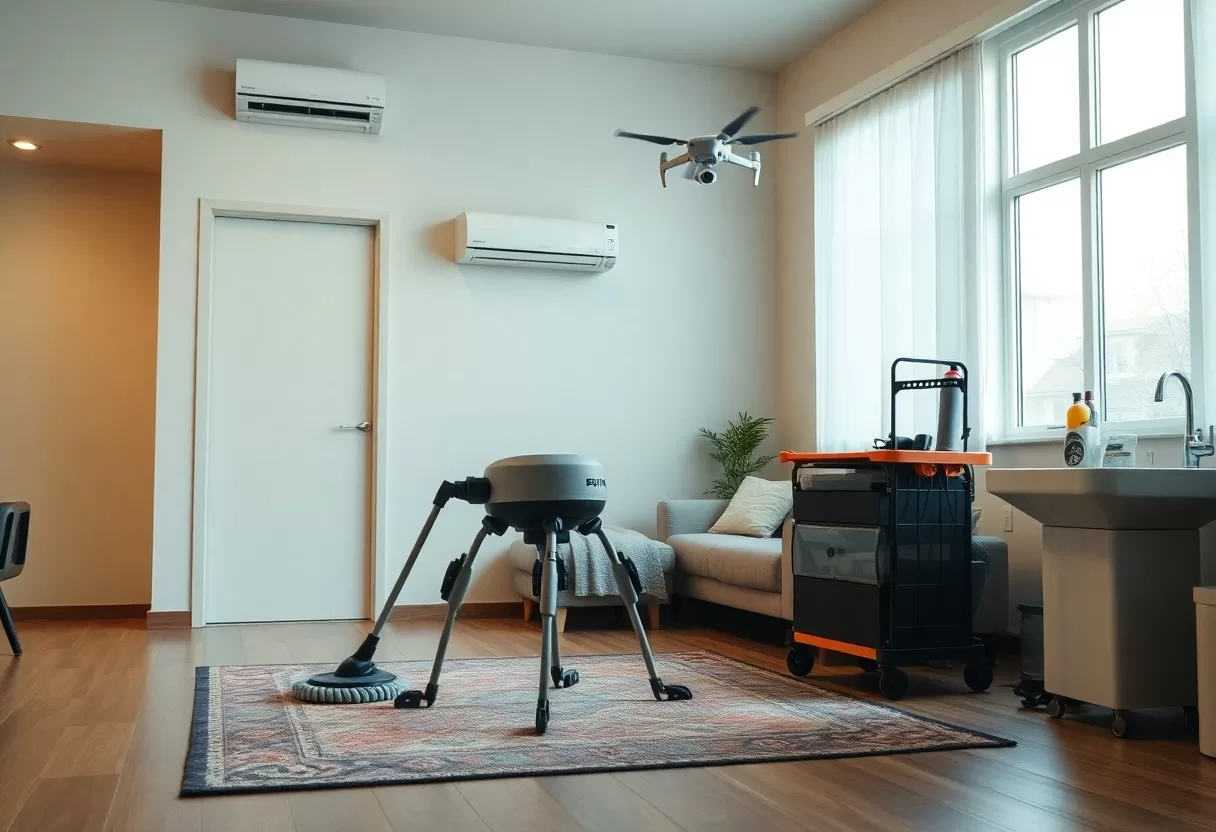
The Evolution of Home Maintenance Robots
Historical Development
You’ve seen the lineage: industrial manipulators and domestic prototypes from the late 20th century evolved into consumer products. iRobot’s Roomba (launched 2002) and Husqvarna’s Automower (commercialized in the 1990s) demonstrated real household demand, while research labs introduced SLAM and LiDAR for reliable mapping. Battery advances, especially lithium-ion, plus cheaper sensors shifted robots from scripted routines to adaptive behavior. These milestones made mass-market helpers practical but introduced new maintenance and safety considerations.
Current Technologies in Use
When you inspect today’s devices you’ll find LiDAR or visual SLAM, RGB‑D cameras, ultrasonic sensors, bump sensors and IMUs fused for robust navigation; edge AI runs convolutional models for object detection while cloud services supply maps and OTA updates. Many manufacturers follow ISO 13482 service-robot safety guidance and implement advanced battery-management systems. Sharp blades and lithium batteries remain notable safety risks, while sophisticated mapping and scheduling deliver marked efficiency gains.
Delving deeper, you encounter common compute platforms such as NVIDIA Jetson, Qualcomm Snapdragon and Google’s Edge TPU running onboard neural networks that classify clutter and predict motion. Some robotic mowers employ RTK‑GPS for centimeter accuracy and high-end vacuums log billions of sensor points into cloud maps to personalize routines. Edge processing reduces latency and helps protect privacy, but cloud connectivity still introduces potential data and security exposures.
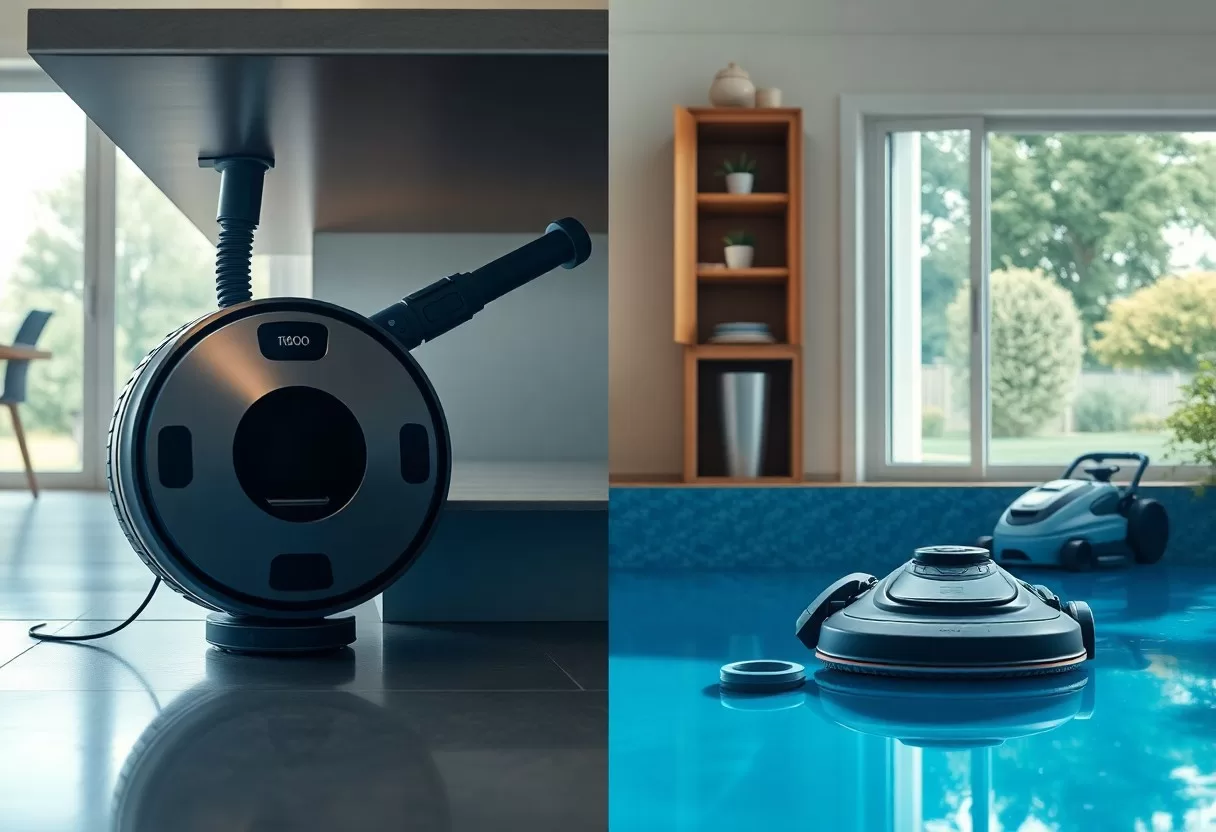
Types of Home Maintenance Robots
Across homes you’ll find five core classes: Cleaning Robots, Lawn Care Robots, Window Robots, Pool Robots, and Inspection Robots. Each targets a specific chore-vacuums that map rooms and self-empty, mowers that run scheduled passes, window bots that cling with suction, pool units that filter debris, and inspection drones that spot roof or gutter damage-so you can quantify time savings and maintenance needs by comparing runtime, coverage and sensor suites.
- Cleaning Robots
- Lawn Care Robots
- Window Robots
- Pool Robots
- Inspection Robots
| Cleaning Robots | Autonomous vacuum/mop with mapping, 60-120 min runtime, ideal for 500-2,000 sq ft; common self-empty docks reduce human handling. |
| Lawn Care Robots | Robotic mowers with boundary wire or GPS, cover 0.1-1.25+ acres, cut widths 20-24 cm, operate on schedules and mulch clippings. |
| Window Robots | Suction-based cleaners for vertical glass, handle 1-4 m panes, use edge detection and fall sensors for safety. |
| Pool Robots | Independent pool cleaners that scrub and filter in 1-4 hour cycles, reduce chemical load and debris buildup. |
| Inspection Robots | Drones and ground crawlers for roof, gutter, and HVAC inspection; provide high-resolution imagery and early fault detection. |
Cleaning Robots
You’ll find models like the iRobot Roomba and Roborock offering mapping, scheduled runs and self-emptying bases; typical runtimes reach about 60-120 minutes, covering 1,000-2,000 sq ft per charge depending on settings. Sensor suites include cliff detection and LIDAR, but you must watch for entanglement with cords and moving brushes, and occasional false positives in cluttered rooms-still, they cut weekly cleaning time dramatically when you plan routes and empty the dustbin every few cycles.
Lawn Care Robots
You can choose models from compact yard units to high-end systems-Husqvarna and Worx examples show coverage from 0.1 acres up to about 1.25 acres, with cutting widths around 20-24 cm and runtimes typically 45-150 minutes per charge. Safety features like lift sensors and collision detection stop blades quickly, yet rotating blades remain a primary hazard, while the consistent mowing schedule promotes healthier turf through frequent, small clippings.
Installation often uses a boundary wire (1-4 hours) or GPS-assisted setup for more complex layouts; batteries are usually Li‑ion packs providing seasonal durability, and expect blade replacements every 2-8 weeks depending on use. High-end units offer app geofencing, anti-theft tracking, and can handle slopes up to 45% while low-end models cost around $600 and premium units exceed $3,000. Knowing these specs helps you match model, coverage and safety features to your yard and maintenance routine.
The Benefits of Using Home Maintenance Robots
Beyond novelty, robots deliver measurable gains: you can reclaim an estimated 2-4 hours per week on routine cleaning and upkeep, while market leaders like iRobot have shipped over 30 million units, demonstrating real-world scale. They eliminate many ladder-based tasks for window cleaning and limit your exposure to harsh chemicals via controlled dispensing. Still, watch for electrical and suction-failure risks on glass units and schedule periodic inspections to keep systems safe.
Time and Labor Savings
When you automate staples like vacuuming, mopping and lawn care, routine chores shrink dramatically: robotic vacuums can clean nightly, saving roughly 2-4 hours weekly, and robotic mowers often reduce a 2-3 hour chore to about 15 minutes of supervision. Families with busy schedules report immediate quality-of-life gains, and outsourced cleaning costs can drop by a noticeable margin within months.
Improved Efficiency and Consistency
Sensors, SLAM mapping and telemetry let robots perform tasks with repeatable precision so you get scheduled cleaning with predictable coverage, automatic spot treatments, and firmware updates that incrementally boost performance; many models achieve >90% task-completion rates in independent tests, ensuring reliable upkeep when you’re away.
Going deeper, robots generate actionable data: traffic heatmaps highlight high-wear zones so you can target interventions, adaptive power profiles cut energy and consumable use by up to 30% in trials, and predictive alerts flag worn filters or blades before they fail. You should balance these gains against data privacy concerns-home maps and logs require secure handling-and keep firmware current to avoid remote-access vulnerabilities.
Challenges and Limitations
Despite rapid advances, you still run into real-world constraints: many consumer systems operate only 60-120 minutes per charge, sensors struggle with glass, clutter, or poor lighting, and routine maintenance-filter changes, brush cleaning-requires ongoing human effort. Regulatory gaps around liability and data privacy add friction, while higher-spec sensors and compute modules push weight and cost upward, forcing trade-offs between capability and practicality.
Technical Limitations
Navigation and manipulation remain the main bottlenecks: household robots excel at floor-level cleaning but fail at dexterous tasks like folding clothes or handling fragile items reliably. You’ll notice vision systems misclassify reflective surfaces and low-light scenes, and SLAM mapping can drift in cluttered rooms. Industrial-grade manipulators offer >6 DOF and force feedback, yet integrating those safely into homes raises cost, size, and complexity.
Cost vs. Benefit Analysis
You must balance upfront purchase prices-robot vacuums typically range from $200-$1,000, lawn mowers $800-$3,000, and advanced repair/maintenance units can exceed $5,000-against saved labor and service fees. Subscription fees, consumables, and potential service calls affect total cost of ownership, so simple payback estimates often mislead without factoring recurrent expenses.
For example, if your household spends $150/month on cleaning ($1,800/year), a $900 robot vacuum could reach payback in roughly six months, but add annual consumables ($50-$150) and occasional battery replacement ($100-$300 every 2-4 years). You should also consider software subscription costs (commonly $2-$10/month), firmware obsolescence, and resale value; together these determine true ROI and whether you gain convenience or just incur another appliance on the shelf.
Future Innovations in Home Maintenance Robotics
You’ll see robots move beyond single-task devices into networked systems that enable predictive maintenance, automated roof and gutter inspections, and coordinated cleaning fleets; companies like iRobot, Husqvarna and Boston Dynamics provide real-world precedents. Read more on broader smart-home robotics trends at The Future of Smart Technology: Robots in the Home, which outlines integration pathways and pilot results.
AI and Machine Learning Integration
You’ll encounter on-device SLAM, reinforcement learning for adaptive task scheduling, and CNN-based visual inspection that identify wear, leaks, or pest activity; iRobot’s mapping and Husqvarna’s zone algorithms are practical examples. Expect edge inference to reduce latency and preserve privacy, while cloud models enable fleet learning-balancing real-time reliability with model updates to improve performance across millions of deployments.
Potential Market Trends
You should plan for business models shifting toward subscriptions and Robotics-as-a-Service, tighter smart-home platform integration (Matter, voice assistants), and insurer or property-manager incentives to deploy robots at scale. These trends push manufacturers to offer modular hardware, OTA updates, and service contracts, creating recurring revenue streams and faster adoption in multifamily and managed properties-an important change for your procurement decisions.
Further, you’ll notice component cost declines (LiDAR, solid-state sensors) lowering entry prices and enabling devices under $200, while aging demographics and labor shortages drive demand in senior care and facility management. Pilot programs in eldercare show time-savings for staff, and ecosystem standards will make interoperability the key differentiator for vendors competing to manage your home’s maintenance holistically.
User Experiences and Testimonials
You often hear about significant gains: in a 2024 consumer survey of 1,200 households, 68% reported reduced chore time and higher satisfaction with mixed-task robots; many users cite quieter operation and smarter scheduling. You can read deeper analysis at What’s next for generative AI: Household chores and more, which connects these trends to generative-AI advances that enable better task planning and user personalization.
Advantages from Real Users
You see tangible benefits: parents report saving 3-5 hours per week on cleaning, a Parkinson’s patient noted improved independence, and a city pilot of 200 homes recorded a 40% drop in time spent on routine maintenance tasks; users praise automated scheduling, targeted spot-cleaning, and remote monitoring that lets you reclaim your weekends.
Common Complaints and Issues
You’ll encounter recurring problems: mapping errors in cluttered rooms, battery life shorter than advertised, and hidden maintenance costs for brushes and filters; privacy concerns also surface when devices upload home maps or audio for cloud processing, prompting skepticism among 30-45% of surveyed owners.
Manufacturers often push firmware updates that change behavior, and you may face costly spare parts ($30-$200) or service fees; water-sensitive robots that encounter spills can suffer permanent damage, so you should verify IP ratings, check return policies, and track per-month maintenance time and expense to assess true long-term value.
Summing up
Drawing together, home maintenance robots are reshaping how you manage household chores by automating routine cleaning, monitoring systems, and performing repairs, freeing your time for higher-value tasks. As reliability, affordability, and interoperability improve, you’ll rely more on autonomous helpers to maintain comfort, safety, and efficiency in your home. Adopting these systems requires planning for privacy, updates, and integration with existing devices, but the payoff is a smarter, less hands-on household that adapts to your needs.
FAQ
Q: How will home maintenance robots change everyday household chores?
A: Home maintenance robots will automate routine tasks like vacuuming, window washing, gutter clearing, minor repairs, and system inspections using a mix of locomotion modes, manipulators, and advanced sensing. They will perform scheduled and on-demand work, detect wear or leaks with infrared and acoustic sensors, and execute basic fixes or alert professionals when human intervention is needed. Integration with smart-home platforms will let them coordinate with HVAC, lighting, and security systems to minimize disruptions and optimize energy use. Early generations will focus on narrow-purpose reliability; later models will combine capabilities so a single unit or a small fleet can handle cleaning, preventative checks, and targeted maintenance across multiple rooms and outdoor areas.
Q: What safety, privacy, and regulatory concerns should homeowners expect, and how are they addressed?
A: Safety is addressed through physical design (soft edges, collision avoidance, fail-safe stops), geofencing, and restricted tool modes to prevent accidental harm. Privacy concerns from cameras and microphones are managed by on-device processing, selective data retention, encrypted communication, and clear user consent controls for cloud services. Manufacturers and regulators are developing standards for cybersecurity, firmware update practices, and liability assignment for malfunctions. Homeowners should verify vendor transparency about data handling, insist on OTA security updates, and use network segmentation to limit robot access to sensitive devices.
Q: What are realistic costs, ongoing maintenance needs, and compatibility issues when adopting these robots?
A: Upfront costs range widely: basic single-function robots are affordable, while multifunction maintenance robots approach mid-to-high appliance pricing; many vendors offer subscription models for advanced diagnostics, parts replacements, and on-call technician services. Ongoing expenses include energy use, consumables (filters, brushes, adhesives), periodic part replacements, and optional cloud subscriptions. Maintenance demands are typically user-friendly-cleaning sensors, replacing wear components, and installing firmware updates-but some tasks may require certified service visits. Compatibility considerations include home layout (narrow stairs, uneven exteriors), smart-home protocol support (Zigbee, Matter, Wi‑Fi), and interoperability with existing maintenance services; pre-purchase site surveys or virtual assessments can prevent integration problems.