
Geothermal Heating & Cooling – Harnessing Earth’s Energy at Home
Most homes that adopt geothermal heating and cooling let you tap stable underground temperatures to heat and cool your space with remarkable efficiency, significantly lowering your energy bills and carbon footprint; be aware of high upfront installation costs and site limitations that can complicate installation, while the long-term savings and system longevity typically make it a sound, low-carbon investment for your household.
Over recent years, geothermal heating and cooling has become a dependable way to use the Earth’s stable subsurface temperature to condition your home; it delivers significant energy savings and sharply lower carbon emissions, but its success depends on proper site evaluation and professional installation, since poorly installed loops or system faults can cause costly damage or reduced performance, and understanding upfront costs and incentives helps you make an informed choice.
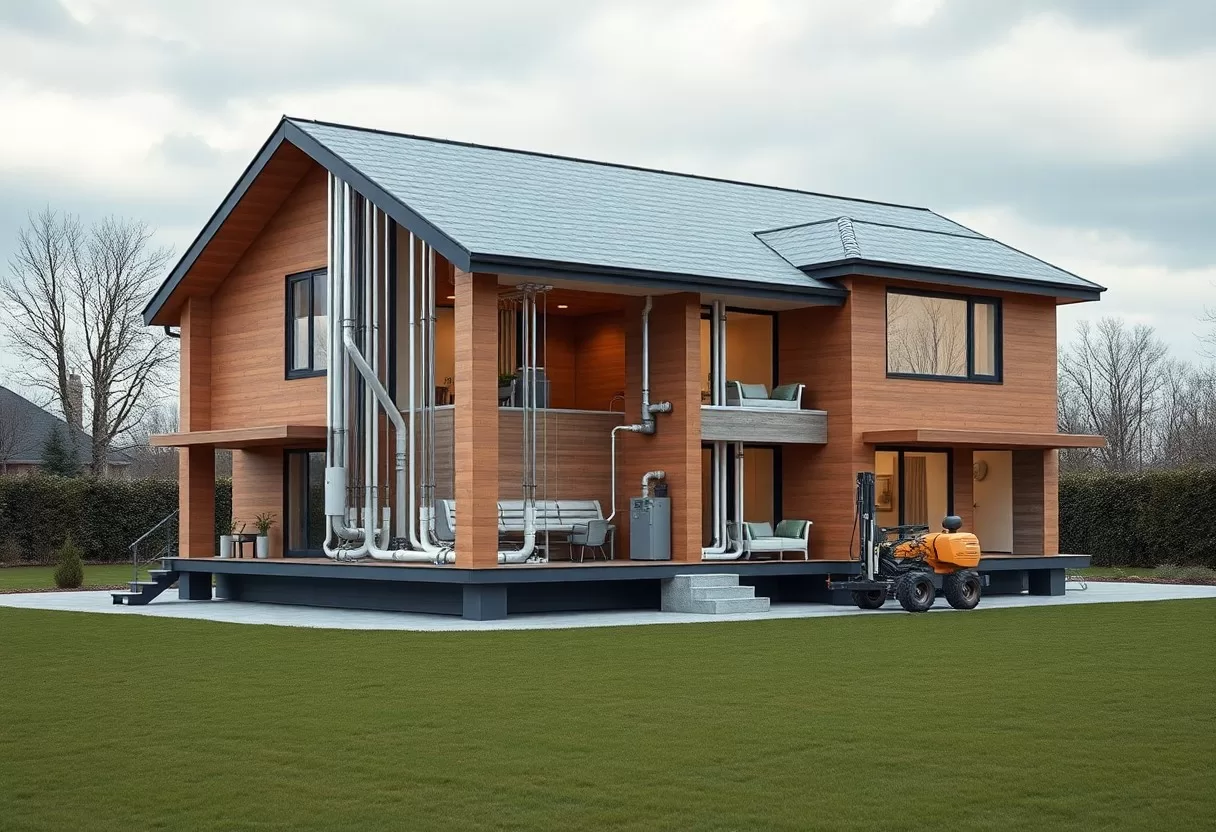
Key Takeaways:
- Significantly reduces energy use and operating costs by using stable ground temperatures for heating and cooling.
- Cuts greenhouse gas emissions and reliance on fossil fuels, providing a low-carbon option for homes.
- Delivers long equipment and loop-field life with low maintenance and strong payback when paired with incentives and favorable energy rates.
Key Takeaways:
- Geothermal systems use stable ground temperatures to deliver highly efficient heating and cooling, often cutting energy use and utility bills compared with conventional HVAC.
- Higher upfront installation costs are offset by long equipment and ground-loop lifespans, lower maintenance, and available incentives or tax credits.
- Geothermal reduces greenhouse gas emissions, offers year-round comfort and domestic hot water options, and can be adapted to many property sizes and climates.
Understanding Geothermal Energy
You can rely on steady subsurface temperatures to smooth seasonal peaks: a geothermal heat pump moves heat between your home and the ground, delivering high efficiency (typical COP 3-5) and cutting operating costs by 30-70% compared with resistive heat. Systems require an upfront investment for a ground loop, but long lifespans and low maintenance make them cost-effective over 10-25 years.
What is Geothermal Energy?
Geothermal energy uses heat stored in the earth beneath your feet; you use a heat pump to extract or reject heat to the ground, exploiting stable ground temperatures (often 10-16°C at shallow depths). This transfer-based approach means you’re moving thermal energy rather than generating it on site, which yields much higher system efficiency than combustion-based systems.
- Ground temperature: stable baseline for year-round performance.
- Heat pump: core component that transfers heat instead of creating it.
- Closed-loop vs open-loop: choices that affect site requirements and permitting.
- Thou should weigh installation cost against long-term savings and incentives.
| Ground temp | ~10-16°C near surface; more stable with depth |
| COP range | 3.0-5.0 typical depending on design |
| Payback | Often 5-15 years with incentives |
| Environmental | Low on-site emissions; possible groundwater risks for open systems |
| Lifetime | Loops: 50+ years; equipment: 20-25 years |
Types of Geothermal Systems
You’ll choose systems based on land, climate, and budget: horizontal closed-loop uses trenches for larger lots, vertical closed-loop drills 100-400 ft boreholes for tight sites, pond/lake loops use bodies of water, and open-loop pumps groundwater directly where available; each has trade-offs in installation cost, efficiency, and permitting.
Vertical boreholes commonly run 150-400 ft per hole, and a rule of thumb is ~400-600 ft of horizontal trench per ton of capacity; closed-loop systems use an antifreeze carrier, while open-loop depends on water quality and flow, potentially requiring treatment or discharge permits-Thou should perform a site-specific analysis to select the optimal configuration for your home.
- Horizontal closed-loop: lower drilling cost, needs acreage.
- Vertical closed-loop: compact footprint, higher drilling depth and cost.
- Pond/lake loop: cost-effective if you have sufficient water body.
- Thou must consider local regulations, water quality, and drilling constraints.
| Horizontal loop | 400-600 ft/ton; shallow trenches 4-6 ft deep |
| Vertical loop | 100-400 ft boreholes; 1-3 boreholes per ton typical |
| Pond/lake loop | Requires >1 foot/ft² volume; low cost if available |
| Open-loop | Uses groundwater; watch for mineral content and discharge rules |
| Direct-use/ES | Specialized high-temperature or district systems for industrial/use cases |
Understanding Geothermal Energy
Beneath your feet the ground holds a nearly constant temperature that geothermal systems tap to move heat, not create it. You benefit from high efficiency because the heat pump exchanges with stable 45-70°F soil, yielding coefficients of performance (COP) often between 3 and 5. Systems operate year-round to lower fossil fuel use and smooth peak loads, while properly installed ground loops can last 50+ years, delivering decades of dependable service.
What is Geothermal Energy?
Geothermal for homes uses a heat pump and buried loop to transfer thermal energy between the earth and your house. You might choose horizontal loops on larger lots or vertical boreholes 100-400 feet deep for small lots; closed-loop fluid circulates to extract heat in winter and reject it in summer. Typical residential units deliver 3-5 times the energy they consume, measured as COP/EER, making them far more efficient than conventional furnaces or air conditioners.
Benefits of Geothermal Systems
You gain lower utility bills, steady comfort, and large emission cuts. Typical systems reduce space heating and cooling energy use by 25-50% and can lower overall home energy costs by up to 60% compared with fossil-fuel systems; indoor heat pumps commonly last 20-25 years with minimal maintenance. Additionally, you get quieter operation and reduced on-site combustion risk, improving both safety and neighborhood noise levels.
Higher upfront cost is the primary trade-off, but incentives and long-term savings improve the economics: many homeowners see simple payback in 5-10 years depending on local energy prices and rebates, and the U.S. Residential Clean Energy Credit can cover up to 30% of installed cost through 2032. You should hire a certified installer-poor design or installation can slash performance and void warranties-so projected savings are realized.
Benefits of Geothermal Heating and Cooling
Beyond lower bills, geothermal gives you long equipment life, steady performance, and low maintenance: you can cut heating and cooling energy use by 50-70% and reduce household CO2 by up to 40% versus fossil systems. Incentives often offset costs-see All You Need to Know About Home Geothermal Heating & Cooling for incentives and payback examples. Expect underground loops to last 25-50 years and heat pumps 10-20 years, improving lifecycle economics.
Energy Efficiency
You typically get a coefficient of performance (COP) of 3-5, meaning the system moves 3-5 kW of heat per 1 kW of electricity. Ground temperatures that stay around 45-70°F stabilize output, so your annual heating bills can drop by 50-70% and cooling by 30-50% compared with conventional systems. Properly sized loops and matched heat pumps are vital: undersized loops can reduce COP and erase expected savings.
Environmental Impact
You sharply lower on-site combustion: switching from natural gas to geothermal can cut your home’s CO2 emissions by roughly 3-5 metric tons per year, depending on climate and grid mix. Geothermal reduces peak electricity demand and grid strain, but improper refrigerant handling or poor loop work can cause high-GWP refrigerant leaks or site contamination, so use certified installers and follow regulations.
Lifecycle analyses show geothermal heat pumps often produce 20-60% fewer greenhouse gases than comparable fossil-fuel systems, varying with the electricity grid and system design. Horizontal loops typically need trenches 4-6 ft deep and hundreds of feet of pipe, while vertical bores run 150-400 ft, minimizing surface impact. Prioritize low-GWP refrigerants, routine leak checks, and quality grouting to protect groundwater and maximize environmental benefits.
Types of Geothermal Systems
You’ll pick systems that either circulate a sealed fluid or use groundwater directly; common options appear below and are summarized in the table.
- Closed-loop (horizontal, vertical, pond)
- Open-loop (well or surface water)
- Hybrid (combines loops and cooling tower)
| Horizontal closed-loop | Large yards; trenches ~400-600 ft/ton |
| Vertical closed-loop | Small lots; boreholes ~150-300 ft/ton |
| Pond/lake loop | Requires ≥8-12 ft water depth; lowest install cost |
| Open-loop | Uses well/surface water; ~3-10 gpm/ton; permits/discharge needed |
| Hybrid | Pairs loop with cooling tower for peak loads |
See What is Geothermal Heating and Cooling? Perceiving these differences helps you match system type to site, budget, and performance.
Closed-Loop Systems
You’ll typically install a closed-loop using a polyethylene pipe filled with an antifreeze solution; horizontal trenches need roughly 400-600 ft per ton, while vertical boreholes often require 150-300 ft per ton. Systems last 50+ years for the loop, deliver consistent COPs of 3-5, and avoid direct water handling, so low maintenance and reduced regulatory hurdles benefit your project.
Open-Loop Systems
You’ll route groundwater from a well or surface source through the heat pump and return it to grade or an injection well; these systems can be more efficient but require about 3-10 gpm per ton, reliable water quality, and permits. Expect higher efficiency but pay attention to scaling, corrosion, and discharge rules, which can add operational costs.
You should plan water testing, sediment filtration, and potential treatment if you adopt an open-loop system; for example, rural homes using a 10 gpm well can support roughly a 3-ton system, but permits and discharge agreements vary by jurisdiction and may mandate injection wells or treatment to protect aquifers.
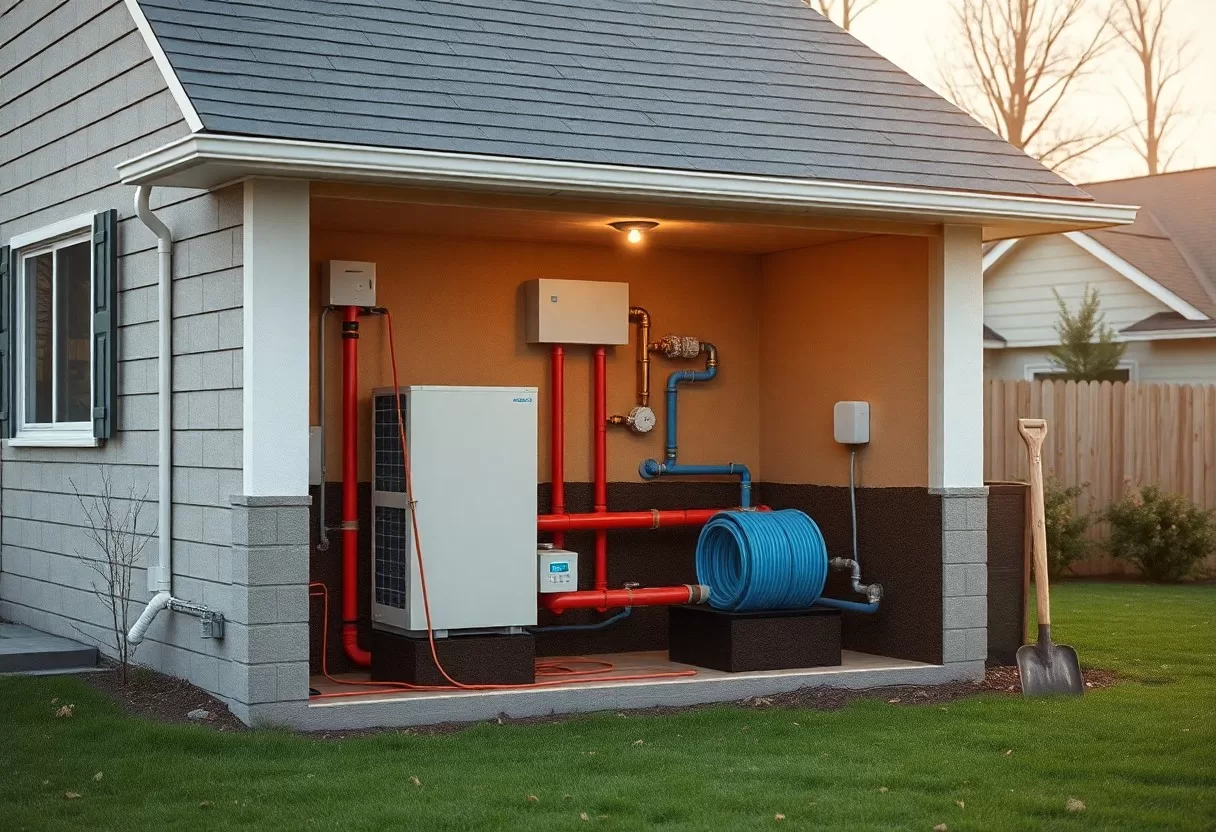
How Geothermal Systems Work
Beneath your yard the ground holds a near‑constant temperature-typically 45-75°F beyond about 10 feet-which a heat pump taps to move heat rather than generate it; you get heating or cooling by circulating a fluid through a ground loop and a refrigerant cycle, producing coefficients of performance of roughly COP 3-5. In practice that translates to 30-60% lower HVAC energy use compared with conventional systems, though performance depends on loop design, soil conductivity, and proper sizing.
Ground Source Heat Pumps
Ground‑source heat pumps in homes usually range from about 1.5-5 tons, serving 1,000-3,000+ sq ft; you’ll see direct‑exchange systems or water‑to‑refrigerant types that transfer heat between the loop and indoor air/water coils. When sized and installed correctly a system delivering a COP near 4 will provide four units of heat for every unit of electricity, and modern variable‑speed compressors help maintain comfort while minimizing cycling losses.
Closed Loop vs. Open Loop Systems
Closed loops circulate a glycol/water mixture through buried pipes, while open loops pump groundwater through a heat exchanger; you’ll favor closed loops for lower contamination risk and less maintenance, and open loops when a reliable, clean well provides sufficient flow-typically 3-5 gpm per ton. Open systems can be cheaper up front but carry higher risks of scaling, corrosion, and regulatory constraints where groundwater discharge is restricted.
Closed‑loop options include horizontal trenches at about 4-6 ft depth (cost‑effective with yard space), vertical bores of roughly 150-400 ft per loop for tight sites, and pond/lake coils where available; loops commonly use 20-30% propylene glycol for freeze protection and are pressure‑tested to prevent leaks. You should expect horizontal installations to cost less per foot but require more land, whereas vertical drilling raises upfront cost but minimizes surface impact; proper site testing and loop sizing determine long‑term efficiency and reliability.
Installation Process
Most installations follow a predictable flow you can plan for: site assessment, loop installation, heat-pump hookup and commissioning. For a typical 3-ton home system expect 1-2 weeks on-site and total installed costs roughly $15,000-$30,000 depending on loop type and geology. Permits and utility locates are common; missing them can delay work and create safety risks.
Site Assessment
During assessment an installer surveys lot size, soil type, groundwater and access for rigs, then performs load calculations to size the system for your home. You’ll see rule-of-thumb loop lengths: vertical 150-300 ft/ton, horizontal 400-600 ft/ton. A thermal response test (24-72 hours) is often recommended for uncertain geology. Expect the assessment to take 1-3 days and cost a few hundred dollars if done separately.
Drilling and System Setup
Drilling uses 4-6″ bore rigs for vertical loops, typically 150-300 ft per bore, while horizontal trenches require excavators and substantial yard space. You’ll see crews grout boreholes for thermal contact and corrosion protection, install manifolds, then set the indoor heat pump and tie to ducts or radiant lines. Scheduling inspections and pressure-testing the loop before startup is standard to ensure safe, leak-free operation.
You’ll often find bore spacing of 15-25 ft to prevent thermal interference, and crews use cement-bentonite grout to optimize heat transfer. The closed-loop fluid is typically a propylene glycol mix sized for local freeze risk, and systems are tuned to a design ΔT (commonly 8-12°F). For a 3-ton install expect about 6-8 vertical bores or 1,500-2,500 ft of trenches; drilling crews can complete bores in a day, with grouting and tie-in adding another day or two.
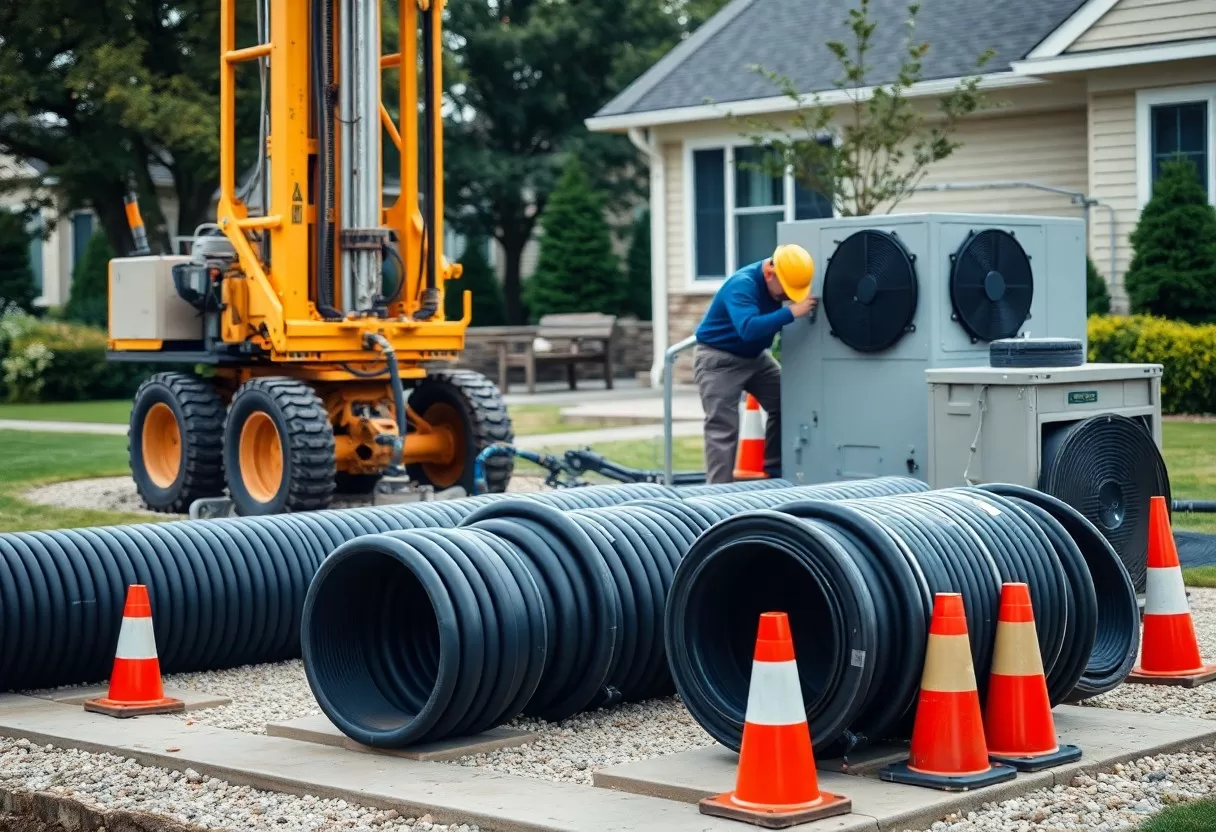
Installation Process
Expect a site visit, permitting and loop installation followed by indoor hookup over roughly 3-7 days for a typical single‑family home; vertical bores usually take one day per hole (150-400 ft), while horizontal trenches can be completed in a few days but require more yard area. During work you should have utilities marked (call 811) and plan for temporary landscaping disruption, and refrigerant handling must be performed only by certified technicians.
Site Assessment and Design
Begin with a Manual J load calculation and a soil thermal conductivity test to size the loop field; for example, a 3‑ton load often requires roughly 450-1,200 feet of horizontal pipe or the equivalent in vertical bore depth depending on geology. If your yard has a high water table or bedrock, vertical bores (150-400 ft per bore) are usually chosen. Permits, easements and rig access shape the final layout and price.
Installation Steps and Costs
Typical steps include utility locating, trenching or drilling, pipe installation and grouting, indoor heat‑pump hookup, pressure testing and system commissioning. Residential installs commonly range from $10,000 to $30,000, with federal tax credits up to 30% and local rebates lowering upfront cost; payback typically falls between 5-15 years depending on your fuel savings and incentives.
For budgeting, expect the loop field to account for about 40-60% of total cost, the heat pump unit 25-35%, and installation/labor 10-25%; for a $20,000 install that might break down to roughly $9,000 loop, $6,000 unit and $5,000 labor. Loops commonly last 50+ years while heat pumps run 20-25 years. You should solicit at least three bids, verify IGSHPA or manufacturer training for installers, and confirm permits and performance testing are included in the contract.
Geothermal System Maintenance
Maintain your geothermal system with a mix of DIY checks and annual professional service to protect performance and longevity: change air filters every 1-3 months, schedule a technician once per year, and monitor loop performance seasonally. Ground loops often last 25-50 years while heat pumps typically reach 20-25 years with proper care; neglect can reduce efficiency by 10-30% and void warranties, so you should track flow rates, antifreeze concentration, and electrical connections regularly.
Regular Maintenance Tasks
Replace or clean filters every 1-3 months and inspect the air handler coils annually; test thermostat calibration and ductwork for leaks. For flow, aim for roughly 2-4 gpm per ton (so a 3‑ton system needs about 6-12 gpm). You should have a pro check refrigerant charge, tighten electrical connections, and measure coil delta‑T (typically 15-25°F) during an annual tune‑up to sustain COP and prevent premature failure.
Troubleshooting Common Issues
When performance drops, start with simple checks: clogged filters, tripped breakers, or incorrect thermostat settings. Low loop flow under ~2 gpm/ton, unusual pump noise, or signs of a refrigerant leak require professional attention; do not open refrigerant lines or electrical panels yourself. Small fixes like duct sealing can restore 10-30% of lost efficiency, while persistent issues usually indicate pump, loop, or compressor faults.
For more depth, measure system delta‑T and loop flow before calling a technician: a recovering system often shows coil delta‑T in the 15-25°F range and flow matching the 2-4 gpm/ton rule. In one case a 4‑ton home regained ~20% efficiency after restoring flow to 8 gpm and replacing a clogged filter; by comparison, a >30% efficiency loss often traced back to refrigerant leaks or failing circulation pumps, which require a NATE‑certified tech and proper leak repair.
Maintenance of Geothermal Systems
Regular upkeep blends simple DIY checks with an annual professional inspection to keep your system efficient and long-lived; ground loops often last 50+ years while heat pump units typically run 20-25 years. You should monitor loop pressure (often ~30-80 psi), track energy use for sudden changes, and log service dates. Annual professional inspection will verify antifreeze concentration, pump performance, and electrical safety to prevent costly failures and preserve the system’s high efficiency.
Routine Maintenance Practices
Change air filters every 1-3 months, inspect ductwork for leaks, and clear debris around outdoor equipment. You’ll test loop fluid concentration (commonly 20-35% propylene glycol), watch loop pressure gauges, and verify circulation pump amperage against nameplate ratings. Record supply/return temperatures and baseline energy use so you can spot a 10-25% drop in performance early. Schedule a pro for annual tune-ups that include refrigerant checks, motor bearings, and controller calibration.
Troubleshooting Common Issues
When performance drops or energy bills rise, first check simple causes: clogged filters, incorrect thermostat settings, tripped breakers, and low loop pressure. If you notice strange noises, ice on coils, or leaks, shut the system and avoid touching electrical components; loss of antifreeze or electrical faults require professional service. You can use a pressure gauge, a basic multimeter, and visual inspection to narrow list of suspects before calling a technician.
For example, a homeowner reported 25% less heating output; replacing a heavily restricted filter and re-pressurizing the loop restored performance. In another case a pump failed-amp draw rose 40%-and replacement cost $800, while repairing a buried loop leak ranged $1,500-$6,000 depending on access. You should document symptoms, pressures, temperatures, and any error codes to give technicians a head start and often reduce diagnostic time and cost.
Cost Analysis
Assessing your investment, geothermal systems typically cost $10,000-$40,000 to install depending on loop type and home size, but incentives and lower operating bills shift the picture; see Geothermal Heating and Cooling Technologies for federal guidance. You should weigh upfront expense against a 20-40% reduction in energy use and available local rebates to understand true net cost.
Initial Investment
You’ll pay most of the cost for groundworks: horizontal loops often run $10,000-$25,000, while vertical bores commonly reach $20,000-$40,000 for average homes; equipment and heat pump add another $5,000-$10,000. Financing options and utility or state incentives can reduce your out‑of‑pocket amount, and site conditions (rocky soil, lot access) frequently drive the upper end of the price range.
Long-Term Savings
Over time you can expect 30-60% lower heating and cooling costs versus conventional systems, with many homeowners recouping costs in 5-15 years depending on energy prices and initial spend. You’ll see steady year‑to‑year savings because geothermal systems have high efficiency and stable performance even in extreme temperatures.
Digging deeper, your payback period shortens if you currently use expensive fuels (electric resistance or oil) and live in an extreme climate; ground loops often last 50+ years and heat pumps 20-25 years, keeping replacement and operating costs low. You should model scenarios with local utility rates, available tax credits, and a contractor’s installation estimate to forecast precise savings for your home.
Economic Considerations
Balancing upfront cost against decades of operation, you should weigh the typical $10,000-$40,000 installation against annual energy reductions of roughly 30-50% compared with separate furnace and AC systems. Geographic heating/cooling loads and electricity prices drive payback, which often falls between 5-15 years. Expect low maintenance and a system life of 20-25+ years, so your long‑term net present value can be substantially positive if you plan to stay in the home.
Initial Investment vs. Long-Term Savings
You’ll see lower bills but higher initial outlay: horizontal loops typically cost about $10,000-$25,000, while vertical loops often run $20,000-$40,000 for a typical single‑family home. Site conditions – rocky soil or a high water table – can increase drilling by 10-50%. Given operating savings and reduced maintenance, many owners hit break‑even in under 10 years and enjoy decades of reduced utility expense afterward.
Incentives and Rebates for Homeowners
You can significantly lower net cost through incentives: the federal Residential Clean Energy Credit currently covers up to 30% of qualified geothermal system costs, and many states/utilities add rebates or performance incentives ranging from a few hundred to several thousand dollars. Some municipal programs offer additional grants for electrification. Combining these can reduce payback by several years, but eligibility often depends on installer certification and equipment specifications.
To capture incentives you should confirm program rules early: many rebates require pre‑approval, proof of Energy Star or IGSHPA‑certified equipment, and post‑installation performance verification. File the federal credit via IRS Form 5695, and check utility portals for stackable offers. If you’re low‑to‑moderate income, look for enhanced incentives or grant programs in your state that can accelerate adoption and reduce your out‑of‑pocket cost substantially.
Environmental Impact
Your shift to geothermal lowers lifecycle emissions and energy use: systems commonly cut heating and cooling energy by 25-50% and can reduce carbon emissions by 40-70% versus fossil‑fuel systems. The EPA snapshot on Geothermal Heating and Cooling Technologies summarizes field performance, and the long lifespan of ground loops (50+ years) keeps your system’s carbon intensity low over decades.
Reducing Carbon Footprint
You cut greenhouse gases because geothermal moves heat instead of burning fuel; typical installations deliver 25-50% lower energy use for climate control and about 40-70% fewer CO2 emissions compared to oil or propane heating. Case studies show single‑family homes saving several tons of CO2 annually, and proper sizing plus annual service preserves those reductions.
Sustainable Energy Source
You tap a stable, renewable subsurface temperature that provides reliable on‑site energy; closed‑loop systems use minimal water and the ground loop’s 50+ year lifespan with indoor equipment lasting >20 years gives sustained, low‑carbon performance for decades.
Different loop configurations-horizontal trenches (typically 3-6 ft deep) or vertical boreholes (often 150-400 ft)-let you fit geothermal to most lots. Your heat pump will usually achieve a COP of 3-5, yielding roughly 2-4× the heat per unit of electricity versus resistance heating. Payback commonly runs 5-15 years and improves with rebates or tax incentives. Be aware that open‑loop designs depend on water quality and permitting; improper well management can risk groundwater contamination, so use experienced installers and proper grouting.
Conclusion
Following this, you can appreciate how geothermal heating and cooling empowers you to use stable subsurface temperatures for efficient, year-round comfort; you reduce energy bills, lower emissions, and gain durable equipment with predictable maintenance, making it a strategic long-term investment for your home’s resilience and comfort.
Final Words
From above, you should consider how geothermal heating and cooling – using ground-source heat pumps to tap stable underground temperatures – delivers high efficiency, lower energy bills, consistent comfort, and reduced emissions. With correct sizing and professional installation you secure long-term reliability and increased home value, while routine checks keep your system performing optimally for decades.
FAQ
Q: How does geothermal heating and cooling actually work in a home?
A: Geothermal systems use the earth’s relatively stable underground temperature as a heat source in winter and a heat sink in summer. A ground loop (closed or open) circulates a fluid that exchanges heat with the soil or groundwater. A heat pump transfers heat between that loop and the home: in heating mode it extracts heat from the loop and upgrades it to distribution temperature; in cooling mode it removes heat from the home and rejects it into the loop. Common loop types are horizontal (trenches), vertical (boreholes), and pond/lake loops. Performance is measured by coefficient of performance (COP) and seasonal energy efficiency (SEER/HSPF equivalents for heat pumps), and geothermal systems typically deliver several units of heat for each unit of electricity consumed.
Q: What installation options, site factors, and costs should I expect?
A: Installation options include closed-loop horizontal (best for larger yards with adequate space), closed-loop vertical (used where space is limited; requires drilling), closed-loop pond/lake (cost-effective if water access is available), and open-loop (uses groundwater directly where available and permitted). Key site factors: available land, soil thermal conductivity, groundwater depth and chemistry, local drilling costs, and climate. Upfront costs are higher than conventional HVAC because of loop installation and drilling, but total cost varies widely by home size, geology, and local labor rates. Many homeowners see payback periods typically between roughly 5-15 years depending on energy prices and available incentives-federal, state, and utility rebates or tax credits can substantially reduce net cost. A professional site survey and heat-load calculation are vital to choose the right loop type and system size.
Q: What maintenance, lifespan, and performance considerations should homeowners know?
A: Ground loops are durable and often last 50+ years; heat pumps and indoor equipment usually last 15-25 years. Routine maintenance is minimal but important: annual professional inspection of the heat pump and controls, checking and replacing air filters every 1-3 months, verifying proper airflow and duct sealing, and periodic checks of antifreeze/fluid concentration and pressure in closed-loop systems (intervals depend on installer guidance). Common performance issues include reduced airflow from dirty filters or ducts, refrigerant leaks in the heat pump, and underperforming loops due to undersizing or poor soil contact. To maximize efficiency, maintain clean vents, ensure proper system sizing at installation, use a programmable thermostat or smart controls, and take advantage of available rebates for upgrades. Geothermal systems reduce fossil-fuel use and greenhouse-gas emissions compared with conventional heating fuels, and they provide stable, quiet operation with lower seasonal energy bills when properly designed and maintained.