
5 Garden Tools That Add Value & Charm to Any Yard
Good garden tools make every job easier, and the right ones can last for decades. Sustainable options made from eco-friendly materials also cut waste, and a garden tended with care can promote biodiversity by giving bees, birds and soil life a better home. In this post, you will find five must-have tools that work hard and look good, plus tips on choosing quality, caring for your tools and spending your budget wisely.
Key Takeaways: Garden Tools
- Good garden tools save time and last for years.
- Sustainable, durable tools are worth the investment.
- The right tools also add charm to your yard.
Table of Contents
Tools that Nourish: The Benefits of Sustainable Materials
Choosing sustainable materials for your tools is good for your garden and your wallet. Hardwood handles from responsibly managed forests (look for the FSC label) and heads made from forged or recycled steel hold up to years of digging. Opting for these sustainable materials means you invest in quality and performance, and you buy far fewer replacements over time.
Craftsmanship vs. Mass Production
Handcrafted tools often show more care than cheap mass-produced ones. A forged trowel or spade is shaped from solid steel, so it does not bend at the neck the way a thin stamped blade can. Handles are shaped to fit the hand, which cuts down on blisters and wrist strain. Small makers also tend to sell replacement handles and sharpening services, so a good tool can be repaired instead of thrown away.
When you shop, hold the tool before you buy it if you can. Check that the head is firmly attached with a solid socket or a tang and rivets, not just glue. The handle should feel balanced rather than front-heavy, and long-handled tools should be long enough that you can work upright without hunching. These simple checks matter more than the brand name.
The Environmental Impact of Material Choices
Material choices in garden tools do affect the environment. Plastic tools are made from fossil fuels and often crack after a few seasons in the sun, which sends them to the landfill. Bamboo, responsibly sourced wood and recycled steel are better choices because they are renewable or reuse existing material. The biggest win, though, is durability: one tool you keep for many years has a much smaller footprint than a string of cheap ones.
Think about the whole life of a tool, not just how it is made. Wooden handles can be sanded, oiled and eventually composted or burned when they wear out, while broken plastic usually cannot be recycled. Steel heads can be resharpened for years and recycled as scrap at the end. Once you see this, it becomes easier to choose tools that work well and leave less waste behind.
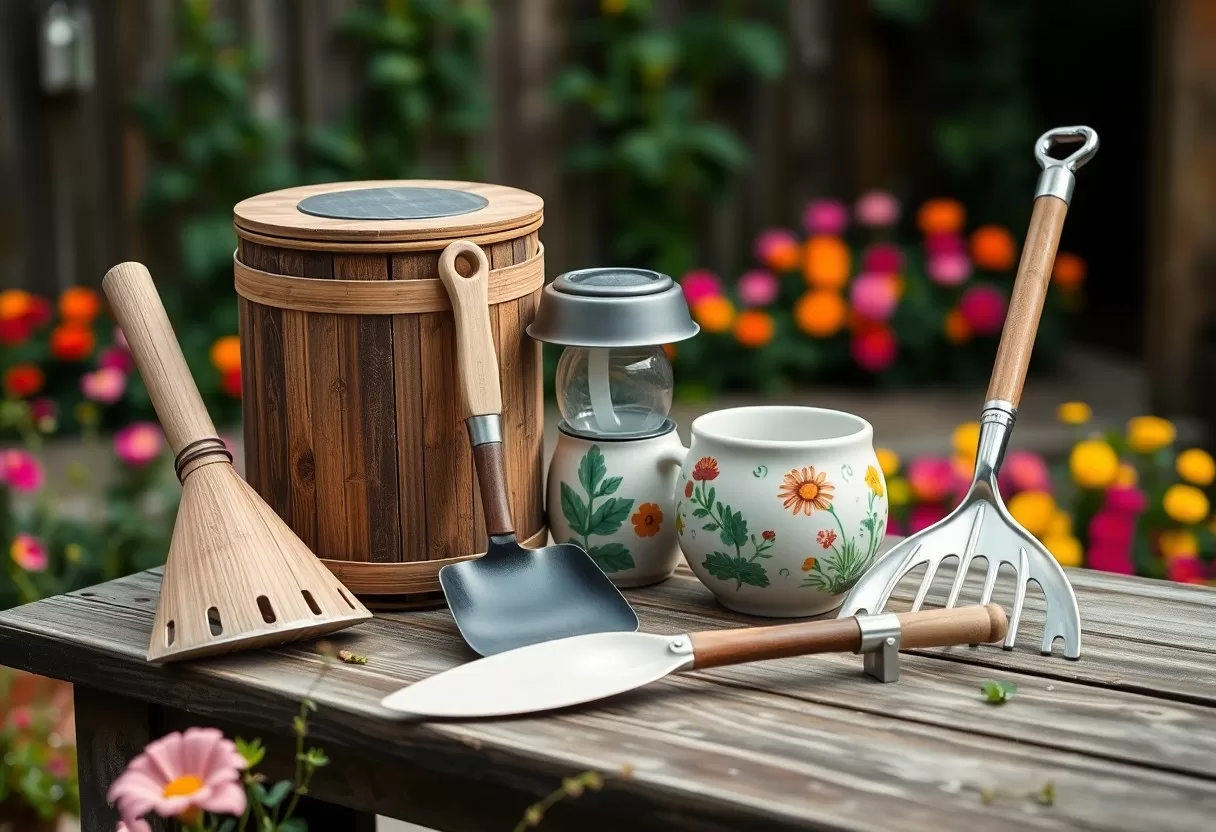
Charming Essentials: Top 5 Tools to Enhance Your Garden
Here are five garden tools that are both useful and full of character. Each one does a real job, and each one looks good enough to leave out on the porch or potting bench. Pick the ones that match how you garden, and add more as your needs grow.
The Ageless Appeal of Handcrafted Wooden Planters
Handcrafted wooden planters bring a warm, rustic look to any yard. Cedar, redwood and larch are good choices because they resist rot naturally. Skip old railroad ties and older pressure-treated lumber for vegetable beds. Make sure each planter has drainage holes, and line the inside walls with landscape fabric so wet soil does not sit directly against the wood. A well-built cedar planter can last many seasons.
Sustainable Soil Tilling: The Case for Bamboo Hand Tools
Bamboo hand tools are light and surprisingly strong, which makes them comfortable for small jobs. Bamboo works best for handles, leaf rakes and light cultivators in loose soil. For heavy digging in clay or rocky ground, a forged steel head on a bamboo or wooden handle is the better choice. That way you get a light grip without a blade that splits.
Bamboo is one of the fastest-growing plants on earth and regrows from its roots after harvest, so it makes a renewable alternative to plastic. You can find bamboo trowels, hand rakes, dibbers and plant stakes. To keep them in good shape, brush off soil after use, let them dry out of the rain and rub in a little linseed or tung oil once or twice a year. Stored dry, bamboo tools last a long time.
The Beauty and Utility of Recycled Metal Garden Stakes
Recycled metal garden stakes combine style and function. Use them to support tomatoes, peonies and climbing plants, or as decorative markers between beds. Rusted steel, copper and painted finishes all look good against green leaves, and they last much longer than thin plastic stakes that snap after a season or two.
Turning scrap metal into garden stakes reduces waste and gives your beds some personality. Old rebar, pipe and fencing can all become sturdy supports. For tall plants like tomatoes, choose stakes about 6 feet long and drive them at least a foot into the ground so they stay upright in wind. Set them at planting time to avoid damaging roots later, and tie stems loosely with soft twine or cloth strips.
Embracing Nature: Natural Fiber Gardening Gloves
Natural fiber gardening gloves are comfortable and breathable. Cotton, hemp and bamboo gloves let your hands breathe on hot days and give you a good feel for seeds and small plants. Many come with a natural rubber or leather palm for extra grip. They make a good everyday pair for planting, weeding and potting.
Natural fibers also break down at the end of their life, unlike nylon or vinyl gloves. Keep in mind that thin cotton will not stop thorns, so add a pair of leather gloves for pruning roses or handling brambles. Choose a snug fit, since loose gloves make you clumsy and cause blisters. Wash fabric gloves when they get muddy and let them dry flat to keep their shape.
Eco-Friendly Watering Solutions: Drip Irrigation Made from Recycled Materials
Drip irrigation is one of the most useful upgrades for any garden. Tubing and emitters deliver water straight to the roots, so less is lost to evaporation, wind and runoff than with a sprinkler. Many kits now use recycled plastic tubing, and with a low-pressure kit you can even run the system from a rain barrel.
Setting up a basic system is a good weekend project. Start at the faucet with a backflow preventer, a filter and a pressure regulator, then run the main line along your beds and punch in emitters near each plant. Water early in the morning, and check the soil a few inches down before you adjust run times. Flush the lines once a season to clear out grit.
Drip watering helps plants grow stronger because the soil stays evenly moist, and dry leaves are less prone to fungal disease. A simple timer makes the whole thing nearly automatic. Over a season, using less water can also lower your utility bill and keep your beds green through hot spells.
The Cost-Effectiveness of Long-Lasting Garden Investments
Good garden tools cost more at first, but they pay off over time. A well-made spade or pruner stays sharp, does not bend, and often comes with a long warranty or replacement parts. That means less frustration in the garden and fewer trips to the store. Think of quality tools as a long-term purchase, the same way you would a good kitchen knife.
Evaluating Quality: Initial Investment vs. Longevity
When assessing garden tools, compare the cost per year of use, not just the price tag. A cheap trowel that bends in one season costs more in the long run than a forged one that lasts ten. Look for solid steel heads, hardwood or fiberglass handles, and pruners with replaceable blades and springs. Buying a few good pieces beats buying a full cheap set you will soon replace.
The Economic Benefits of Decreased Waste and Replacement Costs
Choosing long-lasting garden tools also reduces waste. Every broken tool you throw out ends up in a landfill, and every replacement needs new materials and shipping. Durable tools break that cycle. The money you save can go to things that really help your garden, like seeds, compost or a better hose.
Here is a simple example. A high-quality compost fork might cost two or three times as much as a budget one. If the cheap fork snaps every couple of years and the good one lasts a decade or more, the good one is cheaper per year. Care helps too: clean tools after use, keep blades sharp, oil wooden handles and store everything dry and off the ground.
Sharpening is the easiest way to make any tool last. Run a mill file along the edge of hoes, spades and trowels a few times a season, following the original angle. Clean pruner blades with rubbing alcohol between plants if you are cutting out diseased wood. At the end of the year, wipe metal parts with a thin coat of oil and hang tools on a wall so nothing sits in damp soil.
Creating a Unique Aesthetic: The Role of Charm in Gardening
Gardening is also a way to show your personal style. Vintage tools, a weathered watering can or a handmade trellis add charm and give your yard a lived-in feel. Display a few favorite pieces on a potting bench or hang them on a pegboard in the shed. Tools you enjoy looking at are tools you are more likely to use and care for.
How Sustainable Tools Enhance Curb Appeal
Sustainable tools and accessories can boost your home’s curb appeal with a touch of eco-conscious design. Cedar planters by the front door, a copper rain chain or a neat row of iron plant supports all look tidy and natural. Keep the look simple: two or three matching materials, such as wood and black metal, read as planned rather than cluttered.
Blending Functionality with Artistic Design
When you choose sustainable garden tools, look for pieces that work well and look good. Many tools can double as decor without losing their usefulness. A planter built from reclaimed boards holds plants and adds texture to a patio, and a well-made watering can looks great on the steps. Craftsmanship you can see makes you proud of your garden and more likely to keep it looking its best.
Tools that mix function and design make everyday chores more pleasant. A hand-forged trowel with a smooth wooden handle feels good to use and looks good hanging on a hook. Decorative watering cans and sculptural plant stakes can also act as focal points in a bed. Buying from local blacksmiths, woodworkers or potters supports skilled makers, and you often get a tool that can be repaired later.
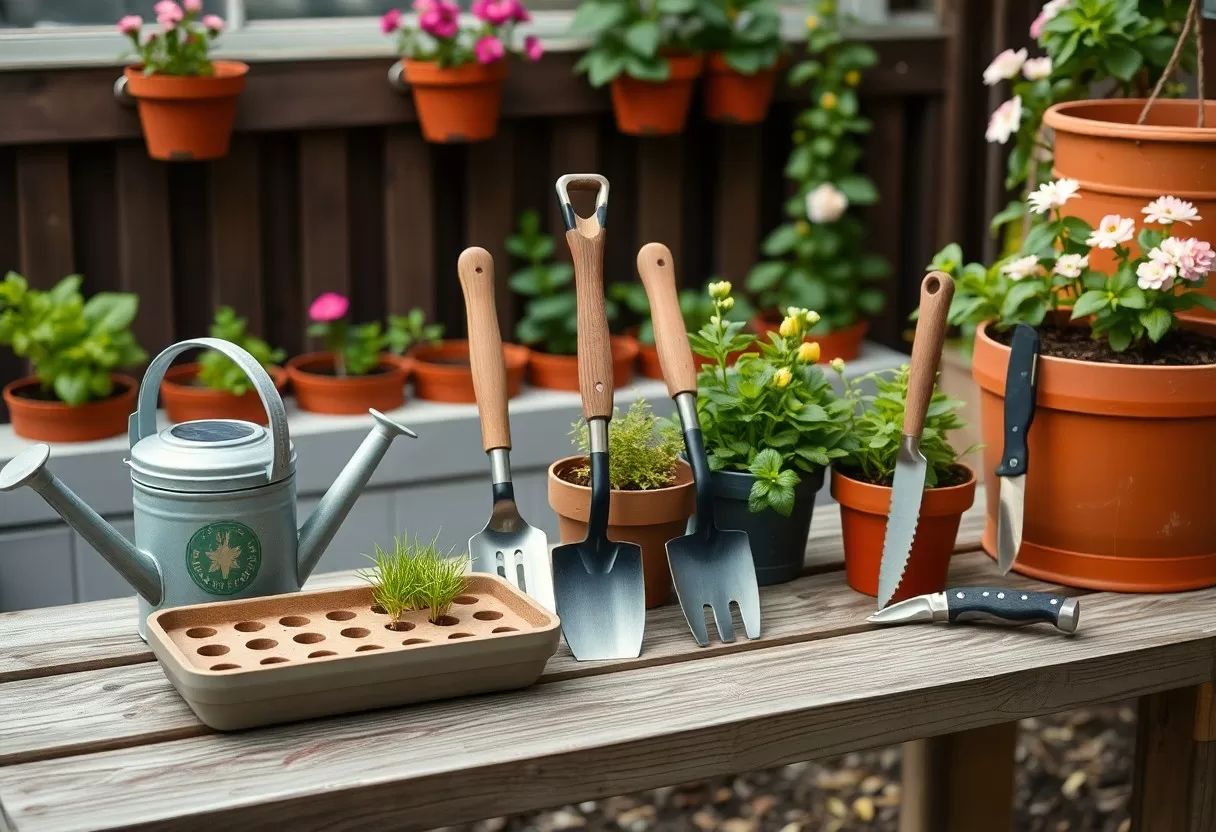
The Future of Gardening: Embracing Innovation and Tradition
The future of gardening mixes new technology with old, proven methods. Soil moisture sensors and smart irrigation controllers can tell you when beds actually need water, while composting, mulching and crop rotation keep soil healthy the traditional way. Used together, they save time and water and keep your plants in better shape.
The Rise of Eco-Conscious Brands
More brands now focus on sustainable tools. Look for companies that use recycled steel or plastic, FSC-certified wood, minimal packaging and fair labor practices, and that sell spare parts. A brand that lets you replace a spring or handle instead of the whole tool is usually a good sign. Read reviews for long-term durability, not just first impressions.
Trends in Sustainable Gardening Tools
Interest in sustainability has led to new trends in gardening tools that are practical and good-looking. Solar-powered lights and pumps, biodegradable seed pots and tools made from responsibly sourced wood are now easy to find. As you shop, ask whether each item will actually help you garden better and how long it will last.
Ergonomically designed hand tools are a welcome trend. Padded, angled handles and ratcheting pruners reduce strain on your hands and wrists during long sessions. Smart tools, like moisture meters and app-controlled irrigation, help you water only when needed. Tools made from sustainable materials, including recycled plastics and bamboo, cut waste and can be just as tough as conventional ones. Choose what fits your garden size and the way you work.
Garden bed soil & mulch calculator
Work out how much soil, compost and mulch you need for raised or in-ground beds.
Conclusion
In the end, good garden tools make gardening easier and add charm to your yard. Choose bamboo handles, durable recycled metal, solid wooden planters and water-saving drip lines, and take care of them so they last. Start with a few well-made basics, add pieces as your garden grows, and you will build a collection that serves you for years while keeping waste low.
Plan the next project for your yard with the free AI garden and landscape designer.
Frequently Asked Questions
Which garden tools do beginners need first?
A good spade, a hand trowel, pruners, a rake and a watering can or hose with an adjustable nozzle cover most tasks. Buy quality versions of these instead of many cheap tools.
How do I make garden tools last longer?
Clean off soil after use, dry them, sharpen blades regularly and store tools indoors. A light coat of oil on metal parts prevents rust.