
Wildlife‑Friendly Gardens – Building Safe Havens for Urban Birds, Insects and Small Animals
Most urban yards can become vital refuges when you prioritize native plants, provide clean water sources, and create predator‑resistant nesting sites; by avoiding pesticides and minimizing hazards like window collisions and free‑roaming cats you significantly reduce threats, while layered planting, brush piles and seasonal seed sources deliver shelter and food that boost pollinators and small wildlife populations.
Key Takeaways:
- Use diverse native plants and layered vegetation to provide year-round food, shelter and nesting sites for birds, insects and small mammals.
- Eliminate pesticides, supply clean water, and create sheltered microhabitats (brush piles, log cavities, nest boxes, leaf litter) to support feeding and breeding.
- Increase connectivity with native hedgerows, stepping-stone plantings and staggered bloom/fruiting schedules to support migration, foraging and genetic exchange.
The Importance of Wildlife-Friendly Gardens
When you prioritize wildlife in your yard you restore imperative ecosystem services: pollinators support about 75% of the world’s leading food crops, insectivorous birds and bats control pest outbreaks, and green spaces cut stormwater runoff-green roofs can reduce it by up to 50%. Small habitat patches act as corridors for movement and gene flow in dense cities. Emphasize native plants and water sources, and avoid chemical pesticides and unrestricted outdoor cats, which are major threats to urban wildlife.
Benefits for Urban Ecosystems
By adding native shrubs, nectar-rich perennials and a shallow water feature, you boost pollination, natural pest control and soil health; studies show restored green patches can increase local insect and bird activity by multiple-fold. Vegetation also cools microclimates-tree canopy commonly lowers local air temperature by 2-5°C-and reduces runoff and air pollution. Prioritize continuous habitat patches and native plant diversity to maximize these system-level benefits.
Enhancing Biodiversity
Planting a mix of at least five native species across three vegetation layers (groundcover, shrubs, canopy) dramatically raises species richness: native plantings often attract 3-5× more native bees and pollinators than turf or exotics. Include seasonal blooms, seed-bearing shrubs and a small pond to support insects, amphibians and birds; avoid invasive ornamentals that outcompete natives and fragment habitat.
For practical impact, map your space and aim for patch connectivity-link hedgerows, balcony planters and street trees to create stepping stones. Leave a log or brush pile for invertebrates, retain 5-10 cm of leaf litter in sheltered corners, and install a 20-30 cm shallow water dish with sloped edges for safe access. Track change with simple surveys or apps like iNaturalist to measure increases in species and adjust plant lists by ecoregion.
Designing Your Wildlife Garden
Design your plot to include at least three vegetation layers-groundcover, herbaceous, and shrubs/trees-and aim for 8-12 native species per 100 m² to support seasonal food. Plant in drifts of 5-7 individuals to concentrate nectar, place a shallow water source (5-10 cm) near cover, reserve brush piles or log edges for shelter, and avoid broad‑spectrum pesticides, which are highly damaging to insects and birds.
Choosing Native Plants
You should choose locally native species because native plants support far more native insects-for example, oaks host hundreds of caterpillar species and milkweeds sustain monarchs. Mix early-, mid- and late-season bloomers (spring bulbs, mid-summer monarda, autumn goldenrod), include larval host plants, and source from reputable native nurseries; plant in groups of 5-7 for better pollinator attraction.
Creating Diverse Habitats
You can provide a mosaic of microhabitats: bare soil patches for ground‑nesting bees, rock or log piles for reptiles and amphibians, dense shrubs for nesting birds, and cavity trees or nest boxes; leave at least 10% of your yard area undisturbed and create hedgerows or green corridors to help small mammals move safely.
You can build simple features to multiply value: stack logs 0.5-1 m high, construct brush piles at least 1 m wide, install nest boxes 2-5 m high facing southeast, and mount bat boxes 3-6 m up on sunny walls; provide shallow water with sloping edges and perches. Also make a big difference by keeping pet cats indoors and continuing to avoid pesticides to cut wildlife mortality.
Water Sources and Wildlife
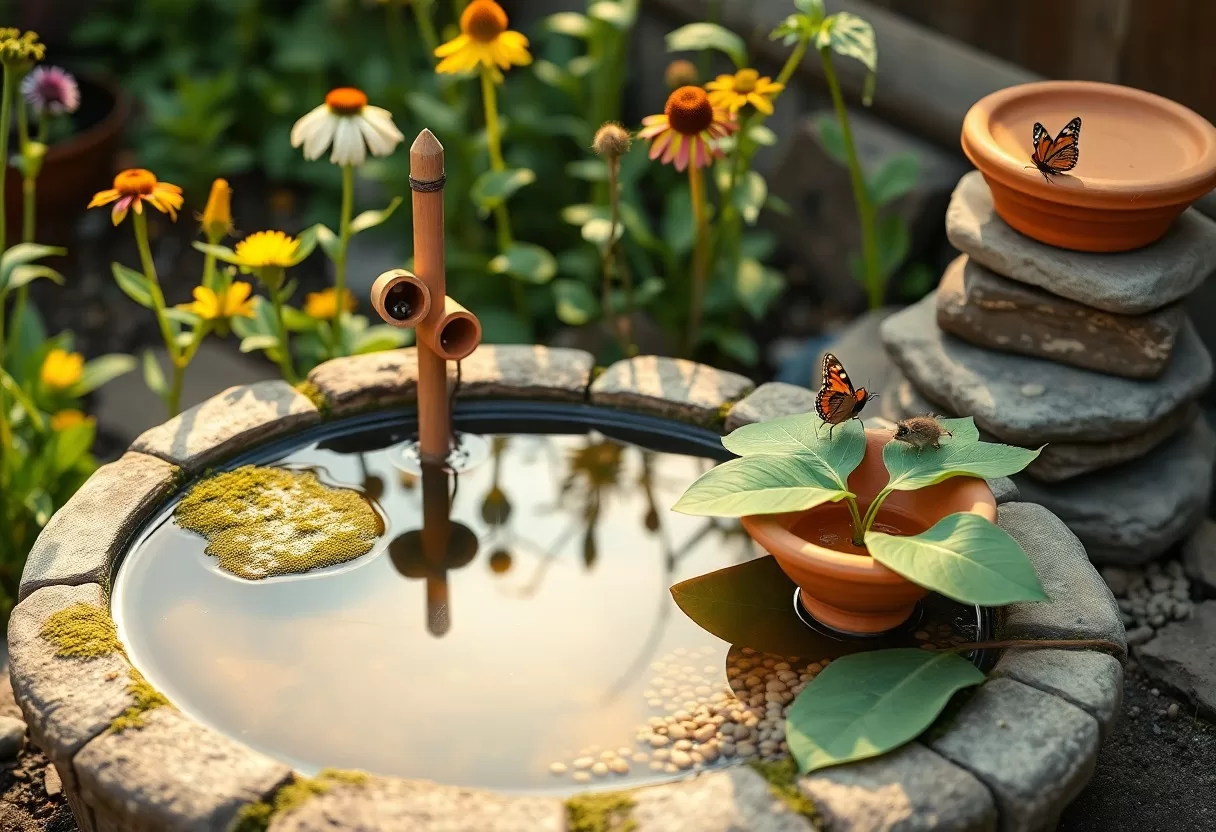
Providing water year‑round makes your garden a magnet: even a shallow saucer (2-5 cm) attracts insects and small birds, while a 1-2 m² pond supports amphibians and dragonflies. Install moving water or a bubbler to prevent mosquito breeding-mosquito larvae typically take 7-14 days to develop-and edge features with native plants. For step‑by‑step habitat design, follow 7 Steps to Build a Forest Garden for Wildlife.
Incorporating Birdbaths and Ponds
Place birdbaths 1-2 m from cover so birds can retreat quickly; keep depths under 5 cm at the edge with a gradual slope and textured surfaces for perching. Use pumps or drippers to create ripples that attract species and disrupt mosquito larvae. For ponds, include shallow marginal shelves planted with native sedges or water mint and provide escape ramps so frogs and small mammals can exit safely.
Benefits of Natural Water Features
Natural water features boost biodiversity by offering drinking, bathing and breeding sites: a 1 m² pond at 10 cm depth holds ~100 L of water, moderates microclimate and captures runoff. You’ll see more pollinators, insectivorous birds and amphibians; dragonflies and predatory beetles help control pests. Well‑designed water also increases habitat complexity, often resulting in higher species richness within months of installation.
Plan seasonal maintenance to keep your feature healthy: clear silt annually, prune margins in late spring, and avoid chemical treatments that harm invertebrates. Plant at least three native species around edges-rushes, sedges and water‑loving herbs-to provide shelter and food. Expect visible ecological benefits within a single season and long‑term stability if you maintain water movement and native planting.
Attracting Birds to Your Garden
Plant native shrubs like serviceberry, elderberry and oaks and create a three-layer structure-canopy, understory and groundcover-to supply berries, seeds and insects year-round. Provide a shallow birdbath (5-10 cm deep) with a dripper or recirculating pump and keep seedheads for winter for finches. Leave a standing dead snag or brush pile for cavity nesters and ground-foraging species; studies show native plant patches can attract up to 3× more bird species than turf alone.
Birdhouses and Feeding Stations
Choose nest boxes with precise entrance diameters: 28 mm (1 1/8″) for chickadees, 32 mm (1 1/4″) for bluebirds and 38 mm (1 1/2″) for nuthatches, mount them 1.5-3 m (5-10 ft) high and face away from prevailing winds. Use tube feeders for small seeds, platform feeders for mixed diets and suet cages for insectivores; offer black-oil sunflower and nyjer. Clean feeders and boxes every two weeks with hot soapy water or a 10% bleach solution to limit disease.
Minimizing Hazards
Keep domestic cats indoors or in a secure “catio” and place feeders 4-5 m (13-16 ft) from dense cover to reduce ambush risk. Prevent window collisions by installing external screens or placing feeders within 1 m (3 ft) of windows or beyond 30 m (100 ft); use decals on the outside to break reflections. Avoid broad-spectrum insecticides-especially neonicotinoids-and replace loose garden netting that can entangle birds with rigid, visible barriers.
For window safety, apply markings on the exterior spaced closely enough to interrupt reflections, or install angled awnings to change glare. When managing pests, favor biological controls like Bacillus thuringiensis (Bt) for caterpillars, insecticidal soaps for aphids and hand-removal-these preserve the insect prey birds need during breeding. Inspect mesh and netting monthly; any soft or sagging netting should be removed immediately since entanglement causes serious injury and death.
Supporting Insects and Pollinators
You should create layered forage and habitat to support urban pollinators: about 75% of flowering plants depend on animal pollination and one-third of global food crops rely on it, so provide continuous bloom from early spring (willow, crocus) through late fall (aster, goldenrod), shallow water, bare soil patches for ground-nesting bees (roughly 70% of native bees) and hollow stems for cavity nesters.
Planting Pollinator-Friendly Flora
You should start with native perennials-Echinacea, Rudbeckia, Salvia and Asclepias (milkweed) attract bees, butterflies and hummingbirds; group each species in clumps of at least 1 m² to boost visitation, include early bloomers (willow, crocus) and late bloomers (Aster, Solidago) to extend forage for 6+ months, and replace single-species lawn strips with diverse wildflower mixes.
Avoiding Pesticides and Harmful Chemicals
You must eliminate routine use of neonicotinoids and broad-spectrum sprays; these compounds can persist in soil for months to years and sublethally impair bees’ navigation and foraging. Use integrated pest management: monitor weekly, set action thresholds, apply physical controls, release predators, and reserve biologicals (Bacillus thuringiensis) or insecticidal soaps for targeted, off-bloom treatments.
You can reduce pest pressure by planting companion species and hedgerows that attract predators and parasitoids; trials show hedgerows increase beneficial arthropod abundance and lower outbreaks. Since 2018, regulators in the EU have restricted outdoor neonicotinoid uses due to documented pollinator impacts. Set a tolerance threshold (often 10% cosmetic damage), hand-pick pests, use trap crops and avoid treated seeds or soil drenches to prevent long-term contamination.
Small Animal Haven
To support ground‑dwelling species in your garden, provide layered cover-brush piles, rock crevices and native grass tussocks; build log stacks of about 0.5-1 m³ and retain a 20-30 cm leaf‑litter layer to shelter amphibians, small mammals and invertebrates. You should also Learn How to Make Your Garden a Safe Haven for Wildlife. Keep pond edges shallow (10-20 cm) and avoid pesticides and rodenticides to protect food chains.
Creating Shelter and Nesting Areas
Use log piles, rockeries and purpose‑built boxes sized to species: small‑mammal boxes need about 15-20 cm internal floor space, bat roosts prefer narrow crevices, and amphibian shelters benefit from damp, shaded compost heaps. You should place shelters close to food and water, leave undisturbed zones 1-2 m wide for nesting, and mount bat boxes 3-6 m high with openings oriented away from prevailing winds.
Safe Passageways for Urban Wildlife
Connect green patches with low fences that include a 13 cm × 13 cm access hole for hedgehogs, ground‑level gaps for amphibians, and continuous hedgerows or green strips so animals can move without crossing open ground. You should reduce hard edges and provide dense cover along corridors to lower predation by cats and raptors.
Implement passages by creating stepping‑stone habitats-dense shrub clumps or small ponds every 10-30 m where space allows, wildlife ramps into garden ponds, and underpasses or grated culverts where roads interrupt routes. You should monitor usage with motion cameras or community surveys, keep corridors dark at night, and avoid poisons to reduce road mortality and support sustained movement.
Conclusion
Following this, you can transform even small plots into thriving refuges by planting native species, providing water and shelter, reducing pesticides, and offering nesting and overwintering sites; your efforts increase local biodiversity, support pollinators and birds, and create resilient green corridors that benefit community well‑being for years to come.
FAQ
Q: How do I design a small urban garden to support birds, beneficial insects and small mammals?
A: Use layers-trees, shrubs, herbaceous perennials and groundcover-to provide food, shelter and nesting sites; prioritize native plants that offer nectar, seeds and berries across seasons and stagger bloom times for continuous resources. Include a clean water source (shallow dish or small pond with sloped edges), patches of bare soil for ground‑nesting bees and a few undisturbed refuges such as log piles, deadwood and leaf litter for insects and small mammals. Limit turf, create hedgerows or dense shrub lines to form corridors, and place feeders and water where cats and predators have limited access. Avoid broad‑spectrum pesticides; adopt planting diversity and companion planting to reduce pest outbreaks naturally.
Q: What shelter and nesting options work best for different species, and how should I install them?
A: For birds, install nest boxes sized and sited for target species-correct hole diameter, height and orientation matter (e.g., small tit boxes 25-30 cm up, 28-32 mm hole); place some boxes on trees and some on buildings to spread risk. For solitary bees, create nesting blocks or mud walls with 6-10 mm holes, and leave small bare soil patches and stems intact for tunnel‑nesters. Build insect hotels with a mix of bamboo, hollow stems and deadwood, but keep them sheltered from driving rain and above ground to avoid damp. Provide brush piles and dense native hedges for small mammals and overwintering insects; avoid sealing cavities or excessive tidying during breeding and dormancy seasons. Check and clean boxes outside breeding periods to reduce parasites.
Q: How can I manage pests, pets and public health while keeping the garden wildlife‑friendly?
A: Use integrated pest management: monitor, encourage predators (ladybugs, lacewings, birds), use physical barriers (netting, collars) and targeted interventions only when thresholds are exceeded. Prefer mechanical controls and selective organic treatments (soap sprays, Bt for caterpillars) applied at times that spare pollinators (evening or early morning) and avoid systemic insecticides and neonics. Reduce mosquito breeding by adding moving water, introducing mosquito‑eating fish, or using Bacillus thuringiensis israelensis in standing water; avoid pesticides that harm non‑target species. Protect wildlife from pets with cat‑proofing (enclosures, bells, keeping cats indoors at dawn/dusk) and use wildlife‑safe rodent control methods (habitat modification rather than poisons). Share signage or guidance if the space is public to inform neighbors about pesticide policies and pet behavior.]