
Smart Wearables Meet Smart Homes – How Wearable Tech Integrates with Your House
Wearables increasingly connect to home systems, letting you unlock doors, adjust climate, and monitor health from your wrist. You can automate routines and save energy, experiencing convenience and more responsive, personalized care, but integration also introduces privacy and security risks. This post explains how devices communicate, which platforms support your home, and how to mitigate threats with strong authentication and firmware updates so your smart home serves you safely.
Key Takeaways:
- Wearables turn into both authenticated controllers and continuous sensors for smart homes, enabling presence-aware automation, biometric-triggered actions, and gesture or voice control from the body.
- Integration relies on Bluetooth, Wi‑Fi, Thread/Matter and cloud APIs; prioritizing local standards like Matter reduces latency and exposure compared with cloud-only approaches.
- Strong security, explicit consent, and edge processing are necessary to protect data and battery life, and designers must optimize connectivity and UX to make interactions seamless and reliable.
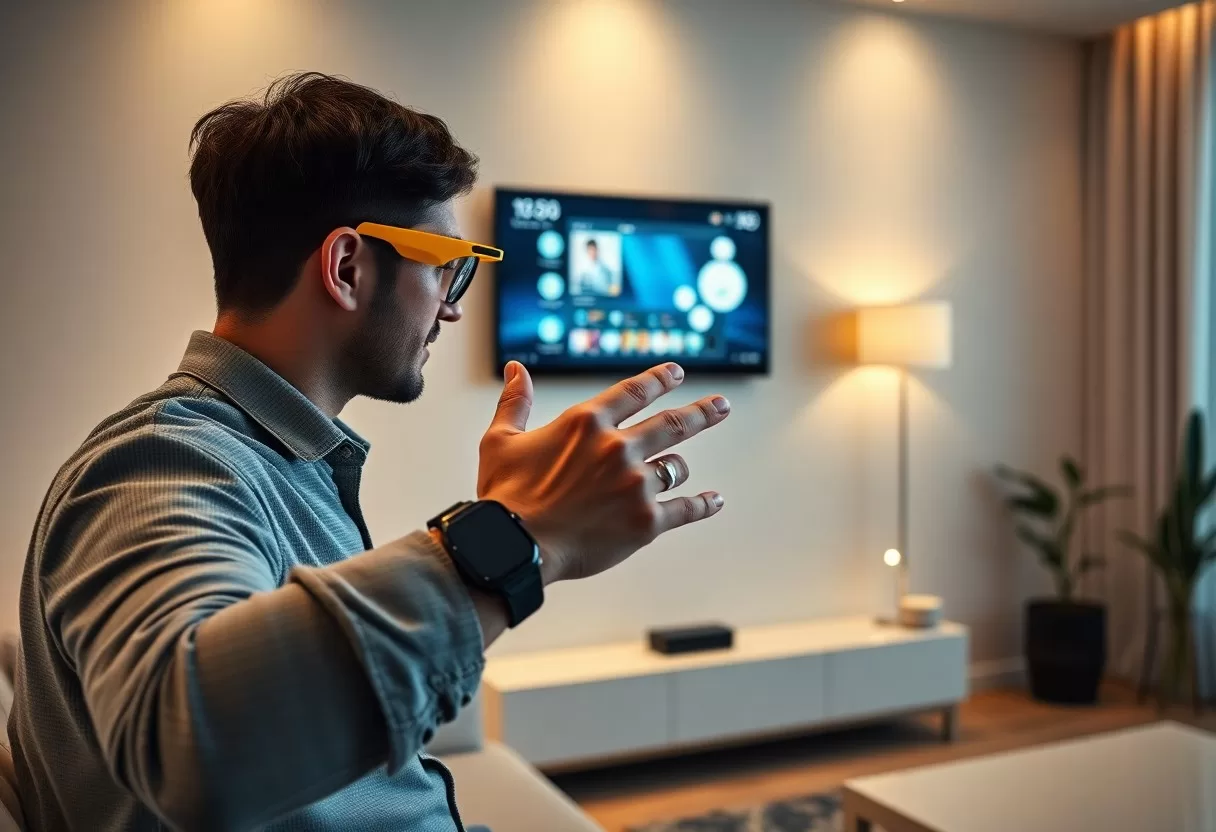
The Evolution of Wearable Technology
By mapping milestones like Fitbit’s launch (2007), Bluetooth Low Energy (2010), and the Apple Watch debut (2015)</strong), you see wearables evolve from pedometers to multimodal health platforms with on-device AI, continuous sensing, and tighter smart‑home links; this shift enabled features such as ECG, SpO2, and UWB spatial tracking while raising privacy and security tradeoffs you must manage.
Historical Context
Beginning with calculator watches and basic fitness trackers, wearable roots extend to medical implants and hearing aids; you witnessed consumer fitness bands hit the mainstream after 2007, BLE in 2010 enabled low‑power always‑on connections, and developers iterated rapidly-so the pattern moved from single‑metric gadgets to sensor fusion and cloud analytics within a decade.
Current Innovations
Today you encounter wearables with FDA‑cleared ECG (Apple Watch, 2018), continuous glucose monitor integrations (Dexcom partnerships), and smart rings (Oura, WHOOP) offering sleep staging via on‑device ML; manufacturers now pack multimodal sensors (PPG, ECG, bioimpedance) and edge AI into devices under 50 grams, improving insights but also expanding attack surfaces that demand strong safeguards.
Expanding on that, you benefit from technologies like Ultra‑Wideband (Apple U1 since 2019) that provide centimeter‑level positioning for secure, hands‑free home access, BLE Mesh and Thread for resilient networks, and Matter for cross‑vendor smart‑home interoperability; simultaneously, continuous biometric streams create privacy and security vectors that must be mitigated through encryption, policy, and transparent data practices.
Understanding Smart Home Technology
Modern smart homes rely on interoperable layers-local devices, a hub, cloud services and mobile apps-so you can automate routines and link wearables to household actions. Core protocols include Bluetooth LE (2.4 GHz), Zigbee (2.4 GHz) and Z‑Wave (~908 MHz), while platforms like SmartThings and Echo bridge them. For practical integration patterns and examples, see The Integration of Wearables with Smart Homes.
Key Components
Your system is built from sensors (motion, door, biometric), actuators (locks, lights, HVAC), a hub or bridge, cloud services and apps. Hubs unify protocols, APIs enable IFTTT-style automations, and wearables act as contextual triggers-heart rate spikes, geofencing, or fall detection. Nest-like thermostats can deliver 10-15% energy savings by learning occupancy patterns, showing how device-level data turns into household efficiency.
Benefits of Smart Homes
When you connect wearables, your home gains personalized automation: lights and temperature follow your location, health alerts trigger emergency lighting, and routines adapt to biometric cues. You get time savings, improved comfort, and measurable energy reductions; utilities and studies often report thermostatic savings in the low double digits when occupancy data is used.
For example, pairing a wearable’s fall detection with smart locks and lights can cut emergency response delays; likewise, geofenced wearables can reduce wasted HVAC runtime. At the same time, be aware of security vulnerabilities-weak device credentials or exposed cloud endpoints can jeopardize privacy-so you should enforce strong passwords, device firmware updates and two‑factor authentication where available.
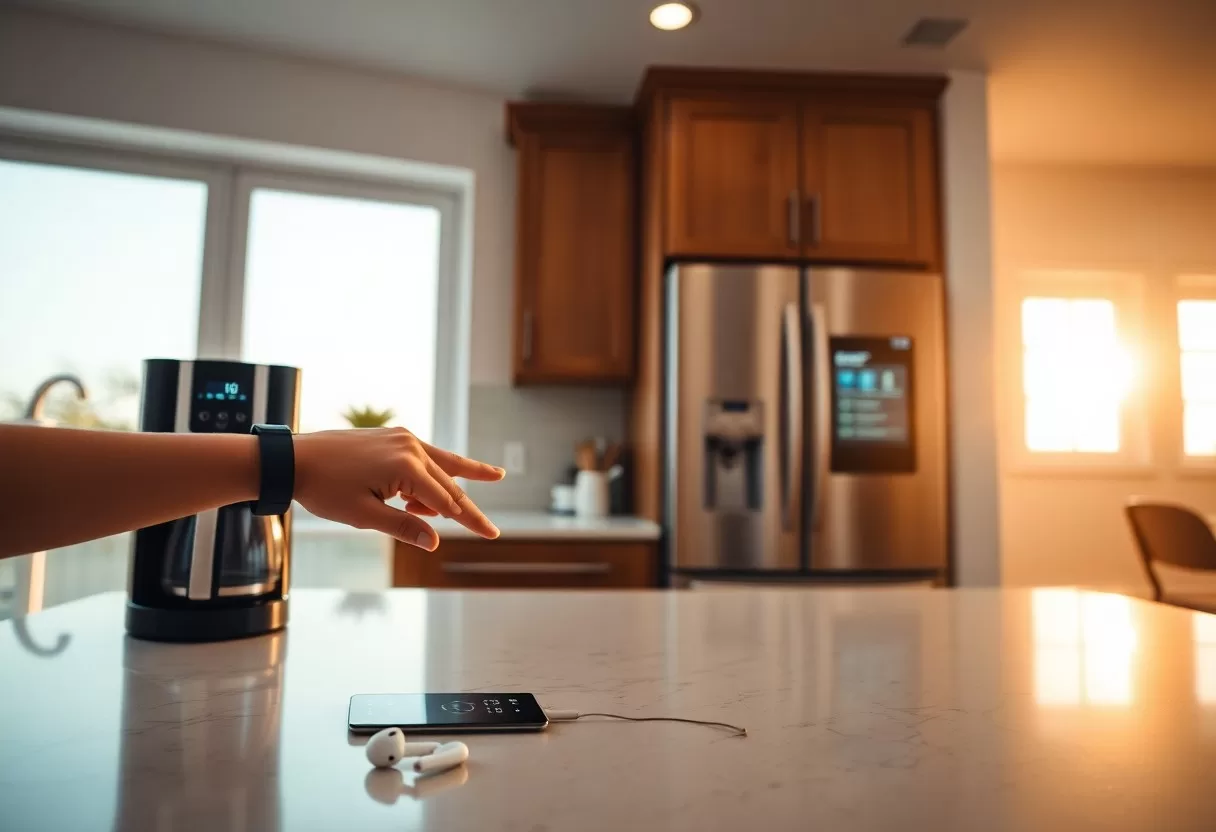
Integration of Wearables with Smart Homes
When you link wearables to home systems, they become additional sensor layers feeding your hub or cloud with continuous biometric and location data; for example, your Apple Watch can surface activity and heart-rate events while a Fitbit provides step and sleep stats to automations. You can create context-aware routines-adjusting HVAC, lights, or locks based on your vitals or proximity-and you must weigh the privacy and attack surface implications when sharing sensitive data with third-party services.
Communication Protocols
You rely on several transport standards: Bluetooth Low Energy (BLE) and Bluetooth 5 for direct wearable-to-phone links (BLE typical indoor range ~10-40 m, Bluetooth 5 extends line-of-sight range substantially), Wi‑Fi for high-bandwidth devices, and mesh protocols like Zigbee, Thread or Z-Wave to span rooms. Cloud and hub messaging often use MQTT, HTTPS or WebSockets; you should insist on TLS, token-based auth and firmware updates to reduce security risks.
Real-World Applications
You’ll see wearables drive automations such as presence-based routines that lock/unlock doors and arm alarms when your device leaves the geofence, sleep-tracking that nudges thermostats and smart blinds, and fitness-triggered lighting or media changes; vendors like Philips Hue, Nest, August and SmartThings already integrate with watch or phone apps, and services like IFTTT or Home Assistant let you chain events from heart-rate thresholds to smart-camera recordings for personalized responses.
Digging deeper, you can implement low-latency local rules on Home Assistant or SmartThings to process wearable inputs at the edge-reducing latency and cloud exposure-while cloud integrations enable cross-vendor workflows. For safety, configure multi-factor auth and scoped API tokens, segregate IoT networks, and log events; these steps protect the positive benefits (energy savings, faster emergency response) while mitigating the danger of unauthorized access to locks or health data.
Health Monitoring and Smart Homes
Wearables like the Apple Watch, Oura Ring and Dexcom CGM feed continuous biometric streams into home systems so that your house can act on real-time signals: a sustained tachycardia can trigger HVAC or a calming light scene, a low glucose alarm can illuminate the kitchen and send alerts, and a detected fall can unlock the front door for responders. Integration increasingly relies on Bluetooth Low Energy and the Matter standard, letting you tie medical-grade readings to practical automations without manual intervention.
Benefits for Personal Health
You gain earlier interventions and contextualized insights: ECG and irregular-rhythm notifications from smartwatches enable faster AFib follow-up, CGMs shrink hypoglycemic episodes, and continuous sleep tracking lets you tune behaviors. Clinical studies of remote monitoring show reductions in hospital readmissions – often cited in the 20-30% range for heart-failure cohorts – and documented cases where smartwatch fall detection summoned EMS and prevented worse outcomes.
Impact on Home Environments
Your home becomes an active care partner: thermostats can lower bedroom temperature when your sleep score drops, smart lighting simulates dawn when your wearable indicates light sleep, and air-purification ramps up if wearables show increased respiratory rates. Vendors already offer rules that map specific biometrics to devices, so you get tailored environmental tweaks that support recovery and daily wellness.
Beyond comfort, automations can address immediate safety: a persistent high heart rate plus unresponsiveness can trigger an emergency routine that flashes lights, unlocks a smart lock for paramedics, sends location and vitals to caregivers, and shuts off gas valves. While these workflows improve outcomes, you must weigh benefits against health-data exposure risks and insist on end-to-end encryption, vendor security attestations, and strict access controls.
Security and Privacy Considerations
Integrating wearables with your smart home increases the attack surface: sensors, hubs, and cloud accounts create new pathways for data leaks and unauthorized control. For example, the 2018 Strava heatmap exposed sensitive locations by aggregating fitness data, showing how location telemetry can compromise safety. You should enforce secure onboarding, least-privilege device scopes, and OTA firmware updates. For implementation guidance see How to combine intelligent body development with smart …
Data Protection
You must protect health and behavioral data with AES-256-class encryption at rest and TLS 1.2+ in transit, implement strict key management, and minimize retention windows. Consent flows should be granular, auditable, and aligned with GDPR/HIPAA where applicable. Use anonymization for analytics, maintain immutable audit logs for access, and delete stale data after a defined retention period to reduce exposure.
Vulnerabilities in Integration
Many integrations fail due to default passwords, unsecured Bluetooth pairing, and open or poorly authenticated APIs; researchers have demonstrated BLE pairing weaknesses that enable eavesdropping and device spoofing. You should treat the hub, cloud, and wearable as separate threat domains and avoid broad permissions that allow one compromised device to control your entire home.
You mitigate risks by enforcing network segmentation (VLANs for IoT), requiring MFA on cloud accounts, applying firmware updates within 30 days, and using certificate pinning; schedule regular penetration tests and real-time telemetry monitoring so you detect lateral movement before attackers reach critical systems.
Future Trends in Wearable and Smart Home Integration
Over the next five years you’ll see tighter convergence driven by standards and faster networks: Matter (launched 2022) plus 5G and edge processing let wearables and hubs coordinate in real time. For example, your Apple Watch or Oura Ring can trigger home automation with lower latency and reduced cloud exposure. Expect smoother routines and energy savings, and beware of greater attack surfaces and privacy erosion you must mitigate.
Emerging Technologies
Ultra‑wideband (UWB) and BLE direction‑finding deliver centimeter‑class positioning-Apple’s AirTag demonstrates this precision-while on‑device ML and edge AI enable sub‑100 ms responses and limit data sent to the cloud. Advances in flexible sensors, energy harvesting, and battery chemistry extend wearable runtimes, but they also expand firmware and supply‑chain risk vectors you should counter with firmware signing and secure provisioning.
Predictions for the Future
Expect wearables to act as persistent personal keys and health sensors for your home: automatic unlocks when your device approaches, HVAC and lighting tuned to skin temperature or stress, and automations triggered by continuous glucose or arrhythmia alerts. By 2030 many homes will rely on biometric‑informed automations, delivering seamless convenience while amplifying data governance and privacy challenges you need to plan for.
For example, a Dexcom CGM low reading could dim lights, unlock the door, and notify caregivers or emergency services; the upside is faster intervention, but false positives risk unnecessary actions, so you must require multi‑signal confirmation, rate limits, local overrides, and strict data governance to balance safety and reliability.
Summing up
Summing up, you gain a seamless, context-aware home as wearables share biometric and location data to automate climate, lighting, security, and routines while you retain control through consent and personalized settings. By adopting interoperable devices and clear privacy choices, you can enhance convenience, safety, and energy efficiency without sacrificing autonomy. Plan for updates and interoperability to keep your system responsive and future-proof.
FAQ
Q: How do wearables communicate with smart home devices and platforms?
A: Wearables connect to smart home systems through several layers: local wireless protocols (Bluetooth Low Energy for short-range pairing, Wi‑Fi for higher-bandwidth local/cloud access, and Thread for low-power mesh networks), intermediary hubs or bridges (home assistants, smart speakers, or dedicated gateways that translate between protocols), and cloud-to-cloud integrations (vendor APIs, OAuth authentication, and automation services like IFTTT or platform-specific skills). Many modern ecosystems also support Matter, which standardizes discovery, authentication and local control across devices. Communication can be direct (a smartwatch controlling a nearby light via BLE) or indirect (wearable uploads biometric data to a cloud service that triggers home automations). Pairing typically requires app-based authentication and permission grants; continuous monitoring uses persistent connections or periodic polling depending on the protocol and power constraints.
Q: What privacy and security risks come from integrating wearables with smart homes, and how can I reduce them?
A: Risks include unauthorized access through weak pairing, data exposure from cloud services, inferred location and behavioral tracking, and compromised companion apps or third-party integrations. Mitigations: enable vendor-provided firmware updates and apply them promptly; use strong, unique passwords and two-factor authentication for accounts; segment your network (separate IoT/VLAN or guest SSID) and restrict remote access to trusted services; limit app permissions and data-sharing settings to the minimum needed; prefer local-control options (Matter/local APIs) when available to reduce cloud dependence; audit third-party integrations and revoke those you no longer use; encrypt traffic (use HTTPS/TLS, VPNs for remote access) and monitor device logs for unusual behavior. For medical or sensitive health data, choose vendors with clear privacy policies and transparent data-handling practices.
Q: What practical automations and setup tips make wearables most useful with a smart home?
A: Use wearables for presence-based automations (auto-lock/unlock doors, arrive/leave lighting and HVAC presets), health-triggered responses (sleep mode scenes, fall detection alerts routed to emergency contacts and smart locks), and adaptive comfort (adjust lighting, climate, or music based on activity or heart rate). Setup tips: confirm compatibility (Matter, supported protocols, required hub), update firmware and apps before pairing, grant only needed permissions, create clear, testable automation rules with fallback conditions (manual override, timeout), and test routines in different scenarios. Optimize battery and responsiveness by choosing appropriate trigger methods (BLE for immediate proximity, geofencing for broader location), set sensible thresholds for biometric triggers to avoid false positives, and keep backup controls (voice, physical switches, or app shortcuts) in case automations fail.