
Optical Illusion Art – Trompe L’oeil Ceilings, Floors & Walls
It’s a concise guide that shows you how trompe l’oeil transforms ceilings, floors and walls; realism demands precise technique, while tripping hazards and disorientation warn careful placement, and dramatic depth and light reward bold design.
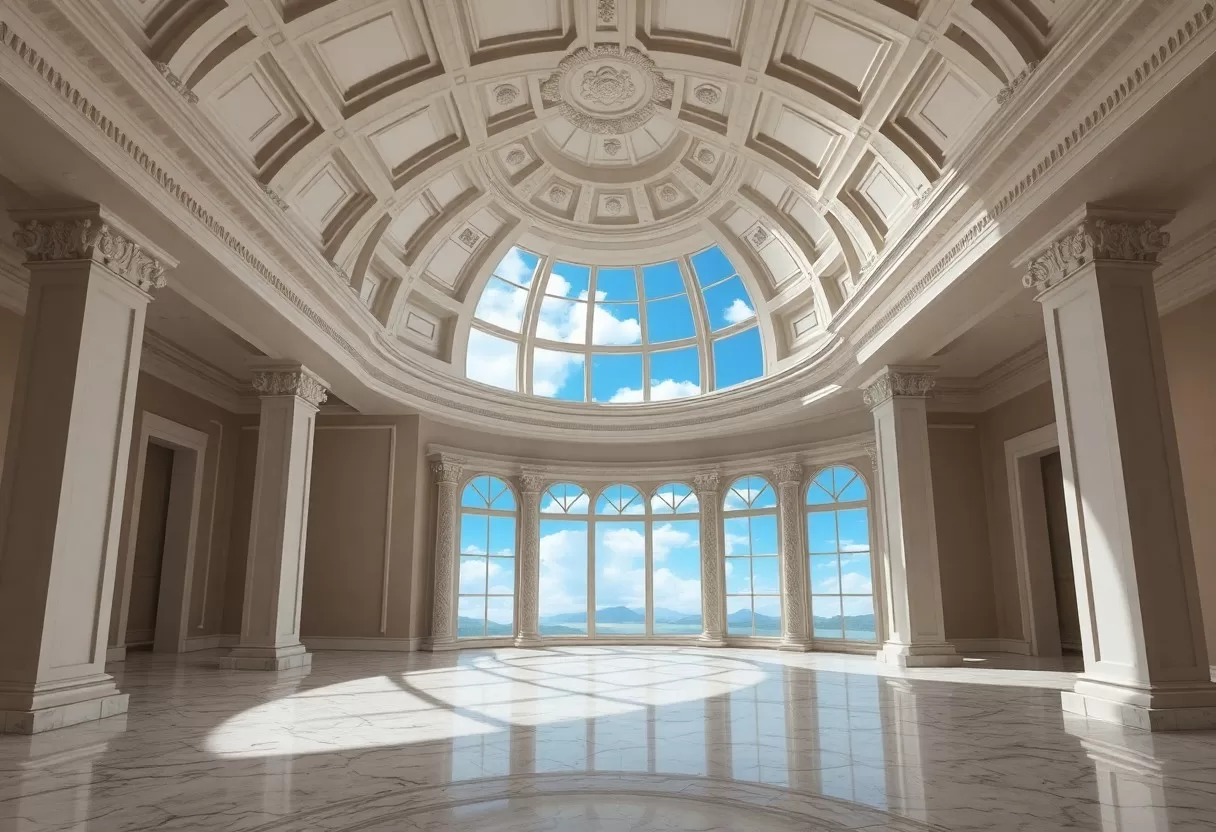
Key Takeaways:
- Transforms flat surfaces into convincing depth and architectural features using perspective, foreshortening, and shading.
- Depends on precise planning of sightlines, scale, lighting and viewing angles to sustain the illusion from intended vantage points.
- Versatile for ceilings, floors and walls-creates immersive environments, guides movement, or restores lost architectural detail.
Historical Context & Influences
History shows you trompe l’oeil evolved from practical decorative skill into a refined study of perception, with ancient techniques informing later mastery and persistent influence on modern spatial art.
Origins: classical trompe l’oeil and ancient precedents
Archaeological finds offer you Roman and Greek ancient frescoes and faux architectures that employed foreshortening to simulate depth, creating early visual tricks still studied today.
Renaissance to contemporary movements and notable practitioners
Renaissance artists taught you systematic perspective, and Renaissance masters like Andrea Pozzo expanded ceiling illusion into theatrical, immersive programs that influence contemporary muralists.
Artists show you how Andrea Pozzo’s ceiling perspectives, Giovanni Battista Tiepolo’s dramatic frescoes and Pietro da Cortona’s spatial compositions established baroque conventions, while modern figures such as Julian Beever, Kurt Wenner and Edgar Müller adapted anamorphosis for public spaces; note that floor illusions can cause disorientation and tripping hazards, even as their public engagement redefines urban interaction.
Visual Principles & Materials
To push believable illusion you must control scale, edge, light and surface: align vanishing points to the viewer, design for a specific viewing distance (commonly 1-10 m indoors), and pick finishes that manipulate specular highlights versus diffuse reflection. Your surface choice-plaster, drywall, wood or masonry-changes brushwork, adhesion and long-term stability, so plan substrates and coatings together rather than as an afterthought.
Perspective, foreshortening, anamorphosis and color theory
You translate three-dimensional cues into paint by using one-, two- and three-point perspective, exaggerated foreshortening and anamorphosis-as in Holbein’s skull-to force a correct viewpoint. Apply color theory practically: warm hues advance, cool recede; increase local contrast by 10-30% for focal elements and drop saturation for distant planes to simulate atmospheric depth.
Paint systems, substrates, digital projection and mixed media
Choose systems by location: for interiors use UV-stable acrylics over flexible primers; for exterior murals prefer silicate mineral paints that chemically bond to masonry. Match substrates-Venetian plaster, lime render, MDF-with appropriate primers; combine projection mapping (typical projectors 4,000-20,000 lm) and LED accents for dynamic effects, but mitigate hazards like solvent fumes and cadmium pigments with ventilation and PPE.
For execution, prep matters: strip contaminants, apply an alkali-resistant primer on masonry or a bonding primer on smooth panels, then build thin paint layers-acrylic emulsions for fast curing, alkyds for enamel-like hardness. When integrating projection, paint a neutral-gray projection surface (gain ~0.8-1.0) and use mapping tools such as MadMapper or TouchDesigner to calibrate keystone and color. Always ventilate during solvent use and wear appropriate respirators when sanding or working with powdered pigments.
Ceilings: Techniques & Case Studies
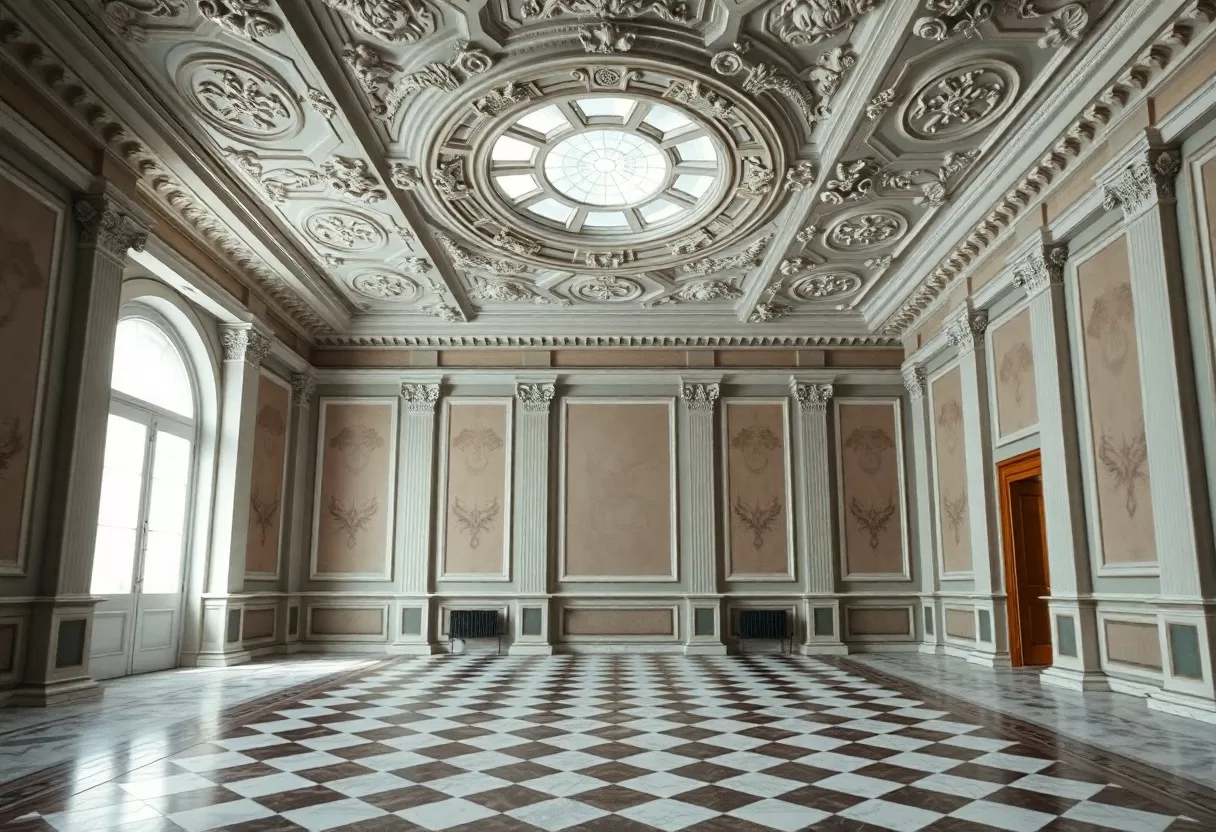
You apply layered perspective, controlled glazing and targeted lighting to sell depth on ceilings; a recent 18 m² installation used 6 glaze layers and 4 LED zones, finished in 12 days. Study vortex compositions like Trompe L’Oeil Art Rug: Optical Illusion Vortex Decor to adapt pattern flow. Use Trompe L’oeil sightline tests and optical illusion staging to tune scale and color contrast for your space.
- 1) Baroque church dome – 120 m² fresco, 18 painters, 9 months; cost €95,000; achieved 28° illusion angle from nave; fresco required lime-plaster curing cycles of 24-48 hrs per intonaco layer.
- 2) Boutique hotel lobby – 36 m² canvas mural, printed 300 dpi on fire-rated textile, installed in 3 days; budget $8,500; lighting zones: 6 RGB channels; sightline tests reduced distortion by 42%.
- 3) Mall atrium installation – 50 suspended foam modules, total dead load 320 kg, rigged to existing steel trusses; installation crew 6, 5 days; seismic anchor spec M12 with 1.5 kN safety factor.
- 4) Residential skylight trompe – 14 m² painted ceiling, 4 glaze passes, artist team 2, 10 days; final perceived depth increase measured at 60 cm compared to flat paint.
Fresco, canvas murals, and suspended three-dimensional effects
You choose fresco for permanence and chemical bonding, while printed canvas gives speed and repeatability; fresco cycles demand 24-48 hour curing per layer, canvas panels typically max 3 m width requiring seamless joins. When adding suspended 3D elements, specify fire-rated materials and rated hardware; a typical suspended installation uses modules weighing 2-15 kg each with distributed rigging points to avoid point loads.
Sightline planning, scaffolding and structural considerations
You map sightlines from primary approach points, aiming for an optimal perceived-depth cone around 30-40° off horizontal; scaffold platforms often reach 8-12 m and must meet local load standards (commonly 1.5-2.0 kN/m²). Secure attachment to structure with rated anchors (M10-M12) and specify fall-arrest plans for crews to mitigate major hazards during installation.
You calculate perspective grids on full-scale mockups and run walk-test simulations to verify illusions at 1-5 m viewing distances; use scaffold layouts that allow lateral access every 3 m and confirm building tie-in locations can support both static and dynamic loads. For suspended work, design rigging with a minimum safety factor of 4 and log all anchor tests; this prevents unexpected deflection and keeps the visual effect stable for your viewers.
Floors & Pavements
Floors and pavements let you extend trompe l’oeil into circulation paths, turning ordinary surfaces into immersive vistas that guide movement and draw attention; use high-contrast perspective to maximize depth while controlling sightlines.
Anamorphic floor art, 3D street painting and optical pavement interventions
Anamorphic floor art, 3D street painting and optical pavement interventions ask you to view from specific angles to unlock dramatic scenes; 3D illusions boost engagement but require clear sight markers so pedestrians perceive depth safely.
Durability, slip-resistance, maintenance and public safety
Durability, slip-resistance, maintenance and public safety mean you must choose materials that resist wear, UV fading and provide certified anti-slip surfaces; regular inspections prevent tripping hazards and protect both artwork and users.
Materials selection forces you to weigh visual clarity against functional demands. Choose pigmented epoxy or acrylic systems with UV-stable pigments and micro-aggregate finishes to achieve both colorfastness and certified slip-resistance. Plan a maintenance regimen that includes gentle pressure washing, timely resealing and inspections after heavy traffic or weather events. Where installations face uneven substrates, you must address leveling to eliminate tripping hazards and document safety testing to satisfy municipal regulations and public liability concerns.
Walls & Architectural Integration
Walls invite you to blend painted perspective with real moldings, letting visual depth extend physical volumes; consult Understanding Trompe L’Oeil: 9 Examples of … for techniques that help you match light, scale and surface finish.
Interior trompe l’oeil: faux architecture, niches and built-in illusions
Interior treatments let you simulate pilasters, niches and cornices so rooms appear larger; you must align vanishing points and shadowing with real joinery to keep viewers convinced and avoid perceptual dissonance.
Exterior façades, scale translation and urban context
Exterior applications force you to translate small studies into readable massings; select pigments and finishes that hold up to weather and street-level viewing while preserving consistent scale cues across distances.
Scaling up requires you to convert fine detail into bold, legible forms and anchor vanishing points to common sightlines; you need coordination with architects, engineers and permits, plus surface prep, scaffolding and UV-resistant paints. Misjudged proportions can cause misreadings that distract drivers, whereas a well-executed façade gives the block a distinctive identity and renewed presence.
Design, Installation & Conservation
You coordinate materials, substrates and finishes to achieve convincing trompe l’oeil while planning for longevity; specify UV-resistant coatings, control humidity, and mitigate moisture risks during installation and conservation.
Project workflow: concept, mockups, client approval and documentation
Plan concept-to-completion steps with tight mockups, staged approvals and clear records so you secure sign-off; keep client approval documented and create archive-quality files for future conservation.
Lighting, ongoing maintenance, restoration and preservation practices
Maintain controlled lighting and limit exposure to direct sun; schedule gentle cleaning and inspections, avoid abrasive cleaning, and protect finishes from UV damage.
Inspect surfaces regularly and record condition photos so you spot fading or flaking early. Keep display lighting low (about 150-200 lux) and fit UV filters or LED sources with negligible UV. Use soft brushes, tested pH-neutral solutions and patch tests-avoid abrasive cleaning or solvents. Engage a professional conservator for consolidation and major restoration, and maintain a stable relative humidity of 45-55% to prevent swelling or pigment loss.
Conclusion
From above you can appreciate how trompe l’oeil ceilings, floors and walls manipulate perspective to expand your sense of space, guide sightlines and enhance atmosphere; by understanding scale, vanishing points and seamless finish you can commission or create installations that convincingly blur real and painted architecture, elevate interiors, and control visual flow while ensuring materials and lighting support the illusion.
FAQ
Q: What is trompe l’oeil and how does it create convincing three-dimensional effects on ceilings, floors & walls?
A: Trompe l’oeil is a painting technique that uses perspective, foreshortening, light and shadow to simulate three-dimensional forms on flat surfaces. Artists design vanishing points and scale elements relative to the intended viewing position so architectural features, openings, or sculptural details appear real. Techniques include anamorphic distortion for specific vantage points, graded glazing to suggest depth, and chiaroscuro to model volume. Preparation often involves measured drawings, digital mock-ups or projected guides to align the illusion with existing architecture and sightlines.
Q: How should surfaces be prepared and which materials produce the most durable, realistic results?
A: Proper surface prep is crucial: clean, repair cracks or hollows, level and prime with a compatible primer or lime base for fresco work. For ceilings and walls, use acrylics, high-quality alkyds, mineral pigments, or true fresco for permanence; for floors choose industrial epoxy or polyurethane with embedded pigments and a non-slip clearcoat. UV-stable pigments and UV-resistant varnishes prevent fading; breathable finishes suit historic plaster to avoid trapped moisture. Account for substrate movement, humidity, and foot traffic-sealants, reinforcement mesh, and flexible topcoats extend longevity.
Q: How do I commission a trompe l’oeil project, what affects cost and timeline, and what common pitfalls should I avoid?
A: Commissioning starts with site photos, measurements, and a brief; an artist or studio will provide concept sketches, mock-ups or digital renderings, and a detailed quote. Cost drivers include scale, complexity, surface prep, access (scaffolding or lifts), specialized materials, and the artist’s experience. Typical timeline: initial design (1-4 weeks), surface prep (days to weeks), painting/execution (days to months depending on size), plus curing and protective coating time. Avoid poor lighting and incorrect viewing-angle assumptions, inadequate substrate repair, low-grade pigments or sealants, and skipping anti-slip measures on floors. Request portfolio examples, client references, a written schedule, warranty or maintenance guidance, and proof of insurance before starting.