
Sustainable Garden Practices – Create An Eco-Friendly Oasis
Sustainable gardening is about working with nature instead of against it, and it’s easier than many people think. Simple sustainable garden practices such as composting, collecting rainwater and growing native plants can turn your backyard into an eco-friendly retreat that needs fewer resources. Cutting back on chemicals and making room for wildlife keeps the garden healthier, saves money and helps the wider environment. Below you’ll find practical steps for layout, water, soil, pests and community projects, so you can start with whatever fits your yard.
Table of Contents
Key Takeaways: Sustainable Gardening
- Choose native plants, which need less water and care and support local wildlife.
- Compost to enrich soil, cut waste and reduce the need for chemical fertilizers.
- Collect rainwater to save water and rely less on municipal supplies.
- Use organic pest control, such as beneficial insects, to keep the garden in balance.
- Plant flowers for pollinators, which support food crops and wildlife habitat.
Designing Your Paradise: Principles of Eco-Conscious Garden Layout
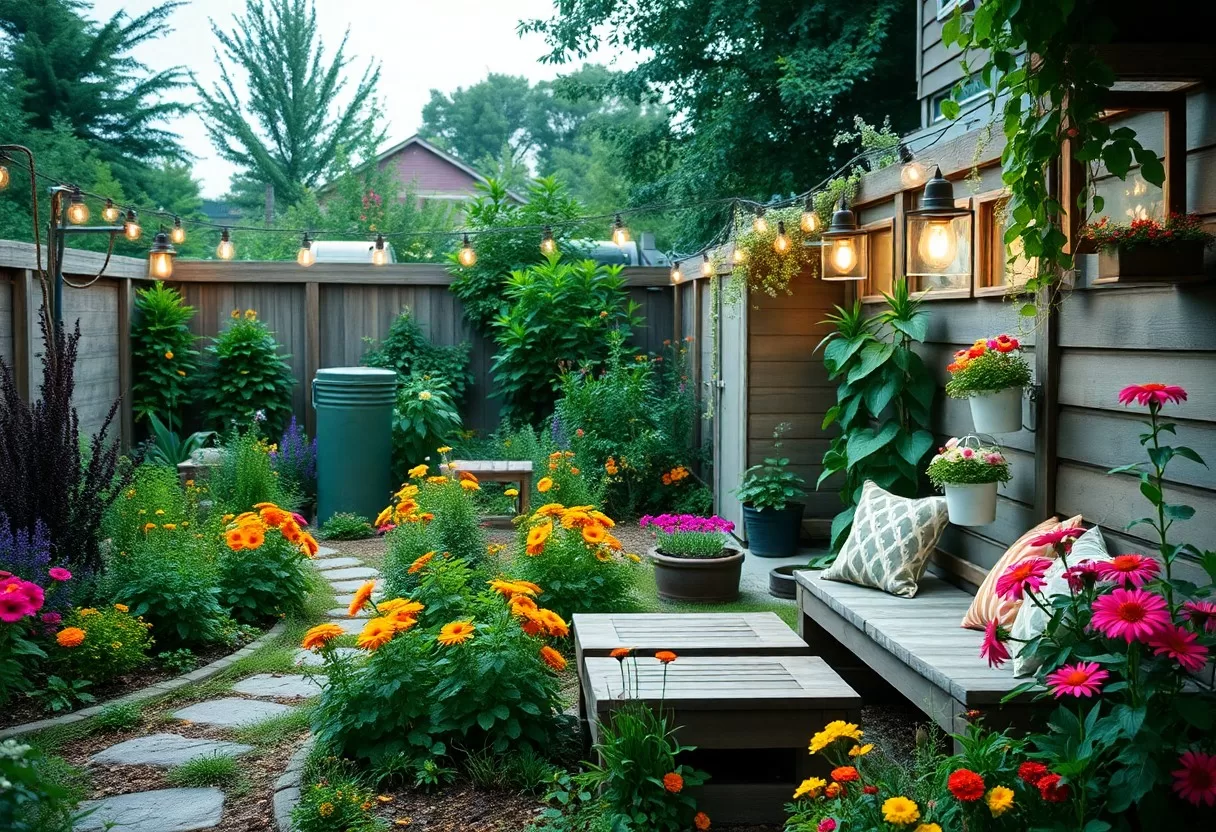
An eco-friendly garden starts with a layout that works with your site. Watch where water collects, where the sun falls and which areas stay dry. Use that to place rain gardens in low spots, permeable paths of gravel or pavers instead of solid concrete, and mulched beds that hold moisture. For more ideas, see these 11 eco-friendly ways to turn your backyard green. Set aside zones for native plants and edibles so the garden looks good, stays useful and copes well with dry or wet years.
Embracing Native Plants for Biodiversity
Native plants are one of the easiest ways to support local wildlife. They are adapted to your region’s climate and soil, so once established they usually need less water, fertilizer and fuss than many non-native species. They also feed native bees, butterflies and birds, many of which depend on specific local plants. Your state’s native plant society or local extension office can suggest reliable species for your area, from groundcovers to shrubs and trees.
The Art of Companion Planting to Enhance Growth
Companion planting pairs plants that help each other grow or keep pests away. A classic example is planting French marigolds near tomatoes, which many gardeners use to help suppress root-knot nematodes. Basil is another common partner for tomatoes, since both like heat and sun and you’ll often harvest them together. This old technique encourages a healthier garden and can reduce your need for synthetic fertilizers and pesticides, especially when you combine it with good soil care.
Companion planting can also help you get more from a small space. Legumes like peas and beans work with soil bacteria to fix nitrogen, which can benefit the plants that follow them. Many rose growers tuck garlic or chives at the base of their bushes in hopes of discouraging aphids. Pairing tall crops with low ones, or fast growers with slow ones, lets you fit more into each bed while keeping your practices sustainable and your harvest steady.
Harnessing Nature: Water Management Strategies
Good water management is at the heart of a sustainable garden. The goal is to give plants what they need without wasting a drop. Rainwater harvesting and drought-tolerant planting save water and help your garden cope with dry spells. Put these ideas to work and you can create an eco-friendly garden with sustainable landscape design.
Implementing Rainwater Harvesting Systems
Rainwater harvesting means collecting rain from your roof and storing it for the garden, which reduces your reliance on municipal water. A barrel or cistern under a downspout is the simplest setup. A 1,000-square-foot roof sheds roughly 600 gallons in a 1-inch rain, so even one barrel fills quickly. Use a screen or lid to keep out debris and mosquitoes, add an overflow that sends extra water away from the foundation, and check local rules, since a few areas regulate rainwater collection.
Incorporating Drought-Resistant Gardening Techniques
Drought-tolerant gardening relies on plant choice and smart design to use less water. Start with native plants and other species suited to your region’s rainfall and soil, since they need less irrigation once established. Group plants by water needs, a practice called hydrozoning, so thirsty plants aren’t sharing a zone with ones that prefer dry soil. This way you avoid overwatering some plants and underwatering others, and the whole garden stays healthier.
Layering your planting helps too. Taller plants and small trees can shade the soil and protect smaller plants that struggle in harsh afternoon sun, which reduces evaporation. A 2 to 3 inch layer of mulch keeps moisture in and blocks the weeds that compete for water. You might also try xeriscaping, which uses gravel, rocks and drought-loving plants to create an attractive, water-efficient garden. Water deeply and less often to encourage deep roots, ideally early in the morning. Over time, a drought-tolerant garden can noticeably lower your water use.
Soil Health: The Foundation of Sustainability
Soil is the foundation of every garden. It anchors plants and supplies water and nutrients. Healthy soil is a living system full of microorganisms, organic matter and minerals that work together. If you want a sustainable garden, focus on building and protecting your soil first, since it directly affects how well plants grow and how they handle pests and disease. A simple soil test every few years tells you the pH and which nutrients, if any, are lacking.
Understanding the Role of Compost and Mulch
Compost and mulch are the two simplest tools for healthier soil. Compost adds nutrients and improves structure, helping sandy soil hold water and clay soil drain better, and it feeds beneficial organisms. Spread about 1 to 2 inches over beds each year. Mulch works like a protective blanket: it reduces evaporation, suppresses weeds and keeps soil temperatures steady. Keep mulch a few inches away from stems and tree trunks to prevent rot. Used together, they make the garden more productive and resilient.
Practicing No-Till Gardening for Soil Preservation
No-till gardening protects the soil structure and microbial life that digging and tilling break apart. When you disturb the soil less, organic matter and fungal networks stay intact and keep supporting plant growth. This method also helps the soil hold moisture, reduces erosion and improves nutrient cycling. Instead of turning beds each spring, you simply add compost and mulch on top and let worms and other soil life work it in.
Switching to no-till can make a real difference to your garden over a few seasons. Organic matter tends to build up gradually, which improves nutrient availability and water holding. With less disturbance, beneficial organisms have a chance to multiply, which can help plants resist pests and diseases. To get started, cut spent plants at soil level rather than pulling them, grow cover crops in the off-season, and smother weeds with cardboard topped with compost when you make new beds.
Pest Control: Navigating the Balance
Controlling pests doesn’t have to mean reaching for harsh chemicals. Sustainable methods let you manage problem insects while protecting the beneficial ones and the rest of the garden. Aim for balance rather than total elimination. A few aphids or chewed leaves are normal, and they feed the predators that keep bigger outbreaks in check. Healthy, well-watered plants in good soil are also much less likely to suffer serious damage.
Utilizing Integrated Pest Management (IPM) Approaches
Integrated Pest Management (IPM) is a long-term approach that focuses on preventing pest problems through a mix of methods. It starts with regular monitoring and correctly identifying the pest, then learning its life cycle. From there you use cultural controls like crop rotation, mechanical controls like hand-picking and row covers, and biological controls like beneficial insects. Chemical options, ideally the least toxic ones, come last. This approach lowers risks to your garden, your pets and the environment.
Attracting Beneficial Insects for Natural Pest Deterrence
One of the easiest ways to increase your garden’s biodiversity is to attract beneficial insects that prey on pests. Ladybugs, lacewings and parasitic wasps are excellent allies, going after aphids, caterpillars and other common nuisances. Give them food, water and shelter, such as a shallow dish with pebbles, a patch of leaf litter or a small brush pile, and they’ll stick around. Over time this creates a natural balance that supports your garden’s health.
To bring in these helpful insects, plant a variety of native flowers and herbs that provide nectar and pollen from spring to fall. Small, open flowers like yarrow, dill, fennel and sweet alyssum are especially good at drawing predatory insects, and letting a few dandelions or mustards bloom helps early in the season. Avoid broad-spectrum pesticides, which kill beneficial insects along with pests. As the predator population grows, pest problems tend to ease on their own, giving you a healthier garden.
Engaging the Community: Building a Sustainable Gardening Culture
Building a culture of sustainable gardening goes beyond your own yard. Talk with neighbors and local groups to share knowledge, seeds, tools and tips. Hosting plant swaps, sharing what worked and what didn’t, and teaming up on small projects gives people a sense of ownership and pride. It also spreads sustainable practices around the neighborhood, and you’ll often learn more from an experienced local gardener than from any book.
Organizing Workshops and Gardening Clubs
Workshops and gardening clubs are a great way to bring like-minded people together. These meetups let you share what works locally, test new techniques and learn more about sustainable gardening methods. Hands-on sessions, such as building a compost bin, setting up a rain barrel or saving seeds, are often the most popular. Your local library, extension office or community center may offer free space for meetings, which makes it easy to get started.
Inspiring Local Initiatives for Environmental Stewardship
Local projects help sustainable practices spread well beyond individual gardens. Partnering with schools, local businesses and environmental groups can lead to community composting, tree planting days or neighborhood clean-ups. These efforts improve the local environment, raise awareness and encourage others to try sustainable practices at home. A school garden, for example, teaches children how food grows and gives them a lasting respect for nature, while also giving parents a reason to get involved.
Final Words
Sustainable gardening helps you create an eco-friendly garden that is good for the environment and a pleasure to spend time in. By using organic methods, saving water and encouraging biodiversity, you build a healthier ecosystem and shrink your environmental footprint. Your garden can become a welcoming retreat for you and for local wildlife, and it can give you fresh produce too. Start with one change this season, such as a compost pile or a rain barrel, and build from there.
Plan an eco-friendly garden with the free AI garden and landscape designer.
Rainwater harvesting calculator
Find out how much water your roof can collect and what tank size makes sense.
Frequently Asked Questions
What are the basics of sustainable gardening?
Build healthy soil with compost, use native plants, collect rainwater, avoid synthetic chemicals, mulch to save water and support pollinators and wildlife.
How can I make my garden more eco-friendly quickly?
Start composting, replace part of the lawn with native plants, add mulch and a rain barrel and stop using chemical pesticides.