
How to Reduce Construction Changes Before Building Starts
Most projects stay on budget when you lock scope, finalize drawings, and secure approvals; early coordination and rigorous reviews prevent dangerous on-site changes and save time and money.
Key Takeaways:
- Complete design documentation, coordinated drawings, and finalized specifications before construction starts to close scope gaps and reduce rework.
- Conduct early site investigations, geotechnical testing, and permitting to uncover conditions that would otherwise force late design changes.
- Establish clear scope definitions, approval workflows, contract terms with defined allowances, and regular constructability reviews with all parties to limit change orders.
Pre-design planning
Plan ahead by clarifying scope, budget, site constraints and approvals so you prevent late changes. Knowing that early alignment saves costly redesigns.
- Scope
- Budget
- Site constraints
- Approvals
How-to align stakeholders, objectives and decision-makers
Organize roles, set clear objectives and define who decides so you avoid indecision during design phases. Knowing who signs off prevents disputes and scope drift.
Tips for feasibility checks and key factors to evaluate
Assess site, zoning, utilities, schedule risks and early cost estimates so you reduce surprises. Knowing early technical vetting limits scope changes and budget shocks.
Review detailed feasibility by verifying soil conditions, environmental constraints, utilities capacity, permit timelines and funding commitments so you avoid late redesigns. Knowing comprehensive checks guide realistic design and procurement decisions.
- Soil conditions
- Environmental constraints
- Utilities capacity
- Permit timelines
- Funding commitments
Scope and requirements definition
Defining your scope and requirements sharply reduces change orders; you should use clear documents, sign-offs, and early stakeholder review; see How to Reduce Change Orders in Construction for practical tactics.
How-to create a clear, unambiguous scope of work
Draft a scope of work that lists deliverables, exclusions, milestones, and acceptance criteria; you must require stakeholder signatures and version control so you avoid ambiguous changes.
Tips for requirements gathering and prioritizing change drivers
Gather stakeholder inputs, rank drivers by impact and cost, validate with prototypes or mockups, and lock priorities before procurement so you limit later revisions.
- Scope: define deliverables, exclusions, and acceptance criteria.
- Requirements: document functional and non-functional items with owners.
- Recognizing change drivers early reduces change orders and cost.
Analyze stakeholder needs in focused interviews and workshops; you map priorities to budgets, assess technical risk, and assign decision owners so you limit scope drift and reduce change orders.
- Stakeholders: identify decision-makers and reviewers.
- Prioritization: score features by impact, cost, and schedule.
- Recognizing risk early lets you mitigate issues that drive change orders.
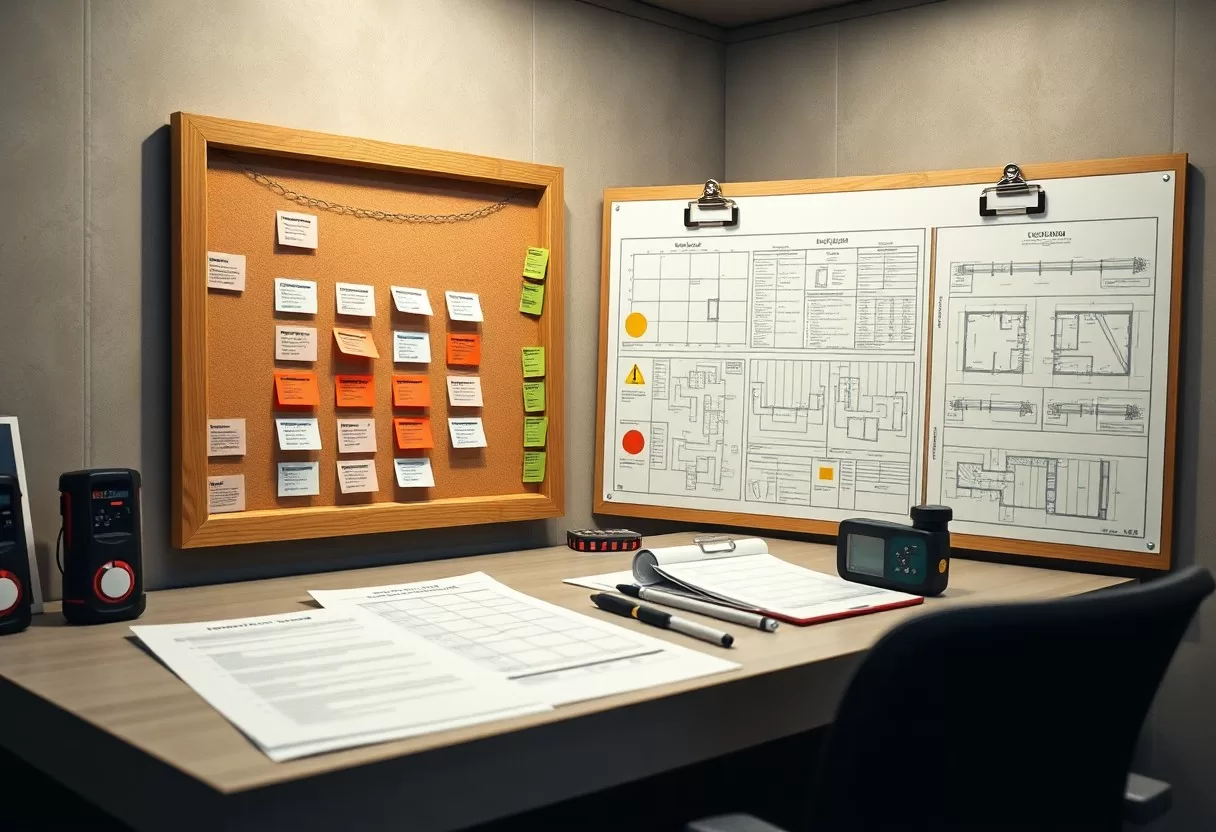
Design coordination and quality control
Your project’s ability to avoid late design changes depends on disciplined coordination and robust quality control. Run weekly multidisciplinary sessions, use automated clash detection nightly, and lock equipment choices before shop drawings. Teams that adopt model-based coordination with a 48-hour RFI turnaround often cut field changes by 40-60%. Assign a BIM coordinator for version control, enforce change freezes on approved models, and require signed discipline approvals to keep construction predictable.
- Multidisciplinary coordination
- Clash detection
- Version control
- Model ownership
- Change freeze
This focus prevents late design surprises that increase cost and delay schedules.
How-to set up multidisciplinary coordination and clash detection
Schedule weekly 60-90 minute coordination meetings with discipline leads, a BIM coordinator, and a minutes owner. Automate clash detection nightly using tools like Navisworks, Revizto, or BIM 360, filter by severity, and publish a prioritized clash list; assign each clash an owner with a 24-48 hour response SLA. Track status on a shared dashboard, run targeted pre-construction workshops for complex zones, and freeze resolved items before detailing.
Tips for design reviews, checklists and critical factors to verify
Use structured checklists covering constructability, tolerances, sequencing, utilities coordination, and regulatory compliance. Prioritize the top 10 factors: interface tolerances, access for maintenance, structural penetrations, routing conflicts, procurement lead times, and site sequencing. Require discipline sign-offs, consolidate comments into a single coordinated mark-up set, and target closing high-risk items within 72 hours to reduce downstream changes.
When you run design reviews, bind checklists to milestones, require a three-stage sign-off (preliminary, coordinated, shop), and log every decision with an owner and target date; projects using this approach often close over 80% of issues pre-construction.
- Checklists
- Constructability
- Access clearances
- Procurement lead times
- Discipline sign-offs
This rigorous process turns design reviews into an effective quality gate that stops errors before they reach the field.
Procurement, specifications and lead times
Procurement choices drive change orders; you should lock in specifications early, align lead times with the schedule, and confirm procurement paths to prevent late substitutions and delays.
How-to write specifications and procure materials to reduce substitutions
Specify performance criteria, acceptable tolerances and manufacturer models so you reduce substitutions, keep bids comparable, and let you approve any alternative before ordering.
- Specifications clarity
- Procurement routes
- Any lead times must be verified
Tips for vendor prequalification and factoring supply-chain risks
Screen vendors for capacity, financial stability and delivery history so you limit supply-chain risks and get reliable vendors before contracts start.
Assess vendor samples, visit facilities, check insurance, and require contingency plans to reduce substitutions and schedule slips; prioritize suppliers with proven lead times and transparent procurement practices.
- Vendor prequalification checklist
- Supply-chain transparency
- Any contingency plans should be contractually required
Contracts, approvals and decision protocols
You should lock scope by using fixed-price or GMP baselines, tie change orders to detailed exhibits, and require quantified cost/time impacts; a standardized clause cut change orders by 18% in a retrofit study. Read practical steps at 3 easy ways to reduce change orders. Thou must require a single escalation path and defined discretionary thresholds to block ad hoc directives.
- Contracts
- Change-order clauses
- Scope exhibits
- Escalation path
- Thou enforce authority matrix
How-to structure contracts and change-order clauses to limit discretionary changes
Draft clauses that define allowable triggers, mandate a standardized change-order form, cap emergency adjustments at $25,000, and require a 5-business-day validated impact report for cost and schedule; include contingency lines and a baseline schedule to quantify any delay claims so you limit subjective interpretations.
Tips for approval workflows, authority matrices and timing factors
Define clear thresholds: use 3-level approvals for changes over $50,000, delegated sign-off for $5,000-$50,000, and automated routing to prevent bypassing; require timestamped digital approvals so you capture decision history and enforce compliance.
Map roles in an authority matrix, assign response SLAs (e.g., 48 hours for PMs, 5 business days for owners), and automate routing by threshold; a portfolio of 30 projects cut average approval time from 7 to 2 days using this model. Thou require documented sign-off before any procurement or on-site changes occur.
- Authority matrix
- Approval thresholds
- Response SLAs
- Digital routing
- Thou lock procurement
Risk management and change-control processes
You align a detailed risk register with a formal change-control plan to limit late scope shifts; projects that integrate both typically see about a 30% reduction in change orders. Define clear approval thresholds, contingency reserves and contract clauses that assign known risks to the appropriate party. Thou implement a living risk log tied to procurement and design milestones.
How-to establish a formal change-control board and documentation process
You set up a change-control board (CCB) with a 3-5 person quorum-commonly the PM, design lead and owner rep-assign voting authority, and publish a charter; many teams require weekly reviews and a 72‑hour turnaround for impact estimates. Standardize a change form, version control and an approval matrix to avoid ambiguity. Thou record every decision in a centralized register.
- Membership: PM, design lead, owner rep (3-5)
- Cadence: weekly or biweekly meetings
- Templates: standardized change request and impact matrix
- Thresholds: monetary approval levels (e.g., $10,000)
- Thou ensure every vote and sign-off is timestamped in the register
Tips for tracking root causes, cost/time impacts and mitigation factors
You use structured RCA methods-5 Whys and fishbone-and capture the root cause, direct cost, and schedule variance within 48 hours; target KPIs like median resolution ≤7 days and change cost <1% of contract per event to keep focus measurable. Maintain a mitigation log tied to contingency burn rates and corrective actions. Thou map each RCA to an owner and a closure date.
- RCA methods: 5 Whys, fishbone
- Response time: log impacts within 48 hours
- KPIs: median resolution, avg cost per change
- Mitigation: action owner and closure date
- Thou link every RCA to a documented corrective action and schedule update
You can integrate BIM and ERP to auto-calculate delta costs and propagate design changes across drawings, cutting manual reconciliation time by weeks; a case reduced change orders from 25 to 7 after weekly RCAs and automated logs. Track changes per 1,000 labor-hours, avg cost per change and time-to-close dashboards to spot trends early. Thou set escalation triggers when unresolved changes exceed predefined thresholds.
- Tools: BIM, ERP, change-log dashboards
- Metrics: changes per K labor-hours, avg cost, time-to-close
- Case study: 25→7 changes after weekly RCA and automation
- Escalation: triggers at predefined thresholds (e.g., 3 unresolved)
- Thou automate notifications and tie escalations to executive review
Final Words
So you should invest time in detailed planning, clear scopes, thorough site assessments, and collaborative design reviews so your team identifies conflicts early; establish firm contractual documents, engage stakeholders and skilled consultants, and use BIM or mockups to validate plans to minimize surprises and change orders once construction begins.
FAQ
Q: How can detailed preconstruction planning reduce construction changes before ground is broken?
A: Detailed preconstruction planning reduces changes by resolving design, scope, and coordination issues before procurement and construction begin. Complete construction documents, including full architectural, structural, mechanical, electrical, and site drawings, provide a single authoritative reference for bidders and contractors. Use a coordinated Building Information Model (BIM) to detect clashes, simulate sequences, and confirm spatial requirements. Conduct constructability reviews with experienced contractors, subcontractors, and fabricators to identify practical conflicts and hidden costs early. Perform cost reviews and value engineering tied to detailed drawings so scope changes stem from informed decisions rather than surprises. Schedule decision milestones and freeze points for finishes, systems, and change-sensitive elements to prevent scope creep. Produce mockups and shop drawings for critical systems to validate fit, performance, and appearance.
Q: What site investigations and surveys should be completed to avoid unforeseen changes?
A: Comprehensive site investigation reduces unexpected conditions that trigger design or schedule changes. Order geotechnical reports, groundwater studies, environmental assessments, and utility location surveys well before final design. Carry out test pits, soil borings, and contaminant sampling where indicated to define foundation requirements and remediation needs. Verify existing structure conditions with measured surveys, as-built drawings, and infrared or scanning services for concealed elements. Document site access, staging constraints, and nearby operations to align logistics with design choices. Record all findings in a risk register and assign mitigation plans plus contingencies and contractual responsibility for latent conditions.
Q: Which contractual and procurement strategies minimize preconstruction changes?
A: Choose procurement and contract terms that allocate risk clearly and encourage early collaboration. Use early involvement arrangements such as early contractor involvement, design-assist, or progressive design-build where contractor input shapes constructability and schedule before bids are fixed. Specify clear scope definitions, allowances, and selection deadlines in contract documents to remove ambiguity that later prompts change orders. Adopt a formal change control process that requires written change orders, documented cost/time impacts, and approval gates before implementation. Prequalify bidders for technical competence and insist on detailed bids tied precisely to drawings and specs to reduce post-award adjustments. Procure long-lead items early and coordinate lead times in the schedule to prevent design substitutions driven by availability. Establish a single baseline set of contract documents and require RFIs and shop drawings to be resolved on a fixed timetable to lock scope.