
Indoor Aquariums – Integrating Water Worlds into Your Living Space
It’s a rewarding way to bring living aquatic ecosystems into your home, and when you plan properly you can enjoy a soothing focal point and improved well-being; however, you must prioritize proper filtration, heating, and routine maintenance to keep fish healthy and be mindful of the risk of leaks and electrical hazards that can damage property; this guide shows you how to select tanks, set up systems, and maintain water quality so your aquarium enhances your living space safely and attractively.
Key Takeaways:
- Plan placement and scale: choose tank size and location to support weight, sightlines, electrical access, and room flow.
- Prioritize water quality and equipment: proper filtration, heating, lighting, and routine testing/water changes maintain a healthy ecosystem.
- Design for harmony: select compatible species and plants, use aquascaping and lighting to create a living focal point that complements your décor.
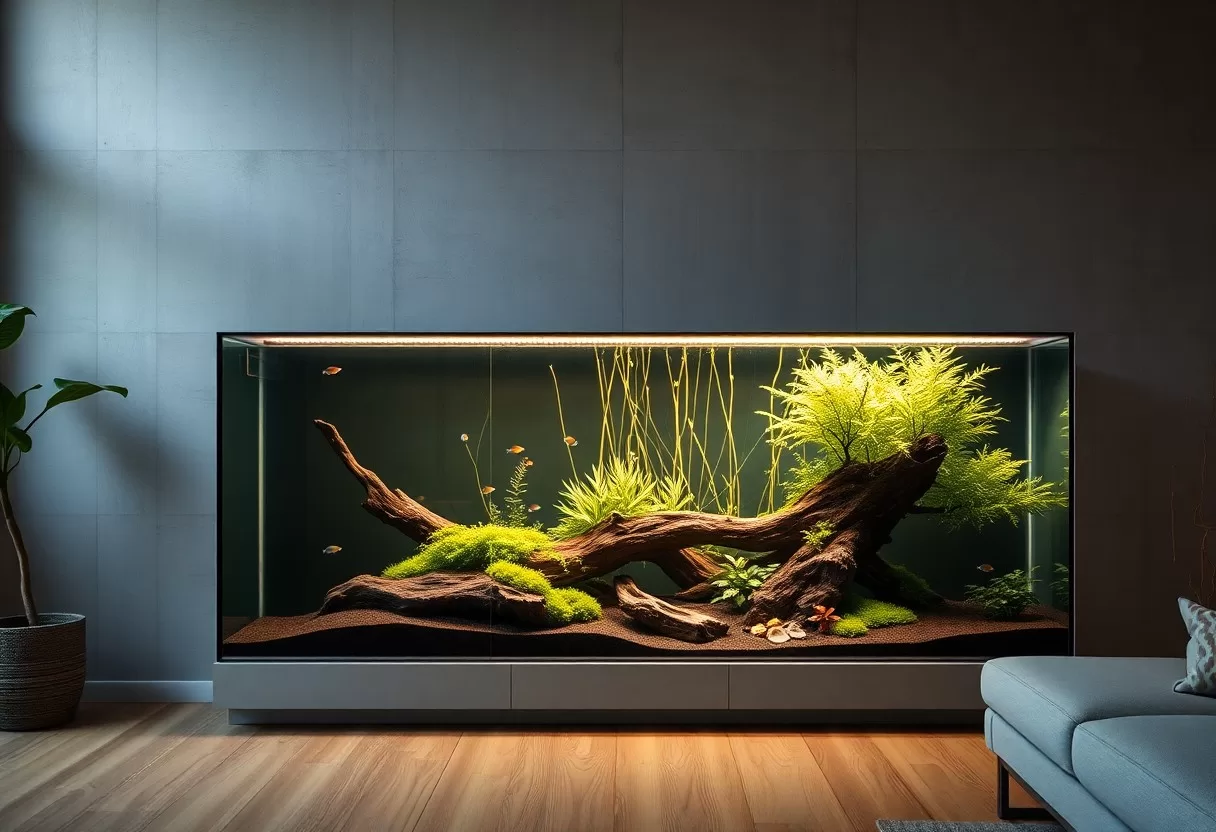
Understanding Indoor Aquariums
You should weigh practical systems-level details: tanks range from small 5-10 gallon nano setups to >100 gallon display tanks, and every gallon adds about 8.34 lb of water – which affects floor loading and stand choice. Plan for filtration turnover of 4-10×/hour, stable heating within ±1°C, and weekly 10-30% water changes. Equipment placement and access determine long‑term success, while routine testing (ammonia, nitrite, nitrate) prevents dangerous water chemistry spikes.
Types of Indoor Aquariums
You can choose from several focused formats: classic community freshwater, dense planted tanks relying on CO₂ and high PAR, marine reef systems with protein skimmers and calcium dosing, compact nano aquaria under 20 gallons, or biotope recreations of specific habitats. Assume that smaller volumes demand more frequent monitoring and faster corrective action when parameters drift.
- Freshwater
- Planted
- Reef
- Nano
- Biotope
| Freshwater community | 20-100+ gal; moderate maintenance; tolerant fish like tetras, barbs |
| Planted (high-tech) | 30-75 gal; CO₂, high PAR lighting, regular fertilization |
| Reef (saltwater) | 50-300 gal; precise chemistry, protein skimmer, dosing pumps |
| Nano | <20 gal; space-saving, high surface‑to‑volume issues, frequent changes |
| Biotope | Any size; species-specific decor and water params to mimic habitat |
Benefits of Having an Aquarium
You’ll gain measurable well‑being and design value: aquariums lower perceived stress, can reduce heart rate during short viewing periods, and add natural humidification to dry rooms. They also function as living art that increases property appeal and can serve therapeutic roles in clinics and waiting rooms. Maintain stable water quality to keep these benefits consistent and avoid sudden losses in livestock health.
Beyond relaxation, you’ll find practical advantages: educational opportunities for children, improved indoor air quality via modest humidity gains, and a focal point that anchors room layout. For example, hospitals that installed aquaria reported calmer waiting areas and staff noted fewer agitation incidents; likewise, well‑lit planted tanks can boost photosynthetic oxygen cycles and support denser biological filtration, reducing nitrate accumulation when you follow a scheduled maintenance plan.
Choosing the Right Location
Set the tank where structure, service, and sightlines align: a 120‑liter (30 US gallon) aquarium weighs about 140 kg when full, so confirm floor support and electrical access; place away from direct sunlight to limit algae and thermal swings, and keep it clear of main traffic to preserve both safety and viewing comfort.
Factors to Consider
Assess structural, light, and service needs before committing:
- Weight: a 120 L tank ≈ 140 kg filled-verify floor rating or use load‑bearing furniture.
- Lighting: keep tanks at least 1-2 m (3-6 ft) from sunlit windows to reduce algae and heat spikes.
- Temperature: avoid HVAC drafts; 1-2 °C swings stress fish.
- Accessibility: GFCI outlet within ~1 m and 20-30 cm clearance behind for hoses and maintenance.
- Sightlines: position at seated eye level (~90-120 cm) for best viewing.
Perceiving how these elements interact helps you prioritize trade‑offs and avoid costly relocations.
Ideal Spaces for Aquariums
You’ll find success in living rooms, entryways, and offices: the living room offers seated viewing at ~1.0-1.2 m eye level, a foyer creates a dramatic focal point, and an office provides a calming visual break during work; ensure a GFCI outlet nearby and keep the tank 1-2 m from direct sunlight to limit algae and heat.
Give practical space: leave a minimum 90 cm (3 ft) walkway, keep 20-30 cm clearance behind the stand for plumbing, and avoid placing the tank above basements or uneven floors; hardwood floors tolerate tanks if weight is distributed, but moisture from frequent maintenance near sensitive materials is a danger to watch for, while a visible central location is a strong boost to room ambiance.
Essential Equipment and Supplies
You should kit your aquarium with dependable basics: a reliable filter sized for a 4-6× turnover per hour, a full-spectrum LED light, a heater matched to tank volume, and quality substrate plus decor; for design inspiration and layout case studies see Blog Aqua-Inspired Interiors. Prioritize safe electrical protection (GFCI, drip loops) and spare consumables like test kits, carbon, and replacement media so your installation runs smoothly.
Filtration and Lighting
Choose filtration by tank size and stocking: canister filters excel for 50+ gallons, HOB units work well for 10-40 gallons, and sponge filters are ideal for fry and shrimp; aim for a 4-6× turnover for community tanks and higher for heavy bioloads. Select LED lighting with adjustable spectrum and a timer-typically 6-8 hours/day for low-to-medium planted tanks, or 8-10 hours plus CO2 dosing for high-light setups; too much light or poor filtration often triggers persistent algae.
Aquascaping Tools
Equip yourself with precision tweezers (20-30 cm), curved and straight aquascaping scissors, a substrate spatula, long-nose pliers, and a siphon for planting and maintenance; add superglue gel and aquarium-safe epoxy for attaching mosses and hardscape. Use nonreactive stones like Seiryu or dragon stone and an aquasoil such as ADA for plant growth; keep a small towel and sterilizing solution for tool care to avoid cross-contamination.
In practice, you’ll use long tweezers for carpeting plants (Hemianthus, HC Cuba) to push stems into substrate in tight rows, while curved scissors let you trim without disturbing the layout; a spatula creates depth layers-fine sand over nutrient-rich aquasoil for rooted species. When attaching Anubias or Java fern, apply a dab of cyanoacrylate gel and hold with fishing line for 24-48 hours, then remove the line. Protect yourself: wear gloves when using adhesives or epoxies and secure power strips away from splash zones; schedule regular tool cleaning and keep duplicates (spare tweezers, scissors) to prevent plant-borne pests from spreading between tanks.
Selecting the Right Fish and Plants
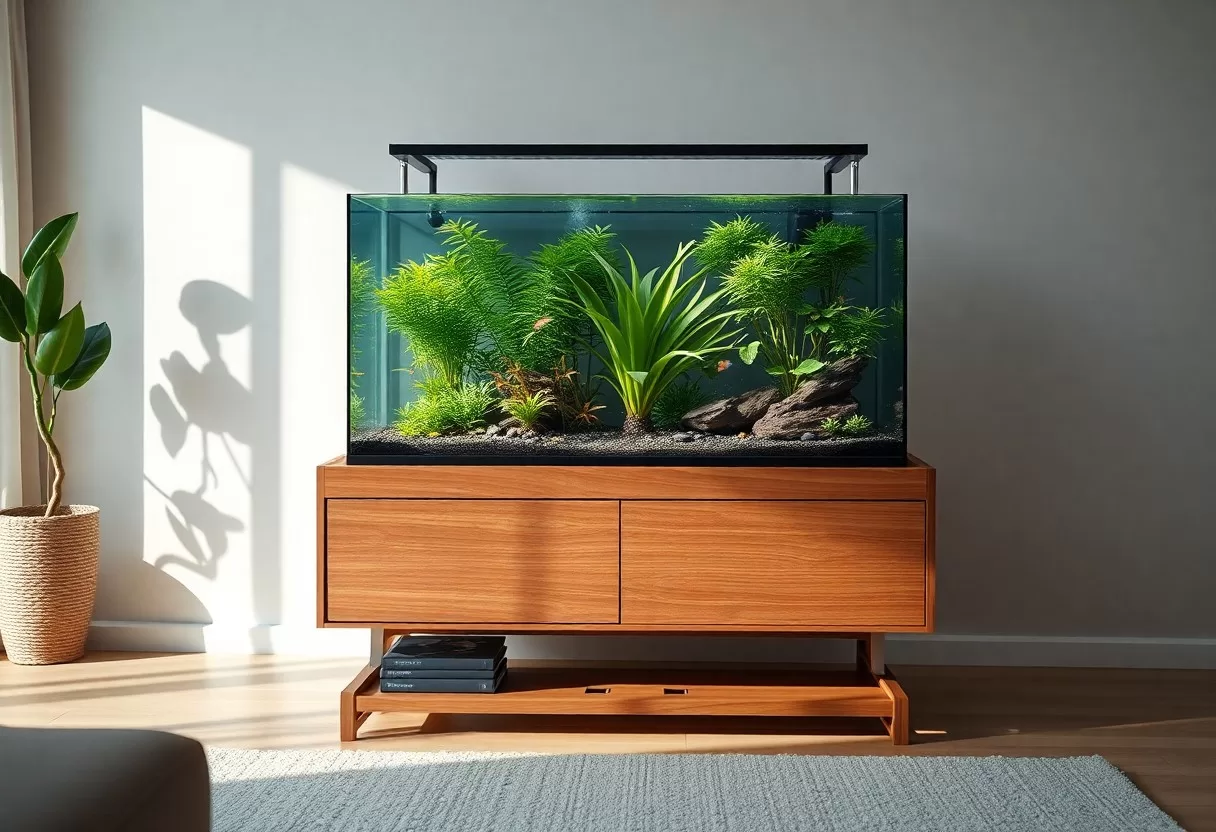
You’ll balance aesthetics and ecology: aim for water parameters typical of community tanks-24-27°C (75-80°F) and pH ~6.5-7.5-so plants and fish thrive together. Choose hardy species like Anubias, Java fern, and Amazon sword to stabilize cycling, then add fish that match flow and diet; for layout inspiration see 25 Fish Tank Living Room Ideas Homeowners Choose …. Prioritize species with similar needs to avoid stress and reduce maintenance.
Compatible Species
You should pair schooling mid-water fish with peaceful bottom dwellers: for a 120‑liter (30 gal) tank try 6-10 neon tetras, 6 guppies, and 4-6 corydoras, plus an otocinclus for algae control. Select species with matching temperature, pH, and diet; avoid mixing territorial African cichlids or large predators with small community fish since aggression will spike and injuries occur.
Maintaining Biodiversity
You maintain biodiversity by combining fast-growing stem plants, mid-height rosettes, and shaded species like Anubias to create niches for fry and microfauna. Stock a balanced clean-up crew-snails, shrimp, otos-and perform 20-30% weekly water changes while testing ammonia, nitrite, and nitrate weekly. Avoid overstocking and sudden parameter shifts to keep populations stable.
You monitor population trends and act when necessary: if one species overpopulates or aggression rises, remove or rehome individuals to restore balance. Prune plants and target-feed to prevent algal blooms; tanks with roughly 40-60% planted coverage tend to show lower nitrate spikes. Quarantine new additions for 2-4 weeks and source from multiple reputable breeders to reduce disease risk and support genetic diversity.
Maintenance and Care
Consistent attention keeps your aquarium both attractive and healthy: aim for 10-25% weekly water changes, maintain a filter turnover of 4-6× per hour, and use a reliable test kit to keep ammonia and nitrite at 0 ppm while keeping nitrates below 20-40 ppm. You should quarantine new fish for 2-4 weeks, secure electricals on a GFCI-protected circuit, and schedule monthly checks on heaters, seals, and lighting to prevent small issues from becoming emergencies.
Regular Upkeep
Each week you should test pH, ammonia, nitrite, and nitrate, siphon 10-25% of water and clean substrate, trim plants, and inspect equipment. Replace mechanical media every 2-4 weeks and chemical media (carbon) every 6-12 weeks, while avoiding full removal of biological media so beneficial bacteria remain. Limit lighting to 8-10 hours daily to control algae, and feed fish only what they consume in two minutes to prevent excess waste.
Troubleshooting Common Issues
When water turns cloudy, algae blooms, or fish gasp at the surface, start by testing parameters: ammonia >0.25 ppm signals action. Perform a 25-50% water change, vacuum detritus, reduce feeding, and boost aeration. For persistent green water consider a UV sterilizer; for fungal or bacterial infections isolate affected fish and treat with targeted medications following dosage instructions for your tank volume.
In one example, a 60 L community tank jumped to 1.0 ppm ammonia after adding five fish; recovery involved an immediate 50% water change, stopping feeding for 48 hours, adding bottled nitrifying bacteria, and increasing surface agitation-parameters returned to safe levels within 72 hours. You can use API or Seachem test kits for daily monitoring during recovery, and activated carbon to clear tannins or medications once stability is restored for faster visual recovery.
Creating a Relaxing Ambiance
Soft, layered lighting and steady, low-noise filtration turn your tank into a calming focal point for your space. Use dimmable LEDs on an 8-10 hour cycle and choose 3,000-6,500K color temps to balance mood and plant needs; quiet canister filters often run at 25-40 dB so background noise stays unobtrusive. Adding slow-swimming species like gouramis or ember tetras and a planted foreground helps reduce stress and lower room anxiety when you watch.
Incorporating Decor
Use a balanced hardscape: position one focal rock or piece of driftwood at the one-third point, layer substrate depths from 2-5 cm for foreground to 6-10 cm for planting zones, and keep to 2-3 contrasting plant species to create depth. You can hide equipment behind leafed plants or in rock caves, and should avoid sharp or porous materials that harbor bacteria or can injure fish-these are hazardous to both livestock and aesthetic longevity.
Enhancing Your Living Space
Place your aquarium to enhance flow and sightlines: center a 50-gallon display so the tank’s midpoint sits near seated-eye level, roughly 40-45 inches. Factor weight – a filled 50-gallon setup often exceeds 600 lb, including stand – and confirm the floor and a dedicated circuit can handle continuous equipment draw (commonly 150-300 W for medium systems). Conceal cords and match cabinetry to integrate the tank as functional furniture.
Integrate smart timers and lighting into your home system for automated dawn/dusk scenes and energy savings; set heaters and filters on UPS-backed outlets if you live in an area with outages. You can use the tank as a partial room divider to improve acoustics or embed it in a media wall while keeping screens at least 3 feet from strong tank lights to avoid glare. Protect the aquarium from direct sunlight to limit algae growth and dangerous temperature swings.
Summing up
With this in mind, integrating an indoor aquarium transforms your living space into a dynamic, calming ecosystem that enhances aesthetics and well-being. By assessing placement, filtration, lighting, and maintenance routines, you ensure stable water conditions and healthy inhabitants. You can tailor size, species, and decor to fit your lifestyle and design goals, creating a striking focal point that rewards consistent care.
FAQ
Q: How do I choose the right aquarium size and placement for my living space?
A: Select a tank size that balances visual impact with upkeep: larger tanks are more stable biologically and easier to maintain water quality, while small tanks require more frequent monitoring. Place the aquarium where it can be viewed comfortably from seating areas at an appropriate eye level, avoid high-traffic zones that risk bumps, and check floor load-bearing capacity for heavy setups (water weight + stand). Keep it away from direct sun to prevent algae blooms and temperature swings, and locate near electrical outlets and water access for equipment and maintenance. Use a dedicated stand or built-in cabinet sized to fully support the tank base and conceal wiring and filtration components for a tidy appearance.
Q: What equipment and layout choices keep the aquarium both attractive and low-maintenance?
A: Choose reliable filtration (canister or high-quality HOB for freshwater, sump + return for larger systems) sized for your tank’s volume and bioload; add a heater with a calibrated thermostat for stable temperature. Use LED lighting with a programmable timer to control photoperiod and plant growth if you have live plants. Select substrate and hardscape that fit your design and species needs-coarse substrate reduces compaction, fine substrate suits rooted plants. Plan stocking levels conservatively and favor species known for hardiness to reduce stress and disease. Hide equipment behind cabinetry or inside a sump to preserve aesthetics. Incorporate automation where helpful: timed lights, an automatic top-off to manage evaporation, and a quality gravel vacuum for efficient water changes. Routine brief maintenance (weekly water checks, monthly filter media handling) keeps the system healthy without large time investments.
Q: How can I integrate an aquarium into different interior styles so it complements my decor?
A: Match the aquarium’s form and finish to the room’s style: rimless or frameless tanks and minimalist stands suit modern interiors; timber-framed cabinets and planted aquascapes blend with rustic or natural themes; built-in tanks with concealed lighting work well for contemporary or luxury settings. Coordinate lighting temperature and intensity with ambient room lighting to create cohesive mood-warmer LEDs for cozy rooms, neutral to cool for clean, modern spaces. Use the aquarium as a focal point by adjusting scale, background, and curated hardscape elements to echo colors and textures in the room. Organize cables and filtration lines inside furniture or a recessed niche for a polished look, and consider glass doors or low-profile barriers if safety around children or pets is a concern.