Floating Architecture – How Over-Water Homes Are Becoming a Real Urban Solution
Over recent years, you may have noticed a growing trend in urban development: floating architecture. This innovative approach to housing offers you a sustainable solution to rising sea levels and urban overcrowding. By embracing over-water homes, you can explore how these designs not only provide unique living experiences but also promote environmental stewardship. Discover the advantages and possibilities that floating architecture brings to your urban lifestyle.
Key Takeaways:
- Floating architecture offers a sustainable solution to rising sea levels and urban density challenges.
- Over-water homes prioritize eco-friendly materials and designs, promoting harmony with aquatic environments.
- Innovation in infrastructure enables efficient living on water, reducing land use and expanding urban development possibilities.
The Concept of Floating Architecture
Definition and Overview
Floating architecture refers to structures designed to remain above water surfaces, utilizing buoyant materials and innovative engineering. You may find these homes and buildings in urban settings, where land scarcity and rising sea levels necessitate alternative living solutions. This style embraces sustainability, blending seamlessly into aquatic environments while providing habitation and functionality.
Historical Context
Historically, floating architecture has roots in various cultures, including the stilt houses of Southeast Asia and the houseboats of Europe. These traditions laid the groundwork for contemporary designs, evolving with new materials and technologies to address modern challenges.
As early as 3,000 BCE, civilizations like the Chinese and Indonesians engineered water-bound homes to adapt to their environments. The rise of the Netherlands’ unique floating communities in the 18th century illustrated innovative thinking regarding flood management and land usage. In the 20th century, the modernist movement inspired architects to explore eco-friendly designs. Today, governments in countries like Japan and the Netherlands are investing heavily in floating solutions to mitigate the impacts of climate change, demonstrating the increasing relevance of this architectural approach in urban planning initiatives. Your understanding of these historical developments underscores the gradual evolution and acceptance of floating architecture as a viable solution for current urban needs.
Benefits of Over-Water Homes
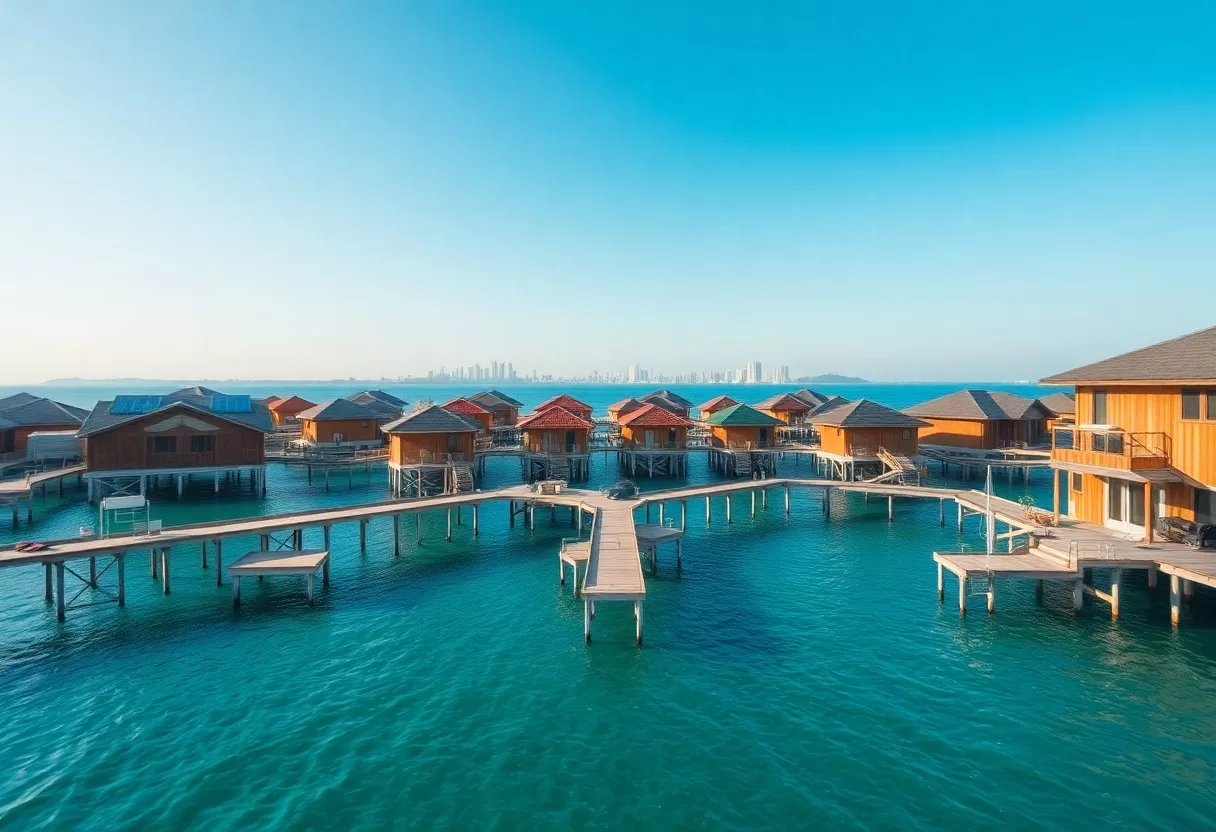
Over-water homes present innovative solutions to urban density and climate challenges. They enable communities to adapt to rising sea levels and changing weather patterns. Additionally, these structures can enhance local economies by attracting tourism and fostering new industries. As noted in studies on coastal urban climate adaptation and the advance onto …, floating architecture represents a forward-thinking approach to sustainable living.
Environmental Advantages
Floating homes contribute positively to ecosystems by minimizing land use and preserving coastal habitats. They reduce the heat island effect common in urban areas and promote biodiversity by integrating green spaces. Additionally, many designs incorporate eco-friendly materials and energy-efficient systems, leading to a lower carbon footprint.
Economic Impacts
Floating architecture can stimulate local economies by creating new jobs in design, construction, and maintenance. Furthermore, these homes often boost property values in coastal regions and attract tourism, leading to increased revenue for local businesses.
For example, projects like the Floating Seahorse in Dubai have sparked significant interest and investment, illustrating how over-water homes can redefine property markets. In addition to increasing job opportunities, these initiatives encourage new sectors such as marine tourism and environmental consultancy, reinforcing the economic benefits of embracing floating architecture as a viable solution for urban development.
Design and Construction Techniques
Floating architecture requires innovative design and construction techniques to ensure stability and sustainability. Modern over-water homes utilize modular designs that can be prefabricated and assembled on-site, minimizing environmental impact. Advanced computer modeling allows architects to envisage how structures will interact with water levels and currents. For an in-depth exploration, check out A Dutch Architect’s Vision of Cities That Float on Water.
Materials Used
Your choice of materials significantly impacts the durability and performance of floating homes. Typically, lightweight yet robust materials like reinforced concrete, marine-grade plywood, and high-density polyethylene are preferred. These materials are resistant to water damage and can withstand harsh marine environments, ensuring longevity.
Innovative Engineering Solutions
Innovative engineering solutions play a vital role in the viability of floating homes. Technologies such as buoyant foundations, which can be constructed from recycled materials, enhance floating structures’ resilience against rising water levels. Engineers are increasingly employing solar energy harnessing systems paired with energy-efficient designs, ensuring that these homes not only float but are also sustainable.
Incorporating smart technologies, such as sensors to monitor water conditions and automated systems for managing energy use, enhances the operational efficiency of over-water residences. For instance, architects and engineers work hand-in-hand to integrate floating platforms with adaptive buoyancy systems that adjust to changing water levels, promoting stability and safety. This synergy between design and innovation sets the stage for a new standard in urban housing solutions, addressing space constraints and environmental challenges faced by many cities today.
Urban Integration and Planning
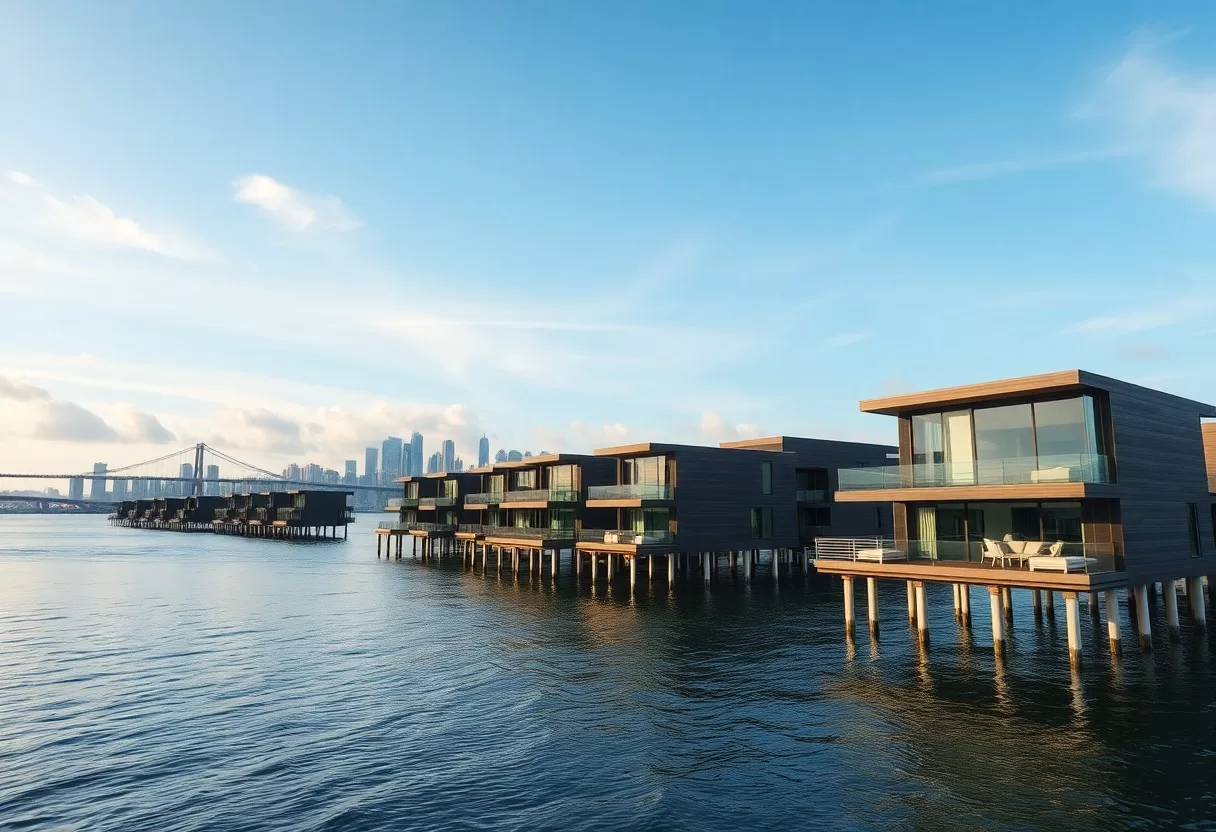
Successful integration of floating architecture into urban environments requires thoughtful planning and collaboration among stakeholders. Cities must prioritize sustainability while addressing the unique needs of over-water communities. Adapting existing zoning laws and encouraging innovative public policies are necessary to harmonize these structures with urban growth.
Zoning Challenges
Zoning regulations often hinder the development of floating homes, as traditional laws do not account for over-water constructions. This leads to challenges in land-use designations, permitting processes, and establishing utility services, which must be creatively navigated to facilitate these projects.
Case Studies of Successful Projects
Numerous successful floating architecture projects around the world demonstrate the feasibility and adaptability of this solution. Notably, cities have pioneered innovative residential solutions that blend sustainability with practical urban planning.
- Amsterdam Floating Houses: Over 1,000 floating homes, reducing land scarcity while promoting eco-living.
- Floating Village, Cambodia: Hosts 300 families on stilts; integrates local economy with an alternative to flooding.
- Oceanix City Proposal: A sustainable floating city design, projecting 10,000 residents, emphasizing renewable energy and waste management.
- The Seasteading Institute’s Floating Community: Vision for a modular floating city catering to diverse governance models.
- Podria Floating Home Project, Norway: Combines 20 eco-friendly homes on a floating platform, emphasizing energy efficiency.
These case studies reveal important insights into the application of floating architecture. For example, the floating houses in Amsterdam not only optimize space but also actively contribute to the local economy. The Oceanix City proposal emphasizes sustainability, projecting a population density that harmonizes with urban living while minimizing environmental impact. Each project showcases how innovative design can transform urban settings, proving that floating architecture is a viable urban solution.
Sustainability and Environmental Considerations
Floating architecture directly engages with sustainability, offering innovative residential solutions that minimize land use and enhance resilience against rising sea levels. These homes often incorporate eco-friendly materials and systems, aligning with environmental goals and reducing urban footprints while enhancing the quality of life for inhabitants.
Energy Efficiency
Energy efficiency in floating homes is achieved through the integration of renewable energy sources, such as solar panels and wind turbines. You might find innovative designs that leverage thermal insulation and smart technology to optimize energy consumption, allowing these residences to function independently and sustainably while lowering overall utility costs.
Impact on Marine Ecosystems
When considering floating architecture, the impact on marine ecosystems cannot be overlooked. Your decisions to implement these structures thoughtfully can influence local biodiversity and water quality, with conscious design mitigating potential disruptions.
Expanding on the impact on marine ecosystems, floating homes can either support or harm local wildlife, depending on their design and placement. By incorporating features such as submerged vegetation and artificial reefs, you can create habitats that promote biodiversity and enhance ecosystem health. Properly managed over-water developments can lead to the establishment of thriving marine environments, balancing human habitation with ecological preservation. Simultaneously, mitigating pollution through sustainable waste management systems is vital to prevent detrimental effects on aquatic life.
The Future of Floating Homes
Your perspective on urban living is about to shift dramatically as floating homes take center stage. Advancements in engineering and sustainability are positioning these innovative dwellings as a viable solution to housing shortages and climate change. With increasing interest from governments and developers, the landscape of urban living is poised for significant transformation in the coming decades.
Emerging Trends
You’ll notice a surge in modular construction techniques and smart home technology within floating architecture. These trends promote not only rapid deployment but also enhance energy efficiency and resilience against environmental challenges. Additionally, the integration of renewable resources, such as solar panels and wind turbines, is becoming standard in designs, ensuring that your floating home remains eco-friendly and self-sufficient.
Predictions for Urban Development
Developers are projecting a 30% increase in floating home projects across major coastal cities by 2030. As urban populations swell, floating communities might become more than just a niche market; they may reshape how you think about city living. Cities like Amsterdam and Miami are already setting the pace, with strategic plans that incorporate floating neighborhoods to adapt to rising sea levels.
Anticipating changes in urban development, planners and architects are embracing floating architecture as a key component in their vision for resilient cities. The integration of these homes could lead to the establishment of entire floating neighborhoods, equipped with schools, shopping areas, and parks, effectively redefining communal living spaces. As migration towards coastal areas continues, investing in floating homes may soon be viewed not just as a lifestyle choice but as a necessity for sustainable urban expansion. Cities like New Orleans and Rotterdam are already implementing pilot programs, paving the way for widespread acceptance and integration into mainstream real estate practices.
Summing up
Hence, embracing floating architecture can significantly enhance your urban living experience by offering sustainable solutions to rising sea levels and urban overcrowding. These innovative homes not only provide unique aesthetic value but also practicality in adapting to changing environments. By considering over-water living, you position yourself at the forefront of architectural innovation, actively participating in a movement that prioritizes environmental consciousness while enhancing your quality of life. The integration of floating homes into urban planning represents a transformative approach to housing, making it vital for modern city dwellers like you to explore these possibilities.
FAQ
Q: What are the main benefits of floating architecture for urban living?
A: Floating architecture offers various benefits, including maximized land use in densely populated areas, reduced flooding risk, and enhanced aesthetics by integrating natural water landscapes into urban environments. It also provides innovative housing solutions in coastal cities facing rising sea levels.
Q: How do floating homes perform during severe weather events?
A: Floating homes are designed to withstand severe weather conditions by utilizing buoyant structures that can rise with rising water levels. Advanced engineering techniques ensure stability and safety during storms by anchoring the homes effectively while allowing them to adapt to changes in water flow and levels.
Q: What materials are commonly used in the construction of floating homes?
A: Floating homes are typically constructed using durable, water-resistant materials such as fiberglass, concrete, and treated wood. These materials are chosen for their ability to withstand moisture and harsh marine environments, ensuring longevity and sustainability of the structures.