
How to Design for Noise Control Without Soundproofing
Just because you can’t fully soundproof your space doesn’t mean you can’t control noise; by prioritizing placement, materials, and detailing you can cut distractions. Start by sealing gaps and adding absorptive surfaces, then manage pathways of transmission because flanking paths and structure-borne vibration can bypass treatments, and use furnishings, zoning, and masking to balance sound so you achieve quieter, more comfortable spaces without major construction.
Key Takeaways:
- Zone and arrange spaces to separate noisy activities from quiet ones, using buffer rooms (closets, halls, bathrooms) and orienting louder areas away from bedrooms and workspaces.
- Reduce reflections and scatter sound with absorptive and diffusive surfaces-rugs, heavy curtains, upholstered furniture, bookshelves, textured wall coverings, and ceiling treatments.
- Apply masking and behavior strategies: add gentle ambient sound (white-noise or water features), schedule noisy tasks, place noisy equipment on vibration-damping pads, and use room dividers or plants to break direct sound paths.
Assess noise sources and design goals
You should map both measurable and perceptual targets: quantify ambient levels in dBA, note RT60 for reverberation, and define outcomes like speech intelligibility or privacy. Use spot measurements at representative times (rush hour, equipment cycles) and set numeric goals-e.g., 30-35 dBA for private offices, 40-45 dBA for open plans-so design choices tie directly to performance rather than guesswork.
How-to audit: identify internal and external noise factors
Start by logging continuous versus intermittent sources over 24-72 hours, using a class 2 sound meter or validated app, note spectral content (low-frequency hums vs high-frequency alarms), and map noise paths through façades, ducts, and partitions; document occupant complaints with times and tasks. Recognizing dominant sources lets you focus on targeted treatments that give the best results for budget and schedule.
- Internal: HVAC, plumbing, equipment, occupancy
- External: traffic, construction, aircraft, adjacent businesses
- Characteristics: continuous, impulsive, low-frequency, intermittent
Prioritize spaces and set target noise criteria (factors to consider)
Rank rooms by task sensitivity, frequency of use, and acceptable intrusion: target 30-35 dBA for private offices, 40-45 dBA for open-plan work, 30-35 dBA for classrooms, and <30 dBA for patient bedrooms at night; factor in peak events, occupancy density, and required speech privacy. Perceiving these trade-offs helps you allocate budget to areas with the highest functional impact.
- Task sensitivity: concentration, teaching, sleep
- Usage: occupancy hours, peak events
- Performance targets: dBA, speech privacy, RT60
For implementation, set measurable metrics: specify dBA maxima at workstation and façade, aim for RT60 <0.6 s in speech-critical rooms, and require minimum STC for partitions-e.g., STC 45+ between offices, STC 50+ for music rooms; test prototypes with B-weighted and octave-band measurements. Perceiving these quantifiable targets early reduces revision cycles and ensures contractor bids align with your acoustic goals.
- Metrics: dBA, RT60 <0.6 s, STC
- Examples: STC 45+ partitions, 30-35 dBA private office
- Verification: field testing, prototype rooms
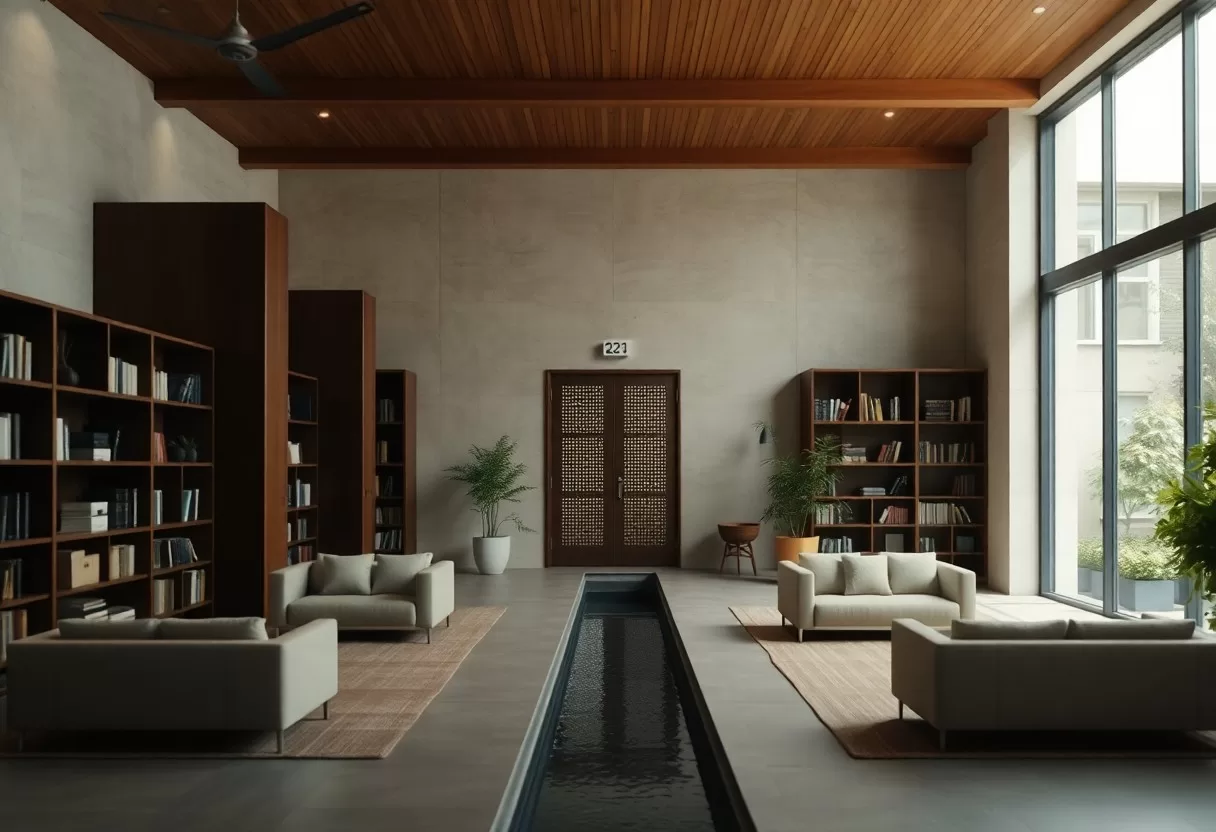
Layout and architectural strategies
How-to zone and place rooms: buffers, circulation, and separation
You should locate noisy functions-kitchens, laundries, and mechanical spaces-adjacent to service cores or façades, placing bedrooms, offices, and nurseries behind buffers like bathrooms, closets, or short corridors. Stack wet rooms in multifamily plans to reduce plumbing noise, and keep primary living rooms away from building entries and elevators. Target circulation widths of about 1.2 m-1.5 m to serve as compact acoustic buffers while preserving usable space.
- buffers
- circulation
- separation
Knowing that modest offsets and service buffers can cut direct noise transfer and improve perceived quiet in private rooms helps you prioritize room adjacencies.
Passive barrier tips: doorways, stairwells, and sightline control
You should specify solid-core doors (STC ~30-35) with compressible seals and thresholds instead of hollow-core options, add vestibules where corridors meet quiet zones, and enclose open stairwells with doors at landings. Stairs placed between units act as acoustic buffers, and angled corridors or partial walls break direct sound and sightlines to reduce disturbance in bedrooms and workspaces.
- doorways
- stairwells
- sightline control
Knowing that upgrading seals and door assemblies often yields immediate airborne noise reductions guides practical specification decisions.
You can combine simple construction tactics for measurable gains: fit automatic closers and continuous seals to keep doors tightly shut, add double 13 mm gypsum on resilient channels around stair shafts to boost partition performance by roughly 5-10 STC points, and offset doors by 300-600 mm to interrupt visual and acoustic paths. In retrofit projects, creating a small vestibule or inserting a closet buffer next to a bedroom frequently improves perceived quiet by several decibels.
- doorways
- stairwells
- sightline control
Knowing to sequence these low-cost, high-impact measures early in design prevents expensive acoustic fixes later.
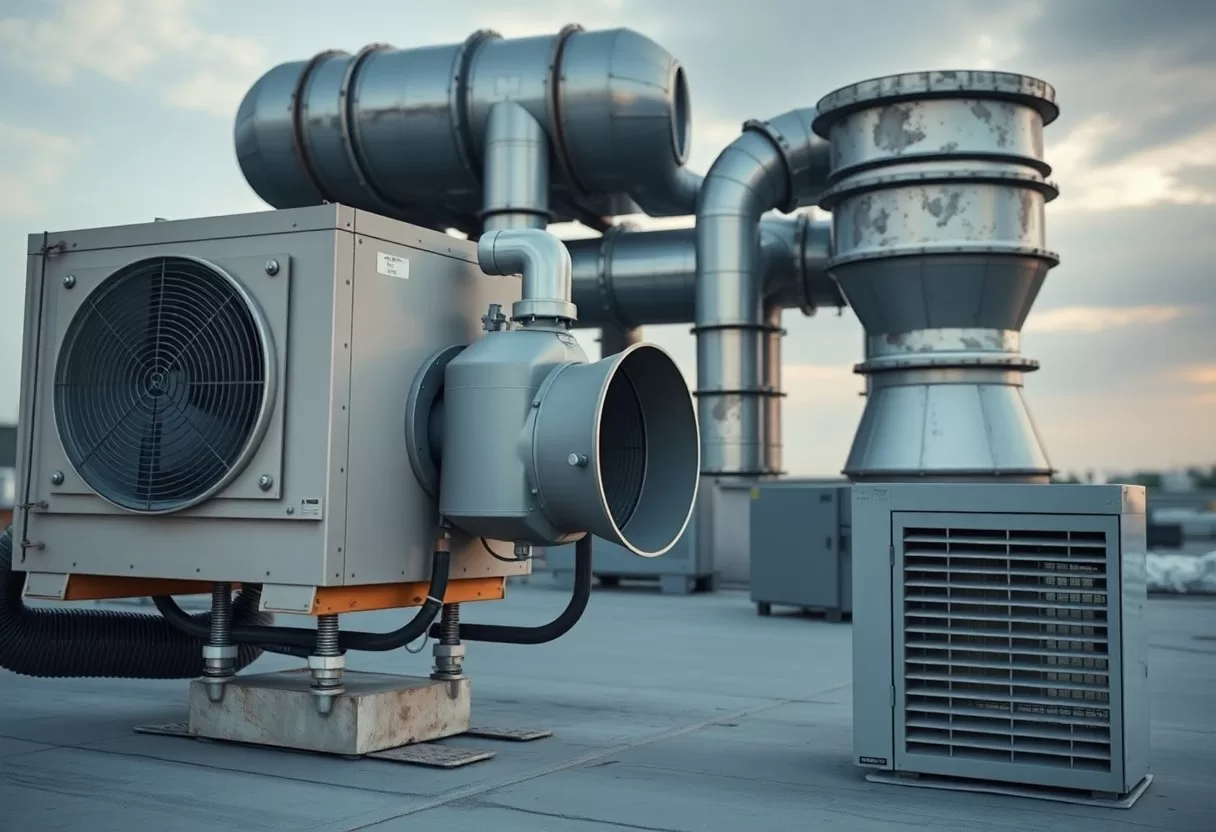
Mechanical and equipment considerations
You’ll favor equipment with low airborne and structure-borne noise: choose ECM motors, variable-speed drives, and inverter compressors to reduce tonality and idle noise. Site noisy plant at least 3-5 m from bedrooms and use soft mounts and flexible connectors to block vibration. If you want peer experience, check this discussion: I’m trying to find out if anyone knows what is the best things …
- Equipment selection: specify <50 dBA at 1 m for indoor units when possible
- Siting: place condensers >3 m from façades facing bedrooms
- The access and maintenance plan-annual tuning often cuts noise 2-4 dB
How-to specify and site quiet HVAC, appliances, and fixtures
You should specify sound power and in-situ SPL limits, request manufacturer test sheets, and require point-source and duct breakout data. Place compressors on exterior pads or rooftops with anti-vibration mounts, and locate laundry/water-heating closets adjacent to circulation zones rather than bedrooms; a 1-2 m buffer and insulated cabinet can reduce perceived noise by 5-10 dB.
Vibration isolation, mounting, and duct/pipe treatments – practical tips
When you isolate, use neoprene or spring mounts sized to the equipment weight (springs for >200 kg loads), add flexible connectors on ducts and piping, and avoid rigid masonry saddles that transmit low frequencies; proper isolation can lower structure-borne vibration by >15 dB at resonance.
For larger systems, specify natural frequency of mounts at least one-third of the lowest excitation frequency-if pumps run at 1,800 rpm, aim for mounts with fn <6 Hz. Use hangers with rubber inserts on long pipe runs and apply duct-liner or external mass-loading where breakout exceeds 25 dB(A) above background. Test commissioning with a sound-level meter at 1 m and at adjacent rooms to verify targets. The documented vibration isolation details must be in the maintenance manual.
- Mount selection: springs for heavy plant, neoprene for small units
- Flexible connections: braided connectors on pumps and ducts
- The commissioning test: measure at 1 m and room boundaries to confirm reductions
Operational and behavioral controls
You can design daily operations to cut noise: implement zoning, require soft-soled shoes in high-traffic areas, set staggered work times, and deploy sound masking at 40-50 dB to improve speech privacy; see Stop Outside Noise: 7 Proven Ways to Soundproof Your … for external-noise tactics. Train staff with 2-3 scripted phrases for polite noise requests and monitor results with simple SPL logs over 30 days.
Policies, scheduling, and occupant how-to tips for noise reduction
You should publish clear policies, use booking rules to confine loud activities to designated rooms, and provide short how-to cards for occupants; enforce with signage and 10-15 minute pre-event notifications. Any policy without measurable goals should include weekly feedback and quick SPL spot checks to verify compliance.
- Quiet hours (e.g., 19:00-07:00)
- Booking rules for noisy equipment and rooms
- Behavior scripts for staff to handle complaints
Maintenance, tuning, and low-cost interventions
You can shave 3-6 dB by sealing gaps with weatherstripping, adding door sweeps, and swapping fluorescent fixtures for LEDs to remove ballast hum; lowering one HVAC fan speed notch often cuts ~4 dB. Use adhesive-backed acoustic tape, foam seals, and soft furnishings, then verify gains with an SPL app over 1-2 weeks.
Start with a 4-week audit: map noise peaks, log sources, and rank fixes by cost-per-decibel. For under $50 you can fit felt pads to 30-50 chairs and replace noisy casters to drop impact noise ~4-6 dB; replacing or adding secondary glazing runs $200-$1,000 and can reduce external intrusion by 8-12 dB. Tighten loose fixtures, lubricate motors, and retune HVAC schedules to lower RPMs during occupied hours-one clinic cut complaints by 60% in 3 months after these steps. Track monthly and prioritize interventions that deliver the largest dB reduction per dollar.
Measurement, monitoring, and iterative improvement
You establish a baseline, set measurable targets, and iterate: log sound levels for at least 2 weeks, combine A-weighted dB readings with occupant surveys, and treat changes as experiments. Aim for incremental wins like a 3-5 dB median reduction (3 dB is just noticeable; 10 dB feels roughly halved), and flag any sustained exposures above 85 dB as hazardous. Use data to prioritize low-cost fixes first and reserve structural changes for problems that persist after two or three iterations.
Simple how-to measurements and tools for designers
You can get meaningful data with affordable gear: use a calibrated Class 2 sound level meter (e.g., Extech) or the NIOSH SLM app for spot checks, deploy AudioMoth loggers or a Zoom H1n for continuous recording, and run RT60 tests with a balloon pop or starter pistol to estimate reverberation. Sample at 1-5 second intervals for 24-72 hours, measure at seated head height (~1.2 m), and inspect spectra to identify dominant frequencies for targeted absorption or masking.
Use metrics and feedback to refine design choices
You define KPIs such as median dB(A), L95 background level, number of peaks >55 dB per hour, and percentage of time above threshold; then correlate those with complaint rates. For example, relocating a printer cut peak events by 8 dB and reduced complaints by 40% in one open-plan office. Track both objective drops and subjective improvements before declaring a solution successful.
You should structure iterations: collect a 2‑week baseline, set targets (e.g., reduce median by 3-5 dB or halve >55 dB events), implement one change, and run a 4‑week A/B or before/after period. Combine SPL logs with daily 5‑point satisfaction surveys (sample size ≥10 users) and use simple statistics (paired t-test or Wilcoxon) to verify effects; prioritize fixes that show statistically and practically significant reductions on both metrics and user feedback.
To wrap up
Following this, you can manage noise by prioritizing your layout, multi-layered materials, soft finishes, and strategic furniture placement; orient noisy activities away from quiet zones, use absorptive textiles and diffusive surfaces, and add mechanical noise controls like background masking. These practical choices let you shape acoustic comfort without full soundproofing, giving you effective, cost-conscious results.
FAQ
Q: How can interior layout and zoning reduce noise without adding soundproofing?
A: Separate noisy activities and quiet areas through spatial planning and furniture placement. Position kitchens, printers, meeting zones, and play areas away from bedrooms, study nooks, and open-plan workstations; distance reduces sound level rapidly due to the inverse-square law. Use tall bookcases, storage units, freestanding shelving, and dense plantings as partial barriers that scatter and block sightlines, which lowers perceived noise. Create buffer spaces such as entry vestibules, closets, or circulation corridors between loud and quiet rooms to absorb and diffuse sound before it reaches sensitive areas.
Q: What materials and surface treatments work best to control reverberation and reduce perceived loudness?
A: Select absorptive finishes and soft furnishings to reduce reverberation time (RT60). Use area rugs, carpet tiles, upholstered seating, heavy drapery, and fabric-wrapped acoustic panels on walls and ceilings; products with higher Noise Reduction Coefficient (NRC) values perform better. Treat first-reflection points beside desks, opposite loud sources, and overhead in rooms with high ceilings using ceiling clouds or baffles. Fill bookcases and use irregular surface treatments or diffusers to break up reflections rather than relying on hard, flat planes. Aim to cover roughly 20-40% of the total surface area in typical rooms to achieve noticeable reverberation reduction without full-scale acoustic construction.
Q: What non-structural strategies can be used to manage noise through masking, operations, and systems?
A: Use sound masking or low-level ambient sound tuned to the space to reduce intelligibility of disruptive noise; keep mask levels low and spectrum balanced so speech privacy improves without becoming a distraction. Choose quieter equipment and maintain HVAC, fans, and appliances to prevent intermittent noise spikes. Schedule noisy tasks during times of lower occupancy, implement behavioral policies (closed doors for phone calls, designated quiet hours), and provide personal solutions such as noise-cancelling headphones or screened workspaces. Add living plants and visual separation to lower the perception of noise, while checking that added elements do not create new noise sources like dripping irrigation or loose fixtures.