
How to Design a Home That Feels Private Without Being Closed Off
You can create privacy while maintaining open sightlines and natural light by using layered screening, planting, and translucent partitions, and by avoiding over-sealed rooms that trap moisture and darkness.
Key Takeaways:
- Layer screens and control sightlines with frosted glass, open shelving, room dividers, and planter walls to block direct views while preserving light and airflow.
- Define zones using furniture, rugs, and partial-height partitions instead of full walls to create intimate areas that remain visually connected.
- Use window placement and landscaping-clerestories, high windows, setbacks, and dense planting-along with operable doors or sliding walls to balance daylight, views, and privacy.
Principles for a Private Yet Open Home
How-to establish privacy goals and core design principles
Map your routines and mark where you need seclusion for work and sleep (typically 6-8 hours daily); translate that into zones-private 20-30%, semi-private 30-40%, public 30-50%-so you design proportionally. Apply layered strategies like screening, sightline control, and acoustic buffering, and prototype with cardboard or cheap curtains to test flow. Thou write a one-page brief listing measurable targets (light levels, dB limits, view lines) to guide trade-offs.
- Privacy zoning
- Layered screening
- Acoustic buffering
Key factors that shape perceived privacy (light, sound, sightlines)
Control of light, sound, and sightlines determines how private a room feels: use translucent glazing to pass 60-80% daylight while blocking direct views; a 50 mm cavity with double glazing can add ~20-35 dB noise reduction; staggered openings and 0.9-1.2 m partitions shift sightlines by meters. If neighbors sit within 6-8 m, you prioritize visual screening and planting to interrupt views. Thou test interventions at peak use times to confirm results.
- Light
- Sound
- Sightlines
Delve deeper: clerestory windows preserve daylight while keeping eye-level sightlines blocked; perforated timber or metal screens can reduce visibility by 30-70% while allowing airflow; sealing doors with 8-12 mm thresholds and adding dense rugs improve noise performance by 5-10 dB. For façades, a 3-5 m planted buffer both absorbs sound and breaks direct lines of sight; you can measure changes with a camera and phone decibel app. Thou run side-by-side tests before finalizing finishes.
- Clerestory windows
- Perforated screens
- Buffer planting
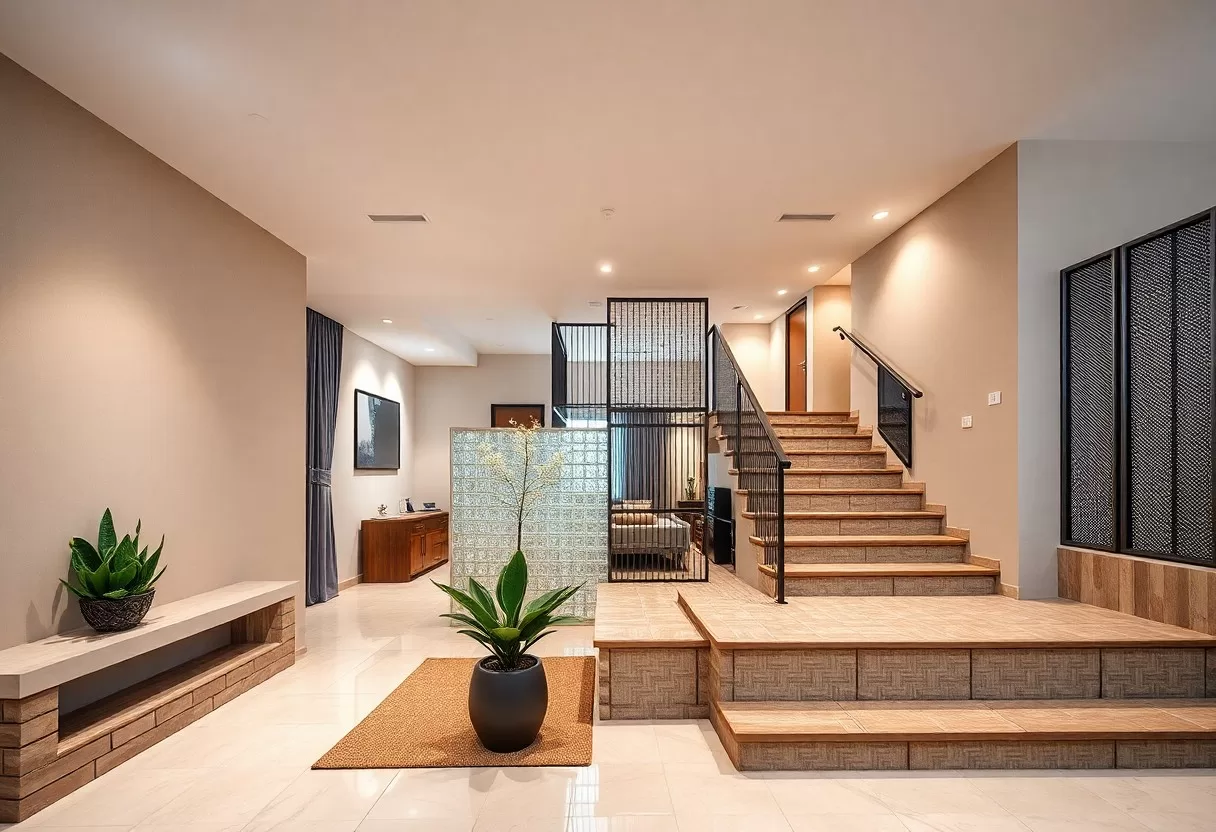
Spatial Layout & Zoning
How-to arrange rooms to separate public and private functions
You should cluster public rooms-entry, kitchen, living-along the front or a central spine and tuck bedrooms, studies, and baths toward the back or upper floors. Use a foyer or buffer zone like a mudroom and stack service walls (kitchens, bathrooms) to act as acoustic barriers. For a typical 1,800-2,200 sq ft home, place bedrooms at least 8-12 feet from street-facing walls to reduce noise and sightlines.
- Public zone: entry, kitchen, living
- Private zone: bedrooms, studies, baths
- Transition: foyer, mudroom, hallway
- Assume that you can create a clear circulation spine to keep guests out of private wings.
Practical tips for circulation, thresholds, and buffer zones
Design corridors at a minimum of 36 inches for accessibility and aim for 42-48 inches where two people pass comfortably. Insert thresholds-vestibules, short hallways, half-walls, or 4-6 ft deep porches-to give sensory cues before private areas. Use offsets or angled entries so you maintain daylight while preserving visual privacy.
- Corridor width: 36-48 inches
- Vestibules: 4-6 ft deep
- Thresholds: doors, half-walls, planters
- Assume that small changes in depth or material can alter perceived privacy immediately.
When you map circulation, control sightlines: spans over 20-30 feet feel open but can expose private zones, so insert L-shaped halls, short offsets, or screens to interrupt views. Use a closet or bathroom as a 3-6 ft acoustic buffer next to bedrooms, choose denser door assemblies (STC-rated doors) where noise matters, and prefer recessed thresholds or material changes to signal transition without blocking light.
- Sightline control: offsets, L-halls, screens
- Acoustic buffers: closets, baths, storage
- Threshold treatments: recessed sills, material changes
- Assume that layering these elements creates privacy without closing off light or flow.
Flexible Elements & Transitional Spaces
Use movable elements-sliding doors, pocket doors, and low partitions-to define zones without full enclosure. You can layer transparency with frosted glass, fabric panels, and planted buffers to keep sightlines while preserving daylight. Consult builders about sound ratings and layout sequencing; see Building a Custom Home with Privacy for detailed plans. Aim for 3-6 ft transitional buffers between active and private rooms to reduce overlap and improve flow.
How-to integrate doors, sliding partitions, and adaptable furniture
Start by matching door type to use: 30-36″ for bedrooms, 36″ for patio access, and pocket or barn systems where swing steals space-pocket doors can reclaim about 2.5-4 sq ft. Specify recessed tracks, soft-close hardware, and perimeter seals to boost acoustic performance up to ~20 dB. Place adaptable furniture on casters and plan clearances (minimum 36″ circulation) so panels and furnishings operate smoothly without blocking sightlines or egress.
Tips for creating semi-private nooks and multifunctional buffers
Carve nooks with a 42-48″ tall bookcase or half-wall, an 18-24″ bench depth, and at least 36″ approach clearance to remain usable. Use planters, rugs, directional lighting, and frosted glass to signal separation while keeping daylight; orient nooks adjacent to circulation to avoid disrupting traffic. Avoid obstructing exits or HVAC intake locations to maintain safety and comfort.
- transitional spaces
- sliding partitions
- semi-private nooks
- After multifunctional buffers
Scale nooks to human dimensions: 24-30″ seat height, 36-48″ knee clearance if you include a desk, and 3-4 ft lateral space for two people. Test acoustics by installing a 6-8″ insulated soffit or adding a gasketed door to measure improvement. If you want flexibility, integrate modular furniture with hidden storage and quick-release anchors so the same area supports dining, work, and relaxation.
- bookcase dividers
- planter buffers
- modular furniture
- After acoustic seals
Final Words
The way you layer sightlines, daylight, plantings, and flexible partitions lets your home feel private without closing it off; prioritize gradual transitions between public and private zones, use glazing that admits light while preserving views, orient openings away from direct sightlines, and choose furniture and landscaping to define spaces-this approach gives you control over intimacy and openness so your home remains inviting yet protected.
FAQ
Q: How can I create privacy between rooms without making the home feel closed off?
A: Use partial-height walls, slatted screens, open shelving, or glass partitions with frosting to block sightlines while keeping light and air moving. Keep ceiling heights and continuous flooring consistent to preserve a feeling of openness across zones. Place furniture to define areas instead of building full enclosures; a sofa back, bookcase, or rug can mark a boundary without sealing a room. Install sliding or folding doors that tuck away when open, so rooms can be private when needed and open to each other for daily living. Add soft textiles and acoustic panels to reduce sound transmission without adding visual weight.
Q: What are good strategies for outdoor privacy that don’t shut the yard off?
A: Plant layered greenery such as hedges, shrubs, and small trees to create a living screen that filters views without a solid wall. Use trellises, woven or slatted screens, and tall planters to add height and interest while allowing light and breeze to pass through. Position patios and seating closer to the house or next to raised planters to create tucked-in spots that feel sheltered. Incorporate pergolas, fabric canopies, or retractable screens for adjustable cover, and choose fences with staggered or horizontal slats to balance seclusion and visual connection with the surroundings.
Q: How do I maintain natural light and airflow while keeping private spaces comfortable?
A: Add clerestory or high windows, transoms, and skylights to bring daylight in above eye level so rooms stay bright without exposing interiors to direct outside sightlines. Choose frosted or textured glass for ground-level openings in bathrooms and bedrooms to admit light while preserving privacy. Create cross-ventilation by pairing operable high and low windows or using narrow vertical vents that allow airflow but limit direct views. Layer window treatments-sheer curtains for daytime privacy and heavier drapes for night-so you can control light and exposure. Improve acoustic privacy with rugs, upholstered furniture, bookcases, and insulated window units to reduce noise while keeping spaces visually open.