
Herb Spiral Inspiration – Compact Spiral Gardens for Culinary and Medicinal Herbs
Most herb spirals let you create a compact, layered garden that supports both culinary and medicinal herbs by providing varied sun, soil depth, and moisture zones so you maximize yields and plant diversity in a small footprint. By shaping terraces and pockets you control drainage and root environment, but ensure proper drainage to avoid root rot and waterlogging. With thoughtful plant placement your spiral becomes a resilient, easy-to-maintain herb source.
Key Takeaways:
- Maximizes small-space planting by stacking soil levels in a spiral to create varied microclimates suitable for both culinary and medicinal herbs.
- Places moisture-loving, shade-tolerant herbs at lower, damper sections and drought-tolerant, sun-loving herbs near the top for tailored care and higher yields.
- Improves accessibility, water efficiency, and visual appeal while supporting succession planting and easy harvesting.
Understanding Herb Spirals
You’ll find an herb spiral is a compact, vertical garden that stacks soil in a corkscrew to create several distinct growing zones within a small footprint; a typical design of 0.5-1 m radius and 0.6-1 m height can accommodate 20-30 herbs, support drought-tolerant Mediterranean varieties at the top, and moisture-loving greens at the base, giving you layered microclimates and easier harvesting from a single access point.
Definition and Concept
An herb spiral is a raised, spiral-shaped bed built with stones or soil that elevates one side to form a slope; you plant sun‑loving, well‑drained herbs like rosemary and thyme on the upper, rock-warmed edge, while placing mint, parsley and watercress near the lower, wetter basin-this intentional zoning mimics diverse habitats within roughly one square meter.
Benefits of Herb Spirals
Because you stack vertical growing zones, an herb spiral maximizes yields in confined spaces, often fitting the variety of a small garden into a 1 m radius; you gain improved water efficiency as runoff collects in lower pockets, better pest management through mixed planting, and ergonomic access that reduces bending and increases planting density without crowding.
For practical planting, place deeply rooting, sun‑loving perennials at the crest, medium water herbs on slopes, and shallow-rooted, moisture-loving annuals near the base-this pattern often reduces irrigation needs and lets you rotate crops yearly; however, watch for poor drainage or compaction on the lower curve, which can cause root rot, and plan for seasonal topdressing and occasional soil regrading to keep your spiral productive.
Design and Construction
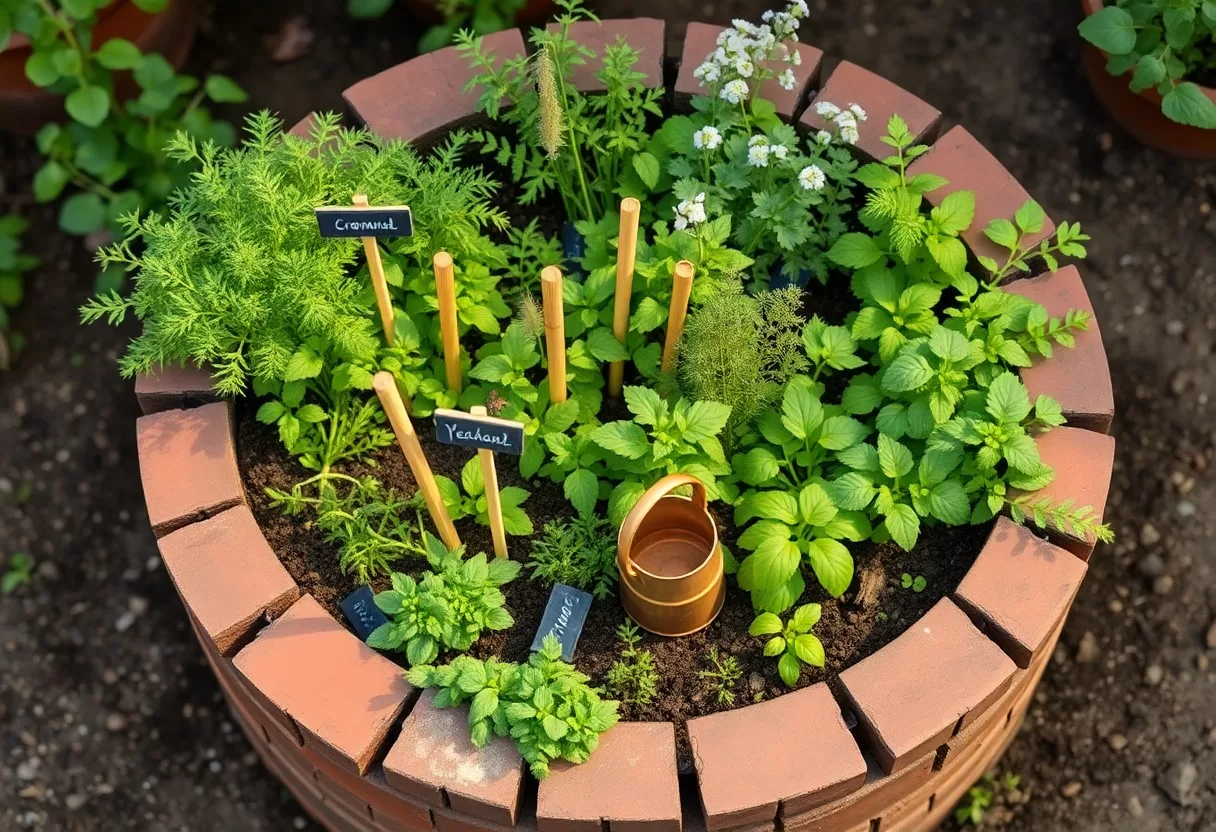
Your herb spiral is typically 1-2 meters across and 0.6-0.9 meters high; build a stable core and tiered beds to create at least three distinct microclimates. Use rock, brick, or log retaining walls to capture heat and increase drainage; poor drainage invites root rot, so incorporate a gravel layer and weep holes. Every 30-40 cm of height change alters moisture and sun exposure, broadening your planting choices.
Site Selection and Preparation
Place the spiral where you get 6+ hours of sun and within ~10 meters of your kitchen for easy harvests. If your site slopes, orient the spiral across the contour to reduce erosion; if it’s in a flood-prone area, avoid it entirely (avoid flood zones). Remove turf, excavate 10-20 cm, loosen subsoil, then add 2-4 cm of compost-rich topsoil to boost fertility.
Materials and Design Options
Choose from dry-stone, recycled brick, gabion baskets, cob, or woven wattle based on budget and look; dry-stone lasts decades, wattle is low-cost and quick. Prioritize materials that provide good thermal mass and structural stability to withstand freeze-thaw cycles. Combine a 5-10 cm gravel base with a well-draining soil mix and shape gentle slopes to manage water flow.
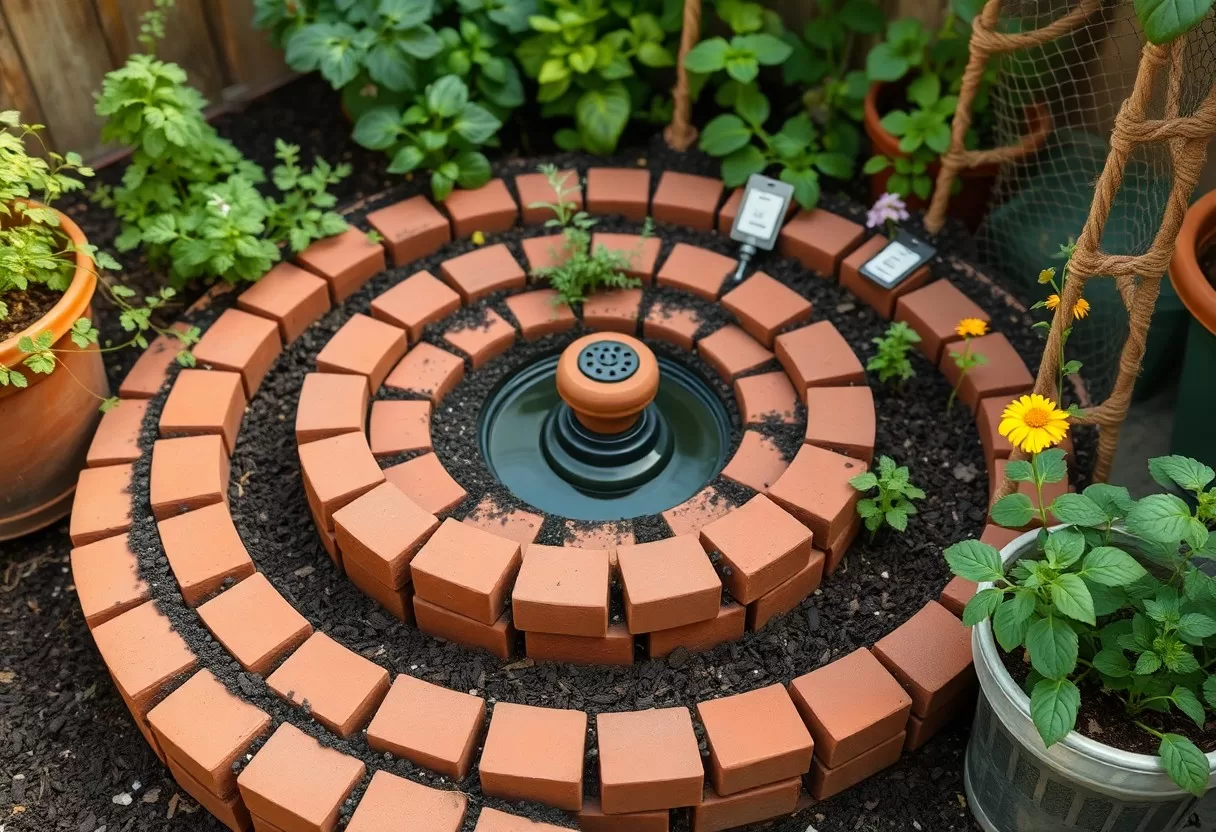
Compact a 5-10 cm crushed-rock base for stability and decide whether mortar (for long-term brickwork) or dry-stone (easier repairs) suits your climate. Soil depth should vary: ridge 10-15 cm for rosemary and thyme, mid-terraces 20-35 cm for parsley and chives, base 40-60 cm for mint and lemon balm. You can add a 30-50 cm diameter pond at the center to raise humidity for moisture-loving herbs.
Plant Selection for Herb Spirals
When you choose plants, match each herb to its microclimate: place sun‑loving, drought‑tolerant herbs near the top and moisture‑loving ones at the base; factor in root depth and harvest rhythm to layer effectively. You can find species lists and specifics at Herbs for Your Spiral Garden and Kitchen. Aim for diversity by combining perennial anchors with fast‑growing annuals for continuous yield.
Culinary Herbs
You should start with reliable staples: rosemary, thyme, oregano tolerate dry, exposed top beds while basil, parsley, cilantro prefer richer, moister pockets. You should space them 20-30 cm apart for air circulation; harvest leaves regularly to encourage branching and higher yields. Mid‑slope zones suit chives and marjoram, which also help deter some pests when planted near vegetables.
Medicinal Herbs
You should choose medicinal species that suit placement: lavender and chamomile thrive on well‑drained upper tiers, whereas comfrey and mint prefer lower, moist zones. You should keep in mind some medicinal plants are toxic if misused, so avoid species like foxglove near children or pets and label beds clearly.
Because you may prepare infusions or salves, prioritize herbs with documented uses-calendula for skin, yarrow for mild bleeding, and aloe for topical burns-and learn specific harvest timings; for example, collect lavender at full bloom for maximum oil content and cut comfrey leaves before flowering for higher allantoin. Use root barriers for vigorous spreaders and always verify dosage and safety from trusted herbal pharmacopeias before internal use.
Maintenance and Care
Watering and Nutrient Management
You should tailor watering to the spiral’s microclimates: the top dries fastest while the base stays moist. Water deeply to wet the root zone-about 15 cm (6 in) per soak-so roots reach moisture; in hot weather this may be every 2-3 days, in cool seasons every 7-10 days</strong). Use drip tubing or a soaker hose for even delivery. Feed with compost or a balanced slow-release fertilizer (e.g., 5-5-5) every 6-8 weeks to sustain both annuals and perennials.
Pest Control and Harvesting
You can manage pests with integrated methods: handpick slugs and caterpillars, deploy beer traps or copper barriers for slugs, and introduce beneficials like ladybugs for aphids. Spray neem or insecticidal soap every 7-14 days when infestations appear, following label rates. Harvest in the morning, pinch above a leaf pair, and never remove more than one-third of a plant at once to keep vigor; basil and annuals often respond well to weekly pinching.
For a practical routine, inspect your spiral twice weekly during peak season, focusing on the moist lower ring for slugs and the sunny top for drought stress. Release about 50-100 ladybugs per m² if you find heavy aphid clusters, and place beer traps every 0.5-1 m around the base to cut slug pressure. When harvesting medicinal herbs, label plants and dry samples separately to avoid cross-contamination and preserve potency.
Creative Uses of Herb Spirals
Beyond efficient planting, you can turn a 1-2 m spiral into a multifunctional element: use it as a patio focal point, a rainwater-capture swale, or a rooftop container feature (around 1.2 m across). Zigzag planting lets you exploit 3-5 distinct microclimates, placing drought-tolerant rosemary and lavender at the top and moisture-loving mint or sorrel at the base for staggered harvests.
Aesthetic Enhancements in Gardens
You can place low, terraced stone walls and alternate textures to create visual rhythm; choose reclaimed brick, gabions, or stacked slate and keep overall height at 0.6-0.9 m so tiering reads from a distance. Combine purple sage, silver-leaf rosemary and chartreuse lemon balm for striking contrast, add solar uplighting for evening interest, and note that it enhances curb appeal while you watch for invasive mint near pathways.
Educational and Community Applications
You can use spirals as hands-on classrooms: a 1.5 m demo spiral accommodates 10-15 students rotating through stations on soil layers, microclimates and plant ID; teach companion planting, water-wise gardening and basic herbal safety, making it ideal for intergenerational workshops while you supervise tool use and harvesting.
You can expand programming by labeling 6-10 key species with QR codes linking to recipes and safety notes, scheduling 2-3 seasonal workshops per year, and organizing volunteer shifts of 4-8 people for maintenance; ensure ADA reachability at ~0.6 m edge height and enforce clear labeling and allergy warnings plus supervision around any toxic species.
Common Challenges and Solutions
When issues pop up in your spiral-pests, waterlogging, or uneven growth-tackle them with targeted fixes: rotate herbs, amend soil, and adjust plant placement. For layout ideas and case examples see Herb Spirals – Modern Farmer. In heavy clay, improve drainage to prevent root rot; for pests use barriers or hand removal; for shade problems, relocate sun-loving species higher on the spiral.
Soil Drainage Issues
If your spiral sits on compact clay or has persistent pooling, add 10-30% coarse material (grit, perlite or coarse sand) and a gravel base to speed runoff. You can also form a 2-4 cm central drainage channel or a 5-10 cm rock layer under planting pockets. Those measures reduce waterlogged roots and lower fungal disease risk while preserving moisture where you want it.
Seasonal Considerations
Seasonal shifts determine placement and protection: put drought-tolerant rosemary and thyme at the exposed top for summer, and keep cool-season parsley and cilantro lower. You should plan to swap tender annuals each season and use temporary covers or shade to shield sensitive plants during extreme cold or heat.
In winter, apply a 5-7 cm mulch to insulate roots and move potted tender herbs indoors when nighttime temps approach 0°C. During summer heatwaves, deploy 20-30% shade cloth for consecutive 30°C+ days and stagger sowings-basil after last frost, cool-season herbs in early fall-to exploit the spiral’s vertical microclimates for continuous harvests.
Final Words
As a reminder you can maximize plant diversity and microclimates in a compact herb spiral, growing both culinary and medicinal herbs efficiently. Design with sun, drainage, and accessibility in mind; layer heights to match moisture and root depth; harvest regularly to encourage vigor. With modest materials and planning, your spiral will deliver year-round flavor, remedies, and ecological benefits in limited space.
FAQ
Q: How do I design a compact herb spiral that supports both culinary and medicinal herbs?
A: Start with a small footprint (about 1-1.5 m diameter for a backyard spiral, or scale down to 50-80 cm for containers). Build the spiral with a raised center 30-60 cm high to create microclimates: the top for very well‑drained, sun‑loving plants (thyme, rosemary, lavender), the middle for Mediterranean and culinary herbs (oregano, sage, chives), and the bottom for moisture‑loving or shallow‑rooted herbs (mint, basil, parsley). Use permeable materials (stone, brick, reclaimed pavers, or treated timber) and layer soil from gritty, fast‑draining mix at the top to richer, more moisture‑retentive mix at the base. Orient the spiral to get maximum sun on the south or north side depending on hemisphere, leave access for harvesting and maintenance, and include pockets or cavities for small pots to rotate in annuals or medicinal crops that need different soil or winter protection.
Q: Which herbs work best together in a compact spiral and how do I balance culinary and medicinal needs?
A: Group herbs by water and light needs rather than by use. Top/dry zone: lavender, thyme, santolina (good for aromatic medicinal uses). Middle: rosemary, oregano, sage, chives (excellent for culinary use and many medicinal tinctures). Bottom/wet zone: mint, lemon balm, basil, parsley (easy culinary harvest and soothing herbal teas). For potent medicinal herbs like chamomile, calendula, or lemon verbena, give slightly richer pockets or pots so you can manage harvest and drying. Keep invasive species (especially mint) contained in buried pots or the lowest level to prevent takeover. Label plants with uses and any cautionary notes, stagger plantings for continuous harvest, and separate plants that need different soil pH or fertility into removable containers if necessary.
Q: What maintenance, harvesting, and seasonal care is needed to keep a compact spiral productive and healthy?
A: Water according to zones-sparse, deep watering for top plants and more frequent watering for the bottom. Mulch the lower sections to retain moisture and reduce weeds; avoid heavy mulch on the top to preserve drainage. Prune and pinch herbs to encourage bushiness and prevent flowering if you want leaf harvests; harvest medicinal leaves and flowers mid‑morning after dew dries for best potency, and dry herbs in a warm, shaded, well‑ventilated spot. Monitor soil fertility and topdress with compost in spring; use gentle organic pest controls (hand removal, neem, insecticidal soap) and maintain good air circulation to prevent mildew. In cold climates, protect tender herbs by moving potted specimens indoors or insulating the spiral base; replace or divide perennials every few years to refresh soil and control vigor.